


Key Findings
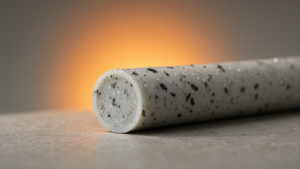
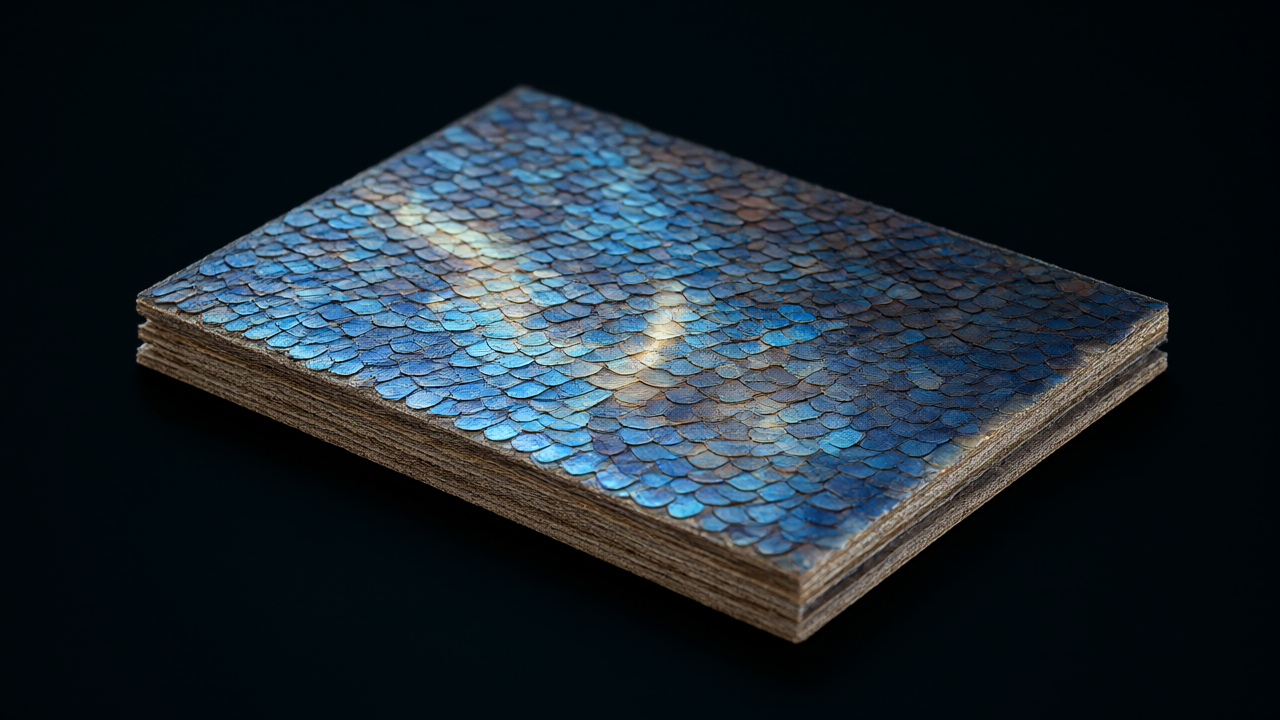
Jianbin Feng and colleagues at the Harbin Institute of Technology have developed a multifunctional metamaterial that integrates structural load-bearing capacity, electromagnetic shielding, and acoustic absorption into a single 24 mm thick structure. This bio-inspired composite eliminates the need for traditional adhesives and bulky separate layers of metal frames, electromagnetic coatings, and acoustic foams.
Technical Details
The material utilizes a gyroidal architecture with smoothly arched paths to distribute force uniformly. This design allows it to absorb 21.9 times more impact energy than a standard honeycomb structure of the same weight. In testing, a 74g sample supported a 438 kg load on one corner under a 1,750 kg vehicle without cracking.
To achieve electromagnetic and acoustic properties, the team implemented the following:
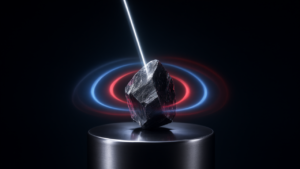
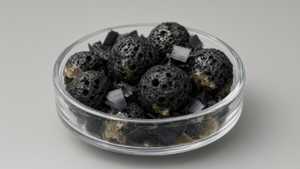
- Radar Absorption: The gyroid interior is impregnated with a paste of carbon nanotubes and carbon black. This creates a conductive labyrinth where incident radar waves are converted into residual heat. The structure absorbs over 90% of incident wave power across 93.5% of the 2 to 40 GHz spectrum.
- Noise Reduction: Perforated lids are placed over each cell to create acoustic resonators. Sound waves enter the cells and dissipate energy through thermoviscous friction against the gyroid matrix, capturing 90% of sound energy in the 600 to 900 Hz range.
Background & Context
Material designers have long faced a trade-off between mass and porosity. While high porosity is required to absorb sound and match electromagnetic impedance, such structures typically collapse under pressure. Conversely, solid reinforcements reflect sound and radiation. The researchers solved this by mimicking the microscopic scale architectures of butterfly and moth wings, which maintain lightness and structural integrity while attenuating high-frequency sounds.
Significance & Outlook
This metamaterial addresses critical inefficiencies in the construction of aircraft, high-speed trains, and electric vehicles, where traditional multi-layer shielding adds excessive weight and is prone to adhesive fatigue. The team has also developed a computerized system to customize these biomimetic structures for specific industrial applications.
Source: https://www.inovacaotecnologica.com.br/noticias/noticia.php?artigo=asa-borboleta-supermaterial
Get our weekly technology intelligence — free
Receive an infographic that lets you judge at a glance whether each field’s analysis report is worth reading.
Subscribe Free — Weekly Tech Intelligence
By subscribing, you’ll receive Troy-Technical’s weekly technology intelligence newsletter.
- Your email and selected fields are used only to deliver the newsletter.
- We never share your information with third parties.
- You can unsubscribe anytime via the link in each email.
See our Privacy Policy for details.
Takes about a minute · Unsubscribe anytime