

Key Findings
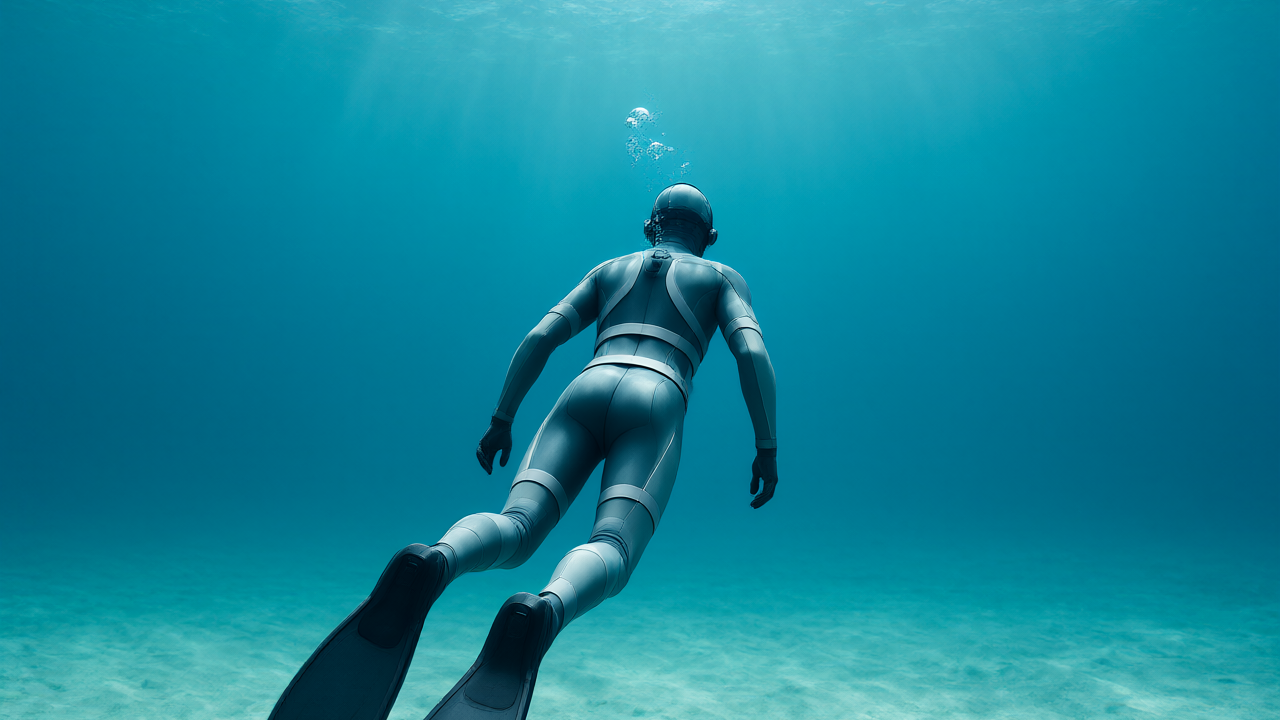
Research led by Wu Xinyu at the Shenzhen Institute of Advanced Technology indicates that wearable robotic assistance can significantly reduce the amount of breathing gas scuba divers use per minute. In experiments using the PEAKED soft exosuit, researchers reported reductions in respiratory minute volume of approximately 30% during flutter kicking, 26% during frog kicking, and 18% during underwater walking.
Technical Details
The PEAKED system is a soft exosuit designed specifically for the hips, supporting both flexion and extension. Unlike rigid frames that may restrict leg positioning, the flexible structure of PEAKED accommodates various movements, including underwater walking, frog kicking, and flutter kicking. The system is designed to assist physical movement while ensuring the diver retains full control, awareness, and decision-making capability.
Background and Context
Designing for underwater environments requires different considerations than land-based exoskeletons. While buoyancy reduces the need to support body weight, water resistance persists throughout most of a leg’s movement, necessitating assistance in both directions. Consequently, the timing and direction of force must be precisely matched to the specific movement being performed; a configuration optimized for flutter kicking may require adjustments for walking along the seabed.
Furthermore, practical deployment requires the system to integrate with existing scuba gear, such as ballast and tanks. Essential design requirements include pressure-resistant waterproofing, comfortable movement, and the ability to remove the equipment rapidly during emergencies.
Significance and Outlook
While these results demonstrate lower ventilatory demand, the researchers note that this does not automatically translate to a proportional increase in safe dive duration, as gas use depends on broader environmental circumstances. Future development will focus on posture stabilization and personalization to adapt the system to different users and movements. The goal is to move beyond isolated improvements in kicking effort toward a system designed around the full scope of diving tasks.
Source: https://knowridge.com/2026/11/wearable-underwater-robots-could-help-scuba-divers-breathe-less-air/
Get our weekly technology intelligence — free
Receive an infographic that lets you judge at a glance whether each field’s analysis report is worth reading.
Subscribe Free — Weekly Tech Intelligence
By subscribing, you’ll receive Troy-Technical’s weekly technology intelligence newsletter.
- Your email and selected fields are used only to deliver the newsletter.
- We never share your information with third parties.
- You can unsubscribe anytime via the link in each email.
See our Privacy Policy for details.
Takes about a minute · Unsubscribe anytime