


Key Findings
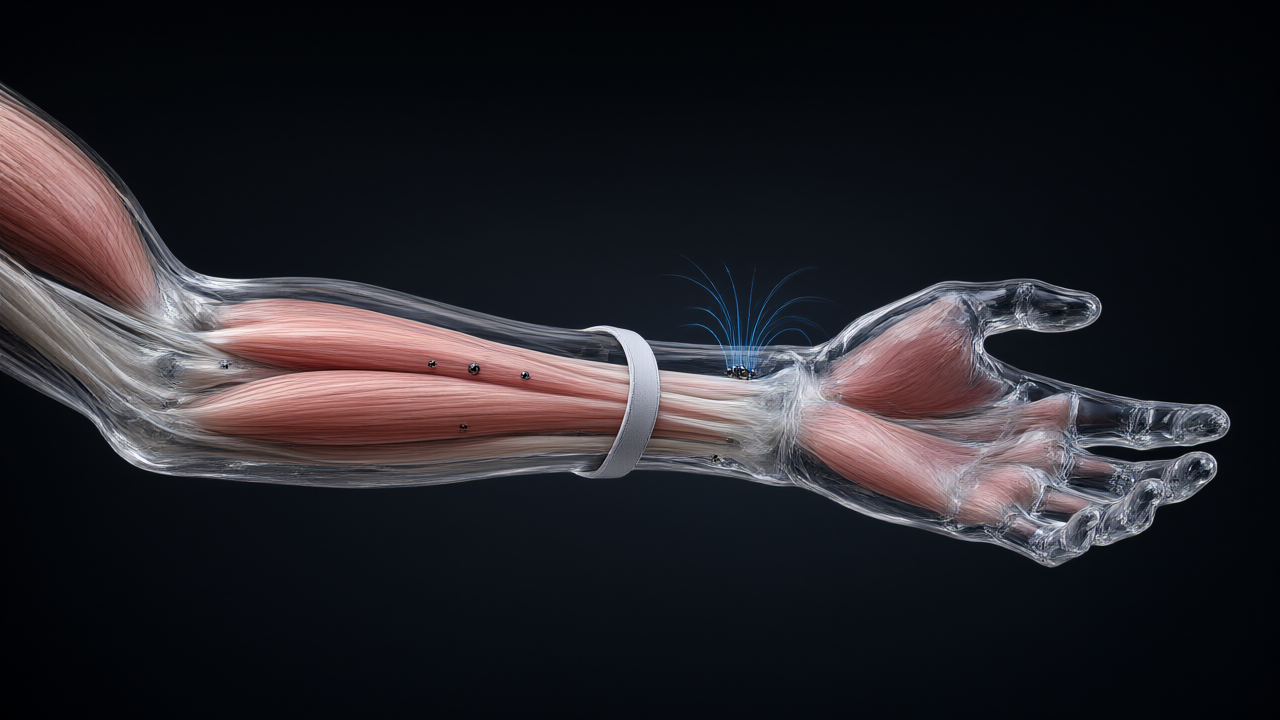
The wireless magnetic implant system enables continuous neuromuscular sensing by tracking permanently implanted magnets to support neuroprosthetic control with multiple degrees of freedom. In tests with three participants with transtibial amputation, muscle-state estimation using this platform matched or outperformed standard surface and implanted electromyography (EMG) across most evaluated outcomes. Additionally, the researchers demonstrated that muscle activation can be detected through magnetic induction alone, presenting a potential alternative to traditional EMG.
Technical Details
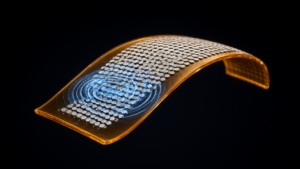
The platform consists of a skin-mounted magnetometer array integrated with customized high-density sensing electronics and an information-theoretic architecture. The system tracks passive magnetic beads with a diameter of 3 mm implanted within human muscle tissue. Key technical specifications include:
- Resolution: Sub-millimetre resolution of real-time muscle dynamics.
- Sensing Depth: Capability to track implants at depths of up to 6 cm.
- Implementation: Deployment of a constellation of magnets to facilitate complex prosthetic control.
The simulation framework for evaluating tracking algorithms and the information filter algorithm are implemented in Python.
Background & Context
Precise measurement of neuromuscular mechanics is essential for synchronizing movement with wearable robotics. However, existing muscle-sensing technologies typically require significant trade-offs between system complexity, invasiveness, and signal fidelity. This magnetic tracking approach seeks to overcome these limitations by providing a wireless method for continuous sensing.
Significance & Outlook
By achieving accurate and responsive neuroprosthetic movement in participants with transtibial amputation, this system demonstrates a viable path toward higher-performance bionic limbs. The ability to detect muscle activation via magnetic induction suggests a shift away from electrical sensing, potentially reducing the complexity and invasiveness associated with current EMG-based interfaces for human-machine integration.
Source: https://www.nature.com/articles/s44460-026-00157-6
Get our weekly technology intelligence — free
Receive an infographic that lets you judge at a glance whether each field’s analysis report is worth reading.
Subscribe Free — Weekly Tech Intelligence
By subscribing, you’ll receive Troy-Technical’s weekly technology intelligence newsletter.
- Your email and selected fields are used only to deliver the newsletter.
- We never share your information with third parties.
- You can unsubscribe anytime via the link in each email.
See our Privacy Policy for details.
Takes about a minute · Unsubscribe anytime