

Key Findings
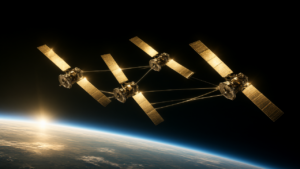
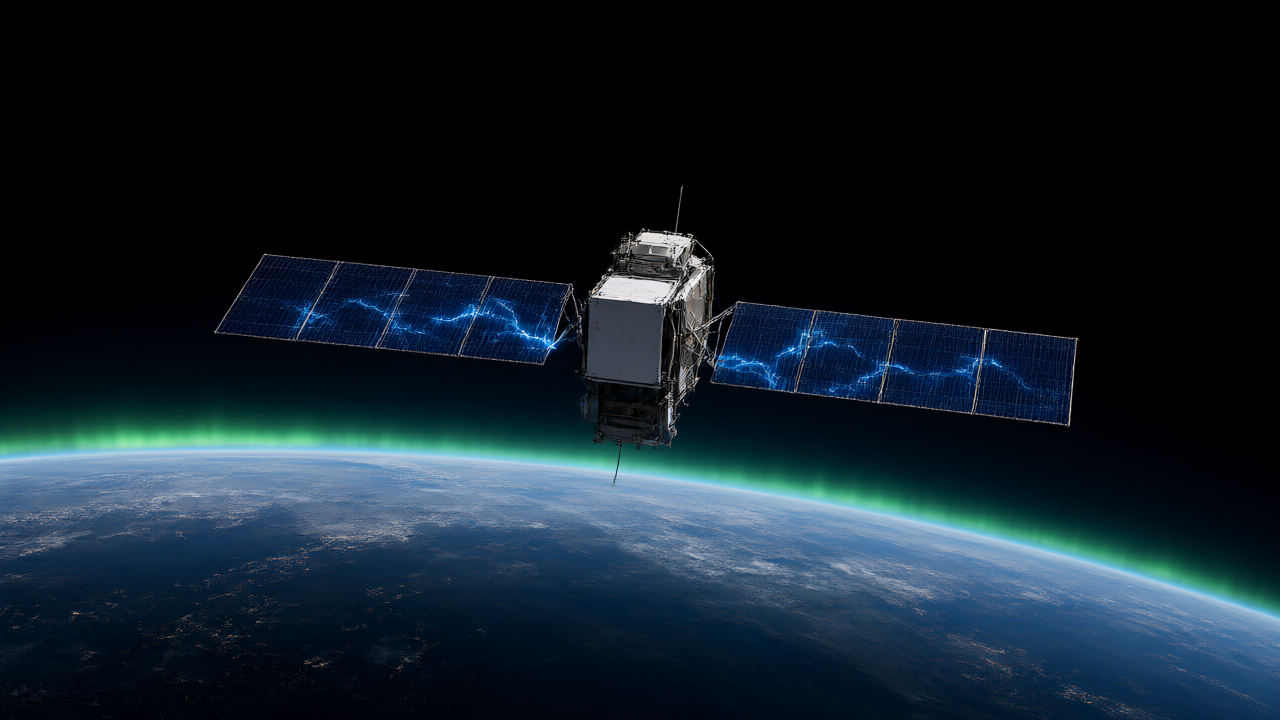
Kyutech and JAXA have successfully developed a method using artificial intelligence to automatically detect surface charging phenomena on artificial satellites. By applying this system to approximately 19 years of observation data, the research team identified approximately 3,000 charging events and elucidated the conditions under which these phenomena occur.
Technical Details
The research team, including Associate Professor Mariko Teramoto of Kyutech and Chief Researcher Teppei Okumura of JAXA, utilized Convolutional Neural Networks (CNN), a type of image recognition technology, to build the detection system. This automation addresses the significant burden previously associated with manually verifying charging events within vast datasets.
The analysis revealed a dynamic mechanism regarding satellite charging:
- High-energy electrons that cause auroras increase negative charging on the satellite surface.
- Plasma in the ionosphere (the region between approximately 60 and 1,000 km above Earth) acts to suppress this charging.
Background and Context
In the vacuum of space, satellites cannot be grounded, leading to the accumulation of electrons and the development of electrical charges on the surface. When local potential differences expand, electrostatic discharges can occur, which may cause physical damage to components such as solar panels and lead to system failures.
Significance and Outlook
This technology allows for the quantitative capture of the dynamic balance of charging intensity, which is expected to significantly enhance operational safety. By improving the prediction of high-risk timeframes and environments, operators can preemptively avoid discharge accidents and the resulting loss of equipment or operational downtime.
While the researchers note that further verification is required to ensure stability across different orbits and extreme space weather—as AI accuracy can be affected by training data bias—the long-term outlook includes applications in real-time space weather prediction and the design of next-generation charging-resistant satellites. Such advancements are seen as a technical foundation for the growth of private-sector space business by increasing the reliability of communication and meteorological infrastructure.
Source: https://plus-web3.com/media/latestnews_1000_11260/
Get our weekly technology intelligence — free
Receive an infographic that lets you judge at a glance whether each field’s analysis report is worth reading.
Subscribe Free — Weekly Tech Intelligence
By subscribing, you’ll receive Troy-Technical’s weekly technology intelligence newsletter.
- Your email and selected fields are used only to deliver the newsletter.
- We never share your information with third parties.
- You can unsubscribe anytime via the link in each email.
See our Privacy Policy for details.
Takes about a minute · Unsubscribe anytime