


Key Findings
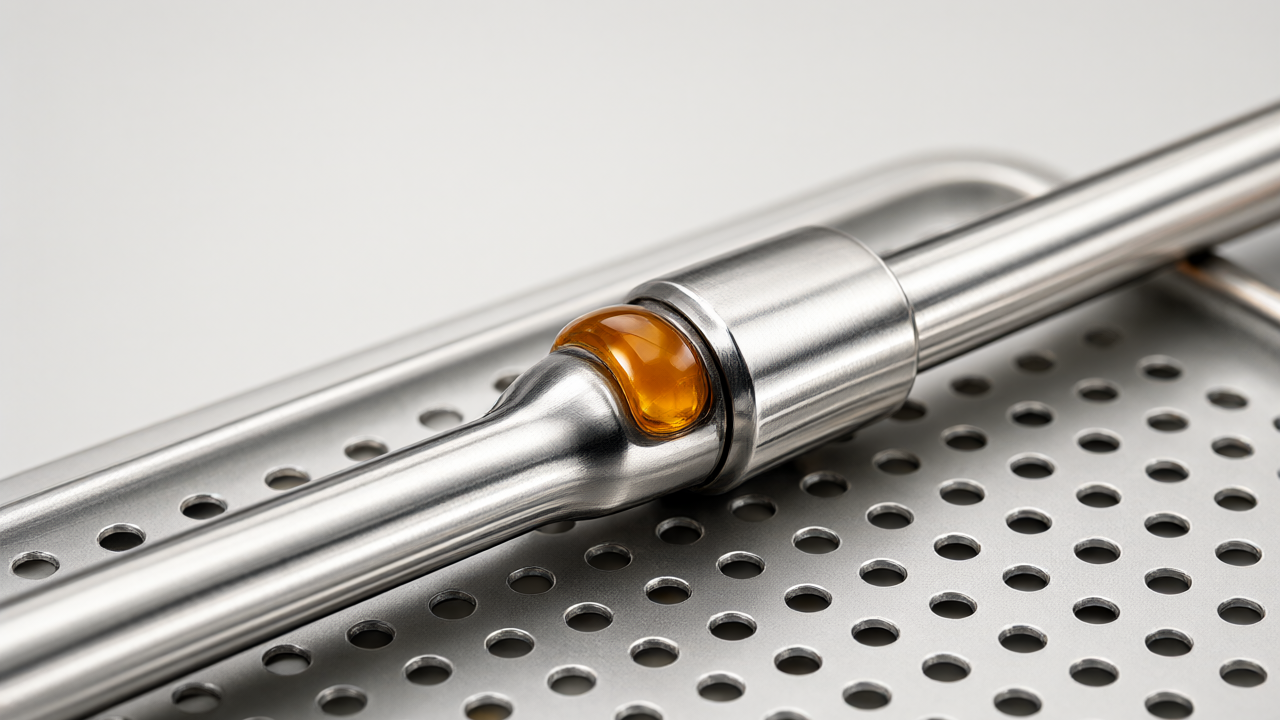
Supreme 17HTMed is a one-component, toughened epoxy system designed for medical device applications. Its primary technical advantage is a wide service temperature range from -100°F to +550°F (-73°C to +288°C) and a high glass transition temperature (Tg) of 208–210°C. The material is 100% reactive, containing no solvents or diluents, and has passed ISO 10993-5 testing for non-cytotoxicity.
Technical Details
The cured system exhibits the following mechanical properties at 75°F:
- Lap shear strength: 1,900–2,100 psi
- Tensile strength: 7,000–8,000 psi
- Compressive strength: 16,000–18,000 psi
- Shore D hardness: 80–90
Electrically, the epoxy acts as an insulator with a volume resistivity exceeding 1015 ohm-cm at 75°F. It has a moderate viscosity of 100,000–150,000 cps at 75°F. To initiate the cure, heat is required; recommended schedules are 4–6 hours at 300°F or 2–4 hours at 350°F, with an optional post cure of 4–8 hours at 300–350°F for optimum properties.
Background and Context
As a toughened formulation, Supreme 17HTMed is engineered to withstand thermal cycling and bond dissimilar substrates, including ceramics, metals, composites, and various plastics. Because it is a single-component system, it requires no mixing prior to use and offers an unlimited working life at room temperature. For storage, the product can be kept refrigerated at 40°F to 50°F.
Significance and Outlook
The ability of Supreme 17HTMed to withstand repeated sterilization—including autoclaving and exposure to aggressive chemical sterilants like glutaraldehyde—makes it suitable for high-reliability medical components. Its capacity to maintain structural integrity across extreme temperature fluctuations while ensuring biocompatibility addresses specific sealing and bonding challenges in medical device manufacturing.
Source: https://www.masterbond.com/newsrelease/supreme-17htmed
Get our weekly technology intelligence — free
Receive an infographic that lets you judge at a glance whether each field’s analysis report is worth reading.
Subscribe Free — Weekly Tech Intelligence
By subscribing, you’ll receive Troy-Technical’s weekly technology intelligence newsletter.
- Your email and selected fields are used only to deliver the newsletter.
- We never share your information with third parties.
- You can unsubscribe anytime via the link in each email.
See our Privacy Policy for details.
Takes about a minute · Unsubscribe anytime