

Key Findings
The study introduces a vertical organic spin-field device capable of fast and robust electrical modulation of spin-polarized currents at room temperature. A primary achievement of this architecture is the ability to control spin polarization across the entire range from 0 to 100%.
Technical Details
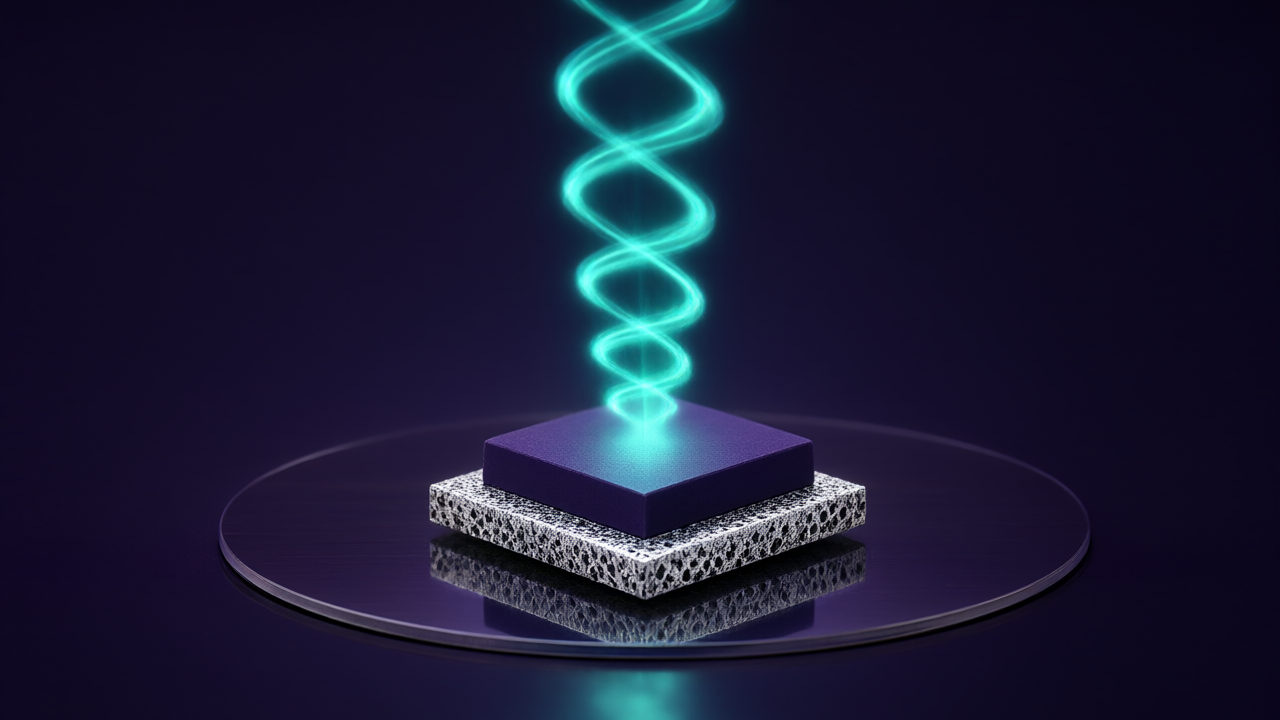
The device is constructed using an interface between an organic semiconductor and a nanoporous ferromagnet. This specific interface allows for the interaction between the electric-field effect and spin transport. By integrating spin transport and field-effect functionalities into a single vertical architecture, the device enables precise electrical control over the information carrier without compromising spin coherence at room temperature.
Background & Context
Electron spin is viewed as a viable information carrier for scalable, low-power computing technologies. However, the practical implementation of spin-based logic has historically been hindered by the difficulty of achieving electrical control over spin transport while maintaining coherence at room temperature. This research addresses these requirements by utilizing the organic semiconductor/nanoporous ferromagnet interface to bridge the gap between field-effect control and spin transport.
Significance & Outlook
The integration of these functionalities allows for the creation of a programmable molecular spin-logic platform. The researchers have successfully implemented spin-logic gates and integrated arithmetic logic circuits using this device. This development provides a pathway toward energy-efficient computing architectures that move beyond traditional CMOS limitations by utilizing spin and polarization for logic operations.
Source: https://www.nature.com/articles/s41928-026-01727-9
Get our weekly technology intelligence — free
Receive an infographic that lets you judge at a glance whether each field’s analysis report is worth reading.
Subscribe Free — Weekly Tech Intelligence
By subscribing, you’ll receive Troy-Technical’s weekly technology intelligence newsletter.
- Your email and selected fields are used only to deliver the newsletter.
- We never share your information with third parties.
- You can unsubscribe anytime via the link in each email.
See our Privacy Policy for details.
Takes about a minute · Unsubscribe anytime