


Key Findings
The HKUST research team has manufactured a low-cost, ultra-durable elastocaloric refrigerant structure that operates for more than 100 million cooling cycles. A prototype utilizing a 30-mm-long unit containing 200 stacked SMA chips achieved a maximum temperature span of 11.7 K and a specific cooling power of 3.85 W g⁻¹. This architecture is estimated to provide a service life of over 10 years under tested conditions.
Technical Details
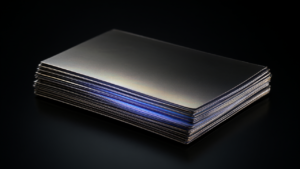
The team implemented a “Stamping and Stacking” method inspired by honeycomb and bamboo architectures. Commercial shape memory alloy (SMA) thin sheets are stamped into porous chips and then stacked to form a tubular structure. This approach offers three primary technical advantages:
- Production Efficiency: The stamping process produces 100 SMA chips per minute, which is over 100 times faster and 95% less expensive than wire-cut electrical discharge machining (WEDM).
- Structural Reliability: Because the structure is assembled from individual chips rather than a single tube, the interfaces between chips arrest crack propagation and prevent longitudinal splitting failures.
- Material Versatility: While stamping was used, the team notes that similar structures could be fabricated via laser cutting or etching.
Background and Context
Elastocaloric cooling uses the reversible phase transformation of SMAs to absorb and release heat, providing a solid-state alternative to energy-intensive vapor-compression systems. Previous SMA structures relying on commercial tubes, plates, or WEDM-produced thin-walled structures faced challenges including high costs, slow fabrication, and susceptibility to buckling and fatigue failure.
Significance and Outlook
This development addresses the critical gap between laboratory prototypes and mass-produced elastocaloric products. The research, published in Science, follows two other breakthroughs by the team: a sub-zero green freezer reaching -12°C (published in Nature) and a zero-degradation NiTiCuCo alloy device (published in Joule). The team has filed multiple international patents and plans to further enhance heat-transfer performance and develop more energy-efficient actuation systems.
Source: https://www.miragenews.com/researchers-develop-low-cost-refrigerant-with-1773264/
Get our weekly technology intelligence — free
Receive an infographic that lets you judge at a glance whether each field’s analysis report is worth reading.
Subscribe Free — Weekly Tech Intelligence
By subscribing, you’ll receive Troy-Technical’s weekly technology intelligence newsletter.
- Your email and selected fields are used only to deliver the newsletter.
- We never share your information with third parties.
- You can unsubscribe anytime via the link in each email.
See our Privacy Policy for details.
Takes about a minute · Unsubscribe anytime