

Key Findings
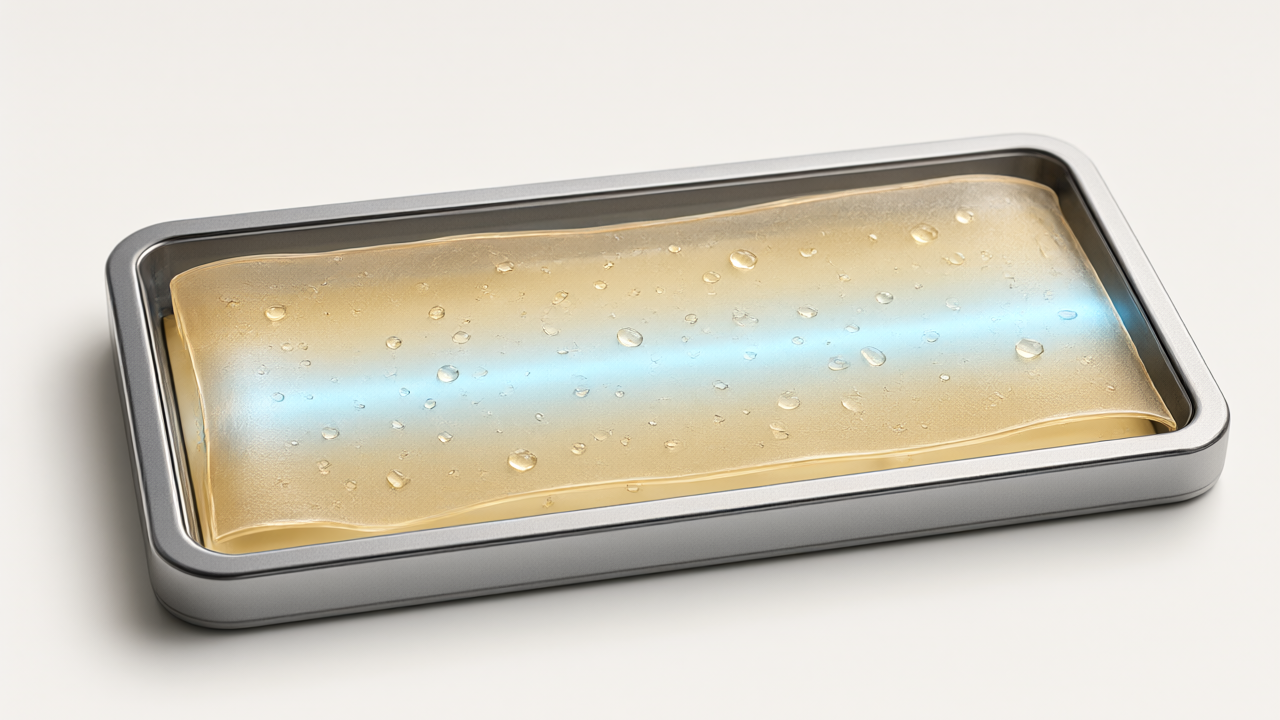
The QDMP-PVA-MeNPBI membrane demonstrates a peak hydroxide ion conductivity of 150.3 mS·cm⁻¹, which is 1.79 times higher than the 84.0 mS·cm⁻¹ recorded for the commercial FAA-3 membrane and significantly higher than the 91.3 mS·cm⁻¹ of the pristine MeNPBI membrane. In water electrolysis applications at 2.10V, the QDMP-PVA-MeNPBI membrane delivered a current density of 3.37 A·cm⁻², four times the 0.84 A·cm⁻² achieved by the FAA-3 membrane.
Technical Details
The membrane was developed through a multi-step chemical process:
- Grafting: Methyl groups were grafted onto the pyrrole and pyridine nitrogen atoms of Poly[2,2′-(1,4-naphthalene)-5,5′-bibenzimidazole] (NPBI) to create MeNPBI, improving solubility and ionic conductivity.
- Blending: MeNPBI was mixed with polyvinyl alcohol (PVA) at various molar ratios. The PVA-MeNPBI-4:1 configuration specifically showed a hydroxide ion conductivity of 138.2 mS·cm⁻¹.
- Crosslinking: A cationic crosslinker, 3-Hexyl spacers N,N-Dimethylpiperidinium cations (QDMP), was introduced via the Menshutkin reaction to produce the final QDMP-PVA-MeNPBI AEM.
Mechanical testing showed the resulting membrane possesses a tensile strength of 57.1 MPa and an elongation at break of 63.4%.
Background and Context
Anion exchange membranes (AEMs) are critical components in anion exchange membrane water electrolysis (AEMWE). The efficiency and operational lifetime of hydrogen production electrolyzers depend heavily on the membrane’s ability to maintain high ionic conductivity and mechanical stability under harsh alkaline conditions.
Significance and Outlook
The QDMP-PVA-MeNPBI membrane exhibits high chemical durability, retaining 92.4% of its initial conductivity after immersion in 1 M KOH at 80°C for 500 hours. These combined improvements in ion exchange capacity, mechanical stability, and current density indicate significant potential for the application of this material in industrial-scale AEMWE for hydrogen production.
Source: https://doi.org/10.21203/rs.3.rs-11324035/v1
Get our weekly technology intelligence — free
Receive an infographic that lets you judge at a glance whether each field’s analysis report is worth reading.
Subscribe Free — Weekly Tech Intelligence
By subscribing, you’ll receive Troy-Technical’s weekly technology intelligence newsletter.
- Your email and selected fields are used only to deliver the newsletter.
- We never share your information with third parties.
- You can unsubscribe anytime via the link in each email.
See our Privacy Policy for details.
Takes about a minute · Unsubscribe anytime