

Key Findings
A research team led by Jung-min Kim and Dong-hwan Kim at the DGIST Nanotechnology Research Department has developed a material design technology that significantly reduces the waste of heavy rare earth elements used in high-performance permanent magnets. The team successfully reduced the amount of dysprosium, a representative heavy rare earth element, by 80% compared to existing methods while maintaining equivalent magnetic performance.
Technical Details
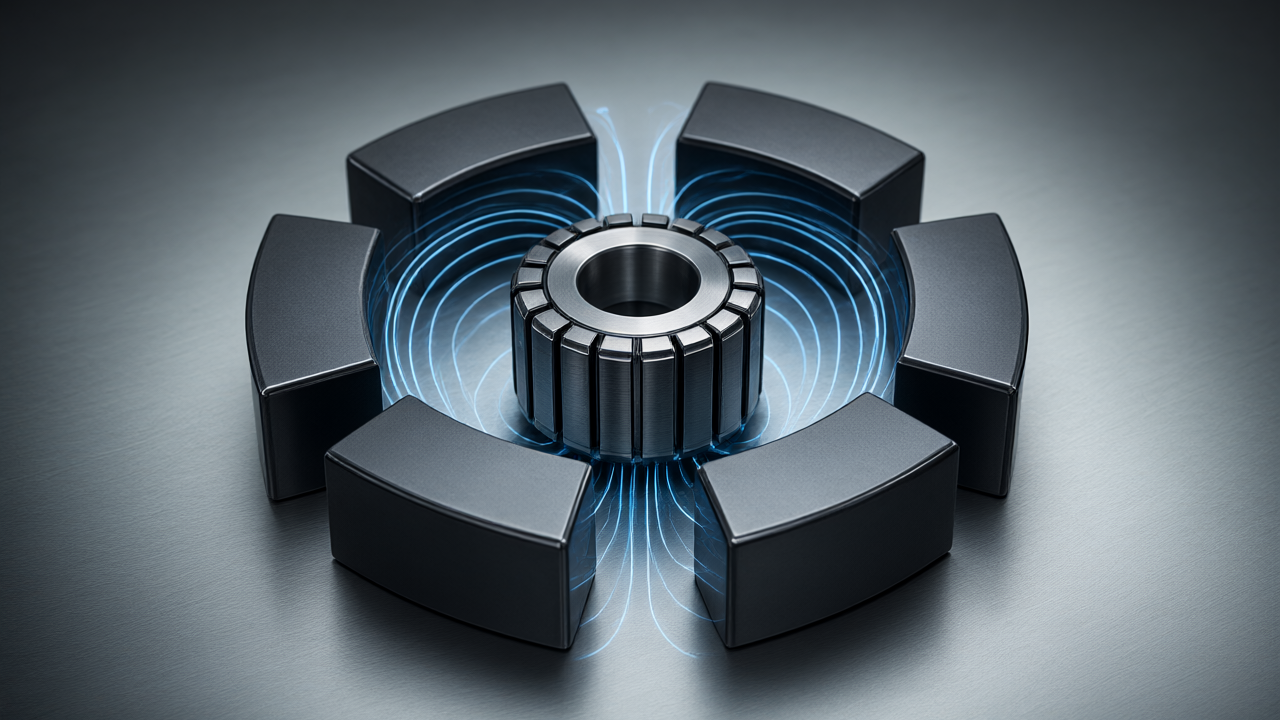
The research focused on neodymium permanent magnets, which are essential for electric vehicle (EV) drive motors and wind turbines. To maintain magnetic strength at high temperatures, these magnets require the addition of expensive heavy rare earth elements. However, the team identified a critical inefficiency in existing processes: heavy rare earth elements failed to disperse evenly within the magnet, instead clustering near the surface, leading to resource waste.
To resolve this, the researchers precisely analyzed the cause of this overconsumption and redesigned the composition of the diffusion material applied to the surface. This new design takes into account the ratio of light rare earth elements contained in the magnet base material. This approach suppresses the clustering phenomenon and induces the formation of a thin, uniform shell on the particle surfaces.
Background & Context
The development addresses the high cost and inefficiency associated with the heavy rare earth elements necessary for the stability of neodymium magnets in high-temperature environments. The findings of this study have been published in the Chemical Engineering Journal, a global academic journal specializing in materials and chemical engineering.
Significance & Outlook
According to senior researcher Jung-min Kim, this research provides a material design strategy to drastically reduce the use of expensive heavy rare earths by precisely controlling their movement and distribution. The team intends to expand the application of this technology to light rare earth-based processes to improve the efficient use of rare earth resources and strengthen technical competitiveness for next-generation high-performance permanent magnets.
Source: https://news.bbsi.co.kr/news/articleView.html?idxno=4117708
Get our weekly technology intelligence — free
Receive an infographic that lets you judge at a glance whether each field’s analysis report is worth reading.
Subscribe Free — Weekly Tech Intelligence
By subscribing, you’ll receive Troy-Technical’s weekly technology intelligence newsletter.
- Your email and selected fields are used only to deliver the newsletter.
- We never share your information with third parties.
- You can unsubscribe anytime via the link in each email.
See our Privacy Policy for details.
Takes about a minute · Unsubscribe anytime