


Key Findings
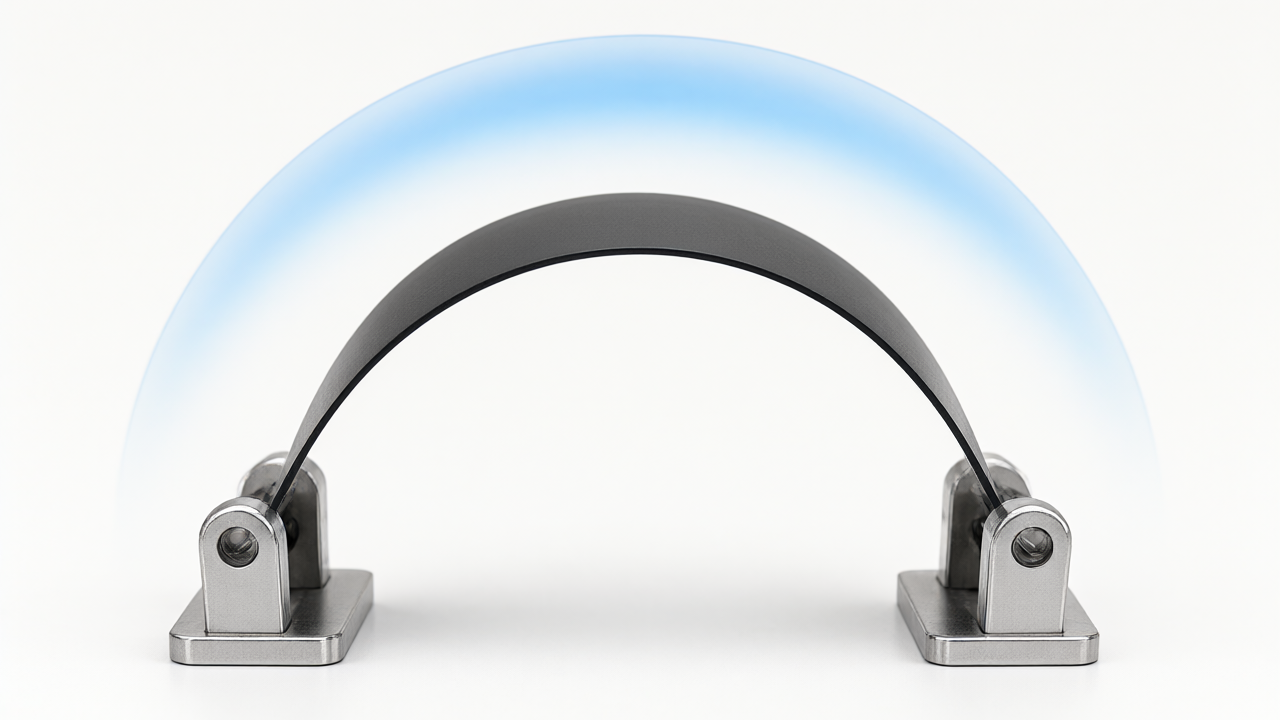
The developed EMI shielding film, approximately 0.1 mm thick, reduces electromagnetic energy to 1/100,000 of its original level. In folding tests with a curvature radius of 3 mm, the film maintained 99.4% of its shielding performance and 97.9% of its electrical conductivity after 400,000 repetitions, showing no visible external damage. Additionally, the material retained over 92.5% of its initial performance under harsh conditions, including high temperature, high humidity, artificial sweat, and rapid temperature fluctuations.
Technical Details
The research team solved the common issue of graphene aggregation—which typically degrades performance—by identifying the core molecular structure required for uniform dispersion. Instead of expensive specialty dispersants or chemical treatments that impair electrical properties, the team used triethylamine, a commercially available general-purpose substance. Graphene solutions using this additive showed no precipitation even after six months.
The film is produced via an eco-friendly water-based process that composites the uniformly dispersed graphene with:
- Flexible plastic materials for overall flexibility.
- Plant-derived cellulose nanofibers to reinforce bonding between graphene layers.
- Carbon nanotubes to maximize electrical conductivity.
These components create a brick-like structural arrangement that prevents cracking during repeated bending.
Background and Context
Graphene is highly valued for displays, future mobility, aerospace, and medical devices due to its lightweight nature and superior electrical conductivity. However, its tendency to clump has historically limited mass production. Previous solutions relied on complex synthesis or costly additives, creating barriers to industrial application.
Significance and Outlook
Because the process uses a water-based system and common materials, it can be integrated into existing roll-to-roll coating and film production lines without requiring equipment changes. This significantly lowers the barrier to mass production. The technology is positioned as a key material for next-generation electronic devices and automotive parts, particularly for solving heat and EMI interference issues in high-density, high-flexibility applications such as foldable displays.
Source: https://www.mtnews.net/news/articleView.html?idxno=26492
Get our weekly technology intelligence — free
Receive an infographic that lets you judge at a glance whether each field’s analysis report is worth reading.
Subscribe Free — Weekly Tech Intelligence
By subscribing, you’ll receive Troy-Technical’s weekly technology intelligence newsletter.
- Your email and selected fields are used only to deliver the newsletter.
- We never share your information with third parties.
- You can unsubscribe anytime via the link in each email.
See our Privacy Policy for details.
Takes about a minute · Unsubscribe anytime