


Key Findings
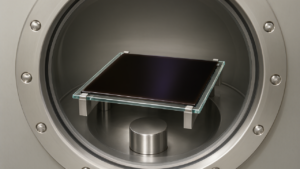
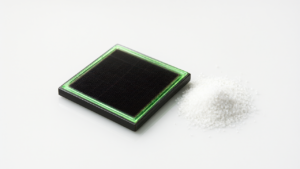
The University of Osaka research team has successfully fabricated a lead-based perovskite solar cell with a power conversion efficiency of 24.4 percent. This result was achieved by utilizing an automated robotic platform and machine learning algorithms to refine the antisolvent coating process and determine the optimal range for droplet behavior.
Technical Details
The platform integrates film deposition with high-resolution optical imaging and environmental measurements to track the transition from a liquid precursor solution to a solid crystalline film. To capture rapid physical changes, the system was designed with the following capabilities:
- Subsecond interval capture of film color variations.
- Millisecond-level resolution of the motion and impact of antisolvent droplets.
- Real-time tracking of the influence of humidity, temperature, and processing conditions on liquid crystallization.
Machine learning algorithms were employed to parse the large volumes of diagnostic data generated by the robotic system. This allowed the researchers to identify complex relationships between multifaceted processing variables and the resulting material outcomes that are typically undetectable via manual fabrication.
Background & Context
Perovskite solar cells generate electricity via a thin light-absorbing layer. A persistent challenge in manufacturing is that minor fluctuations in environmental conditions during the drying and crystallization phase can substantially alter electrical efficiency and film quality. Lead author Ryosuke Kado noted that the project sought to move beyond conventional trial-and-error by directly connecting real-time physical shifts to the final quality of the film.
Significance & Outlook
By unifying automated experimentation, real-time measurements, and statistical analysis, this platform provides a systematic protocol for uncovering previously unknown relationships between fabrication variables and thin-film quality. Senior author Akinori Saeki highlighted that automated instrumentation collects significantly richer information than manual methods. The researchers suggest this approach could catalyze photovoltaic research and support the development of more practical perovskite solar cells.
Get our weekly technology intelligence — free
Receive an infographic that lets you judge at a glance whether each field’s analysis report is worth reading.
Subscribe Free — Weekly Tech Intelligence
By subscribing, you’ll receive Troy-Technical’s weekly technology intelligence newsletter.
- Your email and selected fields are used only to deliver the newsletter.
- We never share your information with third parties.
- You can unsubscribe anytime via the link in each email.
See our Privacy Policy for details.
Takes about a minute · Unsubscribe anytime