


Key Findings
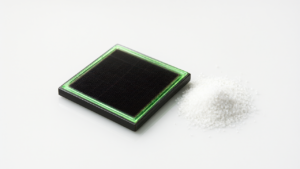
A research collaboration involving Microquanta Semiconductor, Zhejiang University, China Three Gorges Renewable, the Australian Centre for Advanced Photovoltaics, and the Zhejiang Provincial Key Laboratory of Optoelectronic Functional Materials and Devices has developed a perovskite mini-module reaching a certified steady-state efficiency of 23.9%. The device, featuring an aperture area of 19.48 cm², achieved a fill factor of 83.3%.
Technical Details
The team conducted an analysis to determine why perovskite solar cells lose efficiency during the transition from lab-scale devices to larger modules. Their findings identified the fill factor as a primary contributor to this efficiency drop. The researchers further categorized the fill factor deficit into three specific contributions:
- Voltage-related contributions
- Diode-non-ideality
- Transport-related contributions
To mitigate these losses, the team implemented a cryo-controlled processing step designed to regulate the evolution of an intermediate phase during crystallization. According to the researchers, the resulting improvement is mainly attributed to reduced diode non-ideality, with other contributions playing a smaller role. The team noted that the advantages of this processing approach increase as the device size grows.
Background and Context
The study focuses on the “scale-up gap,” where perovskite technologies often see a decline in performance when moving from small-scale laboratory cells to larger modules. By isolating the fill factor as the critical variable, the researchers were able to target the crystallization process to maintain performance across a larger surface area.
Significance and Outlook
Beyond initial efficiency, the researchers indicate that the same fill factor limitations that affect scale-up also govern performance decay during operation. This suggests a direct link between efficiency retention during the scaling process and the long-term stability of the solar cells, providing a potential pathway for improving the durability of large-area perovskite modules.
Get our weekly technology intelligence — free
Receive an infographic that lets you judge at a glance whether each field’s analysis report is worth reading.
Subscribe Free — Weekly Tech Intelligence
By subscribing, you’ll receive Troy-Technical’s weekly technology intelligence newsletter.
- Your email and selected fields are used only to deliver the newsletter.
- We never share your information with third parties.
- You can unsubscribe anytime via the link in each email.
See our Privacy Policy for details.
Takes about a minute · Unsubscribe anytime