

Key Findings
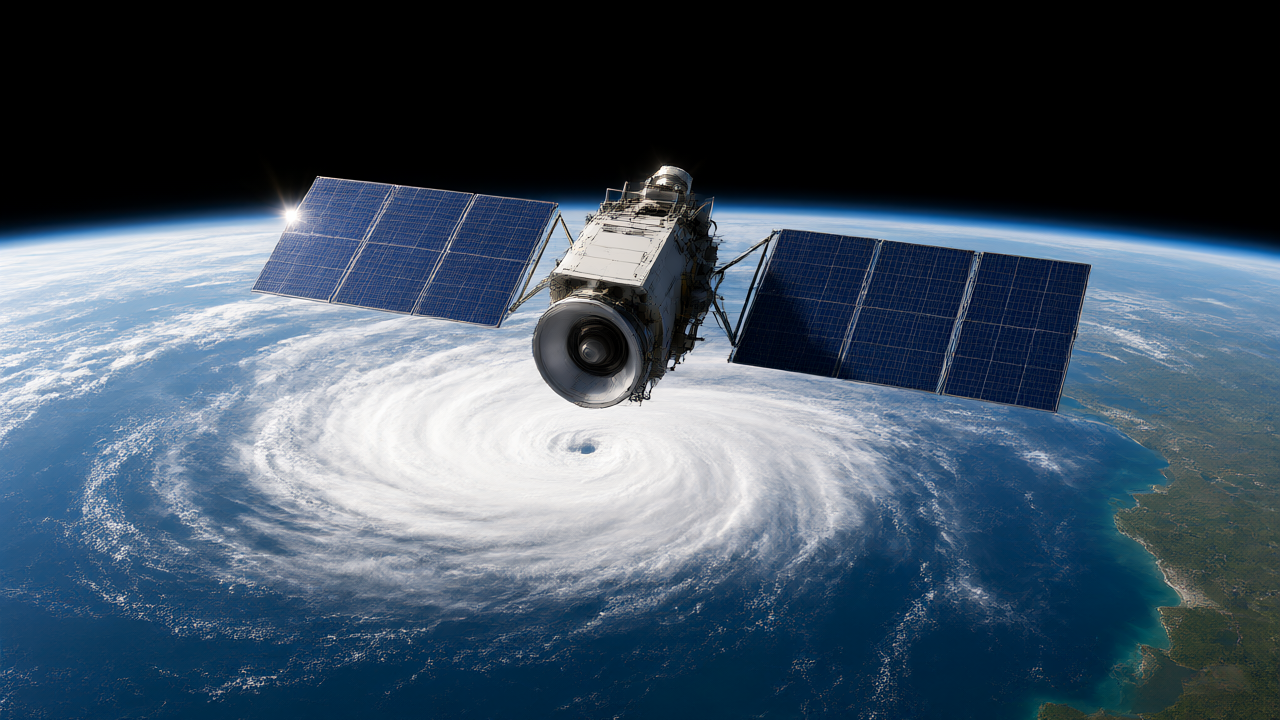
The Korea Meteorological Administration (KMA) has detailed the development plan for GEO-KOMPSAT-5, a next-generation geostationary meteorological satellite. The project represents a shift in procurement, as it is the first geostationary satellite in South Korea to be led by a private company, LIG D&A, rather than the Korea Aerospace Research Institute (KARI). The total project budget is 666.8 billion KRW, with the KMA contributing 543.4 billion KRW and the Korea AeroSpace Administration contributing 123.4 billion KRW.
Technical Details
GEO-KOMPSAT-5 will significantly improve observation resolution and sensor capabilities compared to the current GEO-KOMPSAT-2A:
- Observation Channels: Increased from 16 to 18 channels.
- Spatial Resolution: Visible imagery resolution improves from 0.5km to 0.25km; infrared imagery improves from 2km to 1km.
- Water Vapor Monitoring: Enhanced capabilities for observing lower-layer water vapor to improve predictions of heavy rainfall.
- Space Weather: Sensors will increase from 3 to 4, utilizing a magnetometer, satellite charging monitor, electron meter, and proton meter to support aviation safety and mitigate satellite interference.
Background & Context
The development period spans from April 2025 to December 2031. LIG D&A is responsible for the satellite system, bus, and meteorological payload, while KAIST is developing the space weather payload. KARI is managing technology transfer and the development of control and pre-processing systems. The project is currently in the preliminary design phase, with detailed design scheduled for next year, payload production in 2028, and final assembly and environmental testing in 2029 and 2030.
Significance & Outlook
To ensure continuity, the KMA plans to extend the operation of GEO-KOMPSAT-2A until late 2031 or 2032. Additionally, a ground station system will be developed between 2027 and 2031 at a cost of approximately 45.5 billion KRW, reusing existing antennas but replacing receivers to match the new frequency. These upgrades are intended to address the increasing unpredictability of weather patterns caused by climate change.
Source: https://www.newspim.com/news/view/20261106000354
Get our weekly technology intelligence — free
Receive an infographic that lets you judge at a glance whether each field’s analysis report is worth reading.
Subscribe Free — Weekly Tech Intelligence
By subscribing, you’ll receive Troy-Technical’s weekly technology intelligence newsletter.
- Your email and selected fields are used only to deliver the newsletter.
- We never share your information with third parties.
- You can unsubscribe anytime via the link in each email.
See our Privacy Policy for details.
Takes about a minute · Unsubscribe anytime