Key Findings
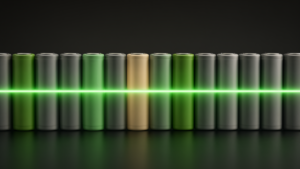
Integrating silica nanoparticles derived from solar panel waste into graphite anodes significantly improves battery performance. In laboratory coin half-cells, an anode composed of 95% graphite and 5% silica by weight delivered a capacity of 370.34 mAh/g after 100 cycles at 0.1 A/g, compared to 308.24 mAh/g for pure graphite. The blended anode also showed a first-cycle Coulombic efficiency of 86.17%, surpassing the 79.14% achieved by graphite alone. At a higher current of 1.0 A/g, the blended anode retained 24.6% of its capacity, which is approximately double the 12.5% retained by pure graphite.
Technical Details
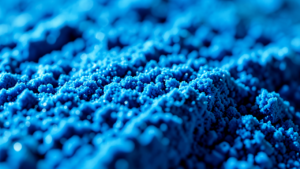
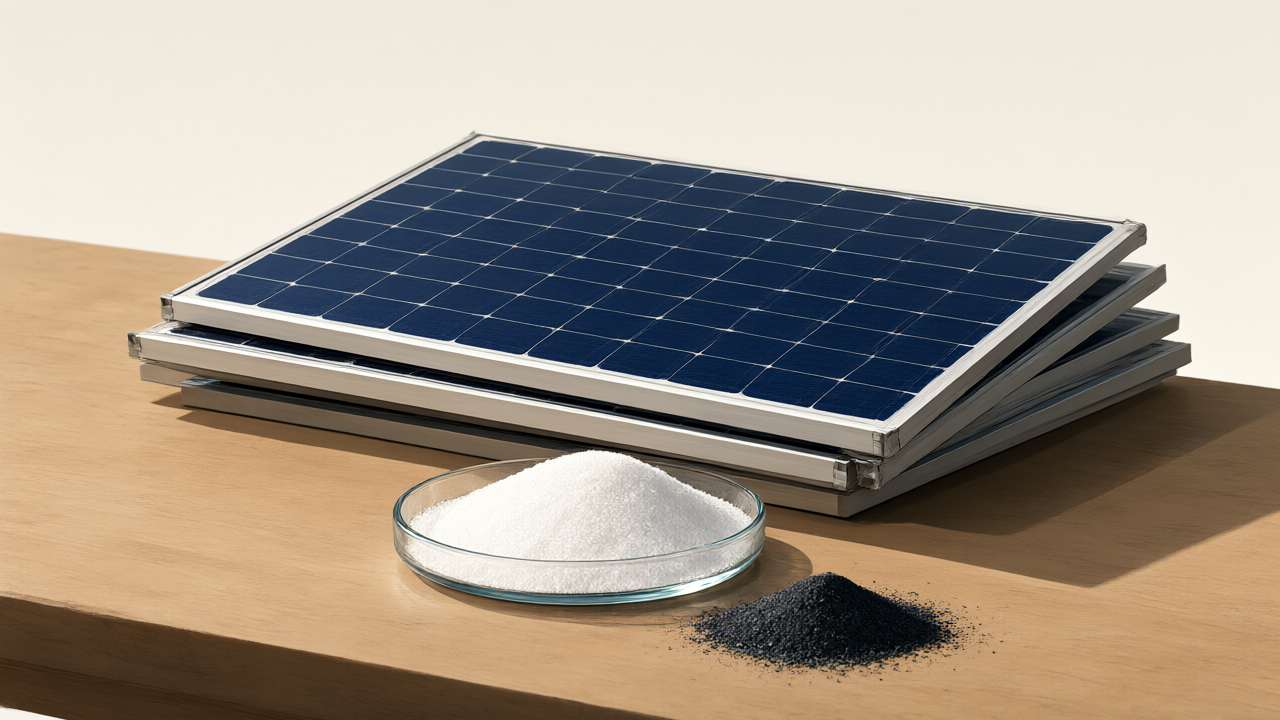
The production process begins by reacting silicon-containing powder from end-of-life panels with sodium hydroxide and water to create a sodium silicate solution. This solution serves as the precursor for a modified Stöber process, where silica particles are grown in an alkaline mixture of ammonia and alcohol. Unlike previous acid precipitation methods that tend to produce clumped particles, this alkaline route yields spherical particles with limited clumping without requiring surfactants or polymer additives.
- Particle Size: Solar waste-derived particles averaged 109 nm, while particles from commercial sodium silicate averaged 97 nm under identical conditions.
- Composition: Elemental analysis showed sodium at approximately 4% and aluminum at less than 1% of the measured atoms, which the researchers attributed to precursor residue and panel waste.
Background and Context
The study, published in the International Journal of Electrochemical Science, was funded by the Korea Environment Industry & Technology Institute and the National Research Foundation of Korea. This research aligns with South Korea’s extended producer responsibility rules for PV modules implemented in 2023, which saw 688 metric tons recycled in the first year. Other similar efforts include 2023 research in Australia and 2024 work by Gyeongsang National University to recover high-purity silicon powder for silicon oxide compounds.
Significance and Outlook
While the current study tested silica as-is, the researchers noted that converting these nanoparticles to silicon could allow for significantly higher lithium storage. Future research will focus on the reduction of these nanoparticles to silicon for use as silicon anode materials.
Get our weekly technology intelligence — free
Receive an infographic that lets you judge at a glance whether each field’s analysis report is worth reading.
Subscribe Free — Weekly Tech Intelligence
By subscribing, you’ll receive Troy-Technical’s weekly technology intelligence newsletter.
- Your email and selected fields are used only to deliver the newsletter.
- We never share your information with third parties.
- You can unsubscribe anytime via the link in each email.
See our Privacy Policy for details.
Takes about a minute · Unsubscribe anytime