Key Findings
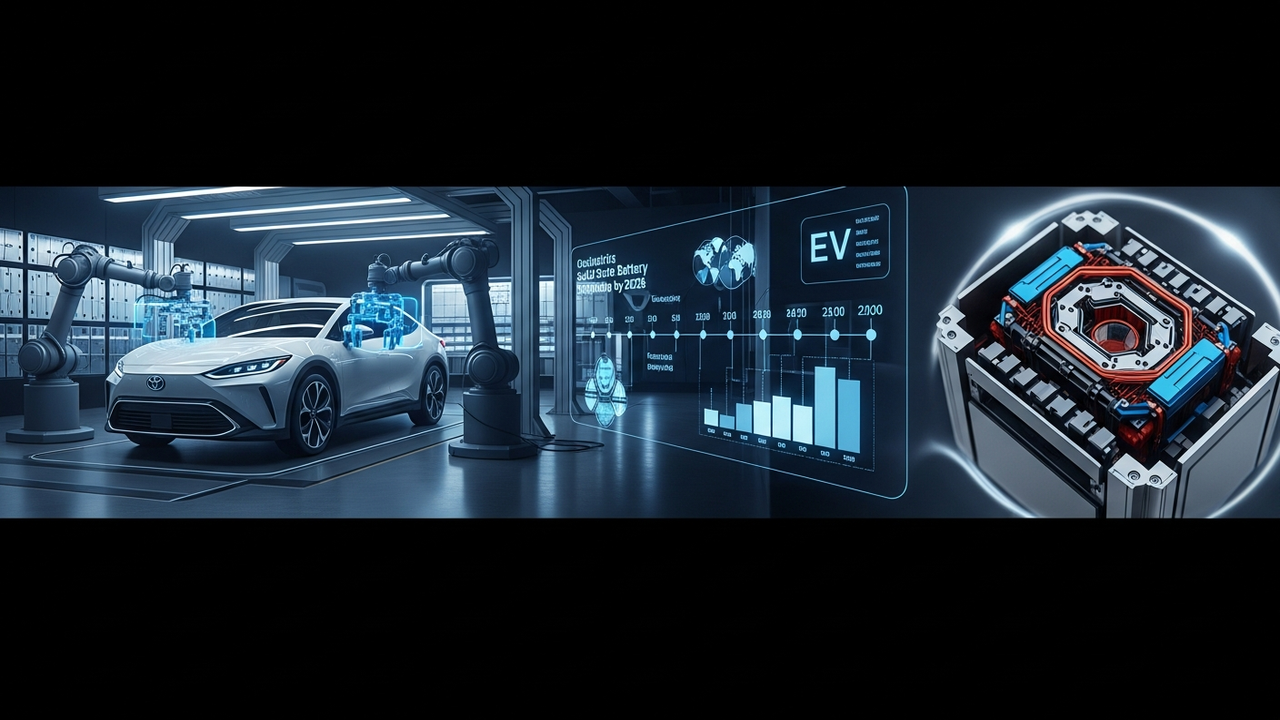
Toyota Motor Corporation has unveiled an ambitious and detailed production roadmap aimed at integrating its next-generation solid-state batteries into electric vehicles (EVs) by 2028. The roadmap meticulously outlines strategies to overcome various manufacturing challenges and achieve cost-effective mass production, underscoring the company’s commitment to leading the electric mobility revolution.
Technical / Clinical Details
Toyota’s solid-state battery development primarily focuses on sulfide-based solid electrolytes, targeting superior safety and higher energy density compared to conventional liquid-electrolyte lithium-ion batteries. The roadmap details plans to significantly expand pilot production line capabilities in the initial phase, concentrating on material selection, cell design optimization, and process refinements. Specific technical challenges include enhancing the stability of the solid electrolyte-electrode interface and reducing internal resistance. Furthermore, Toyota emphasizes the critical importance of establishing a robust and efficient supply chain through tight collaboration with suppliers, from raw material procurement to final assembly. Achieving cost-effective mass production is highlighted as contingent on process simplification and automation.
Background & Context
Toyota has been a long-standing pioneer in solid-state battery research and development. Solid-state batteries promise a significant reduction in leakage and fire risks, thereby enhancing EV safety, and are also expected to extend driving range through increased energy density. However, their mass production faces numerous technical and economic barriers, including cost, durability, and manufacturing complexity. Global automakers and battery manufacturers are in a fierce race to overcome these hurdles and commercialize solid-state batteries. Toyota’s concrete target year of 2028 and the public disclosure of its roadmap demonstrate a strong intent to be a frontrunner, potentially exerting considerable influence across the industry.
Strategic Significance & Outlook
Toyota’s 2028 target for EV integration of solid-state batteries is central to its electrification strategy. If the roadmap progresses as planned, it is expected to bring EVs with enhanced safety and performance to market, boosting consumer confidence and interest in electric mobility. Furthermore, the successful deployment of solid-state battery technology could open avenues for applications beyond automotive, such as stationary energy storage systems and drones, accelerating the adoption of next-generation energy storage solutions. Overcoming manufacturing challenges and achieving significant cost reductions remain paramount for success.
Source: https://reuters.com/toyota-solid-state-battery-roadmap-2026-06-15
Get our weekly technology intelligence — free
Receive an infographic that lets you judge at a glance whether each field’s analysis report is worth reading.
Subscribe Free — Weekly Tech Intelligence
By subscribing, you’ll receive Troy-Technical’s weekly technology intelligence newsletter.
- Your email and selected fields are used only to deliver the newsletter.
- We never share your information with third parties.
- You can unsubscribe anytime via the link in each email.
See our Privacy Policy for details.
Takes about a minute · Unsubscribe anytime