

Key Findings
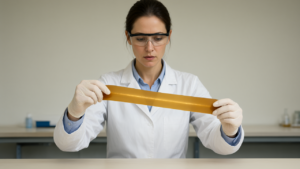
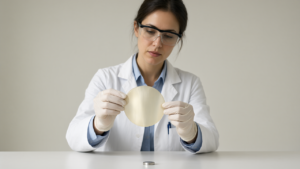
Researchers have developed a graphene-based polymer composite, abbreviated as UBNP-G, capable of self-healing in roughly 40 seconds. Unlike conventional thermally activated polymers that rely on inefficient external convection, this material uses electrical current to generate internal Joule heating. This mechanism allows for rapid repair at both room temperature and extremely low temperatures without external heat sources.
Technical Details
The composite consists of graphene fillers combined with a ureidopyrimidinone-functionalized poly(ε-caprolactone) supramolecular polymer. The high performance is attributed to a segregated conductive network formed by the interaction between the two-dimensional geometry of graphene and dynamic supramolecular interactions. This architecture results in electrical conductivity 10² to 10⁴ times higher than comparable composites using one-dimensional carbon nanotubes at equivalent filler loadings.
Molecular dynamics simulations were used to confirm that distinct filler–polymer interactions drive the phase separation required to concentrate conductive pathways. Additionally, the material serves as its own damage sensor; monitoring electrical resistance provides a reliable measure of structural damage and subsequent recovery, as breaks in the network register as resistance changes.
Background & Context
Traditional self-healing polymers often require lengthy recovery times due to the inefficiency of external heating. To solve this, the researchers integrated a percolated conductive filler network directly into the polymer matrix. The study highlights the importance of filler shape, noting that while one-dimensional fillers remain randomly dispersed, two-dimensional graphene drives the phase separation necessary for efficient electrothermal conversion.
Significance & Outlook
The UBNP-G composite provides a multifunctional strategy for structural health monitoring and repair. Because a single filler system handles Joule heating, sensing, and mechanical integration, it is suitable for demanding environments where ambient heat is unavailable. While these findings currently describe laboratory performance, the combination of seconds-scale healing and resistance-based detection represents a step toward autonomous composites for diverse environmental conditions.
Get our weekly technology intelligence — free
Receive an infographic that lets you judge at a glance whether each field’s analysis report is worth reading.
Subscribe Free — Weekly Tech Intelligence
By subscribing, you’ll receive Troy-Technical’s weekly technology intelligence newsletter.
- Your email and selected fields are used only to deliver the newsletter.
- We never share your information with third parties.
- You can unsubscribe anytime via the link in each email.
See our Privacy Policy for details.
Takes about a minute · Unsubscribe anytime