


Key Findings
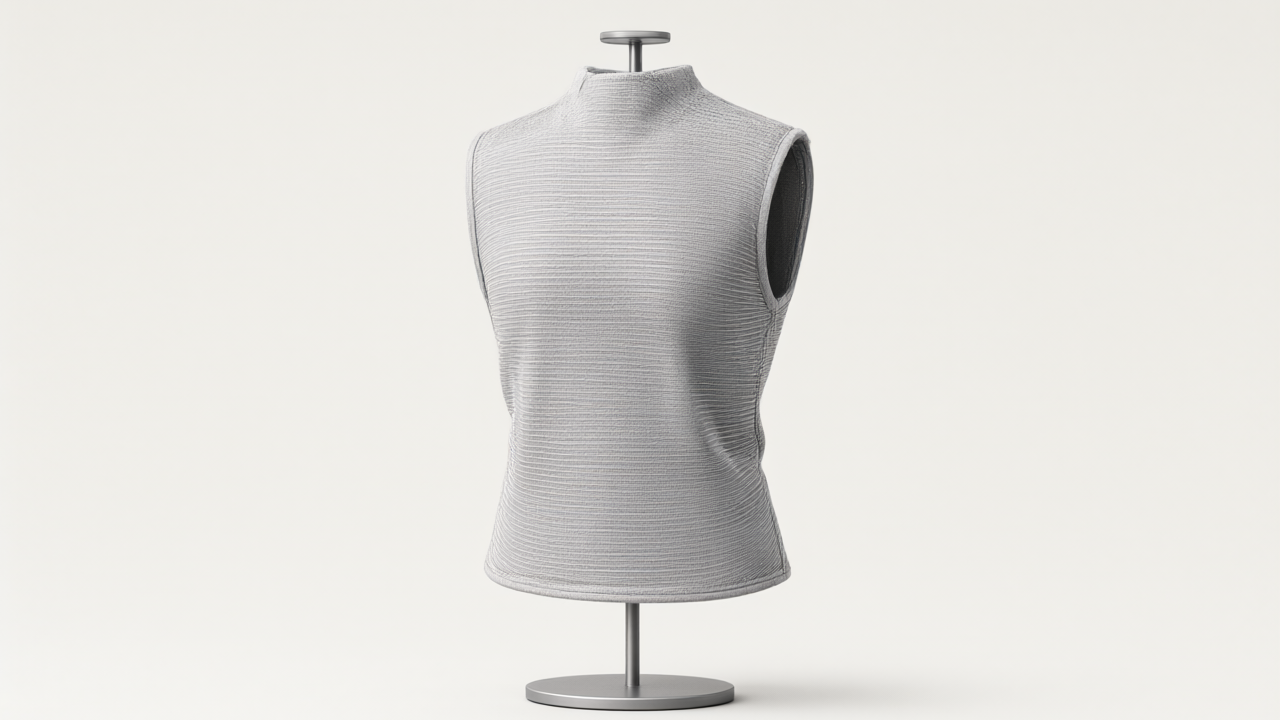
The Bionic Suit, developed by Sartexo and the Korea Institute of Machinery and Materials, utilizes a specialized muscle fabric to assist movements in the lower back, shoulders, and elbows. Tests using electromyography sensors demonstrated that wearing the suit reduces lower-back muscle activity by more than 40% during repeated dumbbell lifts. While muscle fatigue typically increases with repeated lifts, the suit maintains consistently low muscle activity, significantly reducing fatigue during heavy-load tasks.
Technical Details
The core technology consists of shape-memory alloy wires processed into coils 40 micrometers thick—less than half the thickness of a human hair. These coils are woven into a fabric that contracts when heated by an electric current and relaxes via air cooling. This coil structure overcomes the 4% to 5% contraction limit of ordinary shape-memory alloy wires, allowing the fabric to more closely mimic human muscle contraction (which can reach 40%).
- Force Output: 10 grams of muscle fabric can generate enough force to lift objects weighing 10 to 15 kilograms.
- Safety Measures: To protect the wearer, the suit includes an insulating layer and flame-retardant materials to keep skin temperature at or below 40 degrees Celsius. Temperature sensors provide automatic power cutoff during overheating, and a cooling fan is included for outdoor use.
Background and Context
Principal researcher Park Chul-hoon began researching shape-memory alloys in 2012 for humanoid robots before pivoting to wearable technology to improve conditions for delivery drivers and laborers. The resulting “Bionic Suit Full” is the world’s first garment-type wearable robot capable of assisting three joints simultaneously without the use of motors or rigid frames.
Significance and Outlook
Sartexo has transitioned from manual coil joining to automated weaving technology to increase productivity for commercialization. The company is targeting B2B sales in logistics, construction, manufacturing, and defense, with projected pricing for lower-back assist models ranging from under 1 million won to the mid-1 million-won range. Future expansion into B2C markets for older adults and people with disabilities is planned pending medical device certification.
Source: https://en.sedaily.com/business/2026/11/18/wearable-robot-with-muscle-fabric-lifts-1500-times-its
Get our weekly technology intelligence — free
Receive an infographic that lets you judge at a glance whether each field’s analysis report is worth reading.
Subscribe Free — Weekly Tech Intelligence
By subscribing, you’ll receive Troy-Technical’s weekly technology intelligence newsletter.
- Your email and selected fields are used only to deliver the newsletter.
- We never share your information with third parties.
- You can unsubscribe anytime via the link in each email.
See our Privacy Policy for details.
Takes about a minute · Unsubscribe anytime