Key Findings
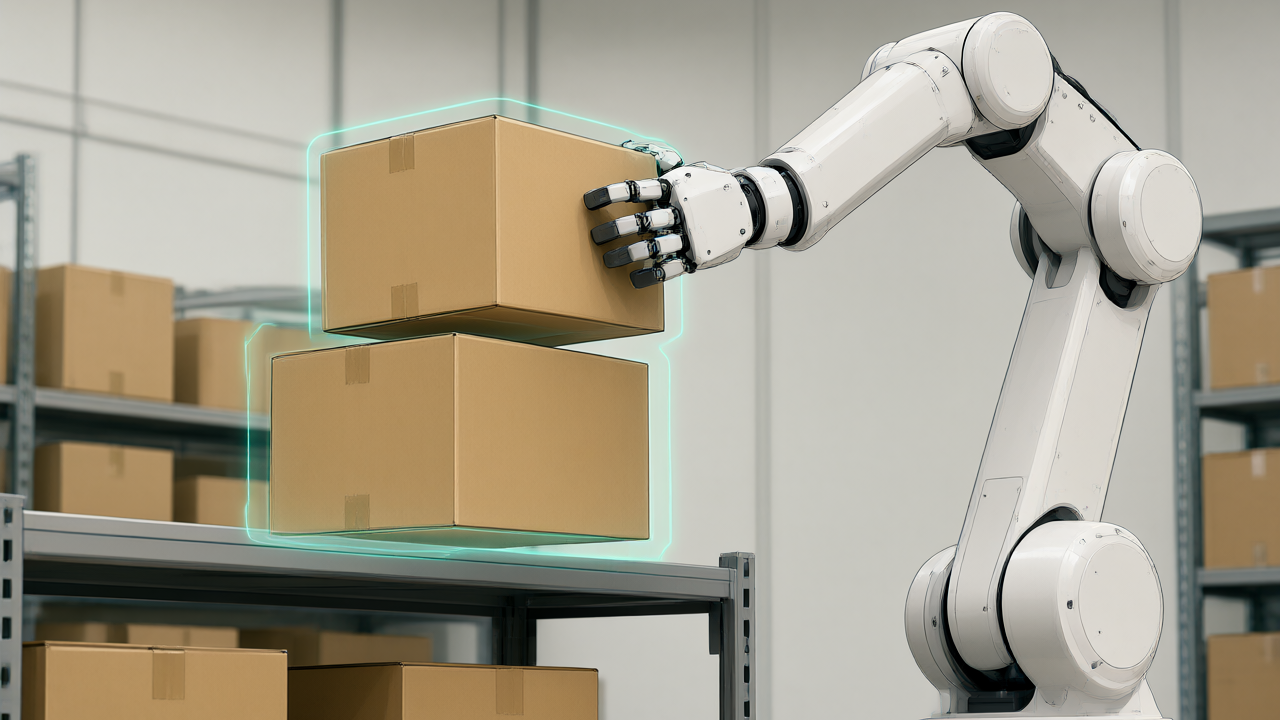
NTT has developed a physical AI technology capable of predicting and evaluating the outcomes of robotic actions, such as cargo collapse or falling objects, before they occur. In simulated shelf-stacking experiments using small robots, the implementation of this technology increased the task success rate from 73.1% to 92.3%. Additionally, the system demonstrated superior prediction accuracy over conventional methods in the “OBJ3D” public benchmark for video prediction involving multiple colliding objects, as measured by the LPIPS metric.
Technical Details
The technology utilizes a proprietary world model that explicitly handles physical quantities—including mass, position, posture, and velocity—to predict future states based on laws of physics and equations of motion. A core innovation is the “physical control adapter,” which NTT has integrated into a video generation model for the first time. This adapter estimates physical properties from camera imagery and calculates subsequent movements based on physical laws, reducing errors such as object disappearance or deformation common in traditional world models.
The “NTT World Model” functions as a reinforcement layer for existing robot control software. It evaluates action candidates generated by “VLA” (which outputs actions from images and language) or “motion planners” (which calculate control for target goals). The system generates predicted future videos for each candidate action, allowing the robot to select the path that avoids collisions or collapses.
Background & Context
Conventional world models often rely heavily on massive datasets and fail to explicitly handle physical quantities, leading to inaccurate predictions of object interactions. In environments like airport baggage handling or courier services, where item shapes and weights vary wildly, collecting exhaustive training data is impractical. By basing predictions on physical laws rather than just data patterns, NTT’s model can handle scenarios not present in its training sets.
Significance & Outlook
NTT intends to first apply this technology to the loading and unloading of diverse airport luggage. The company is collaborating with Mujin to advance social implementation and plans to partner with robot service vendors and logistics operators. Future expansion is planned for the manufacturing, construction, and retail sectors to address labor shortages and improve productivity.
Source: https://aismiley.co.jp/ai_news/ntt-physical-ai-world-model/
Get our weekly technology intelligence — free
Receive an infographic that lets you judge at a glance whether each field’s analysis report is worth reading.
Subscribe Free — Weekly Tech Intelligence
By subscribing, you’ll receive Troy-Technical’s weekly technology intelligence newsletter.
- Your email and selected fields are used only to deliver the newsletter.
- We never share your information with third parties.
- You can unsubscribe anytime via the link in each email.
See our Privacy Policy for details.
Takes about a minute · Unsubscribe anytime