

Key Findings
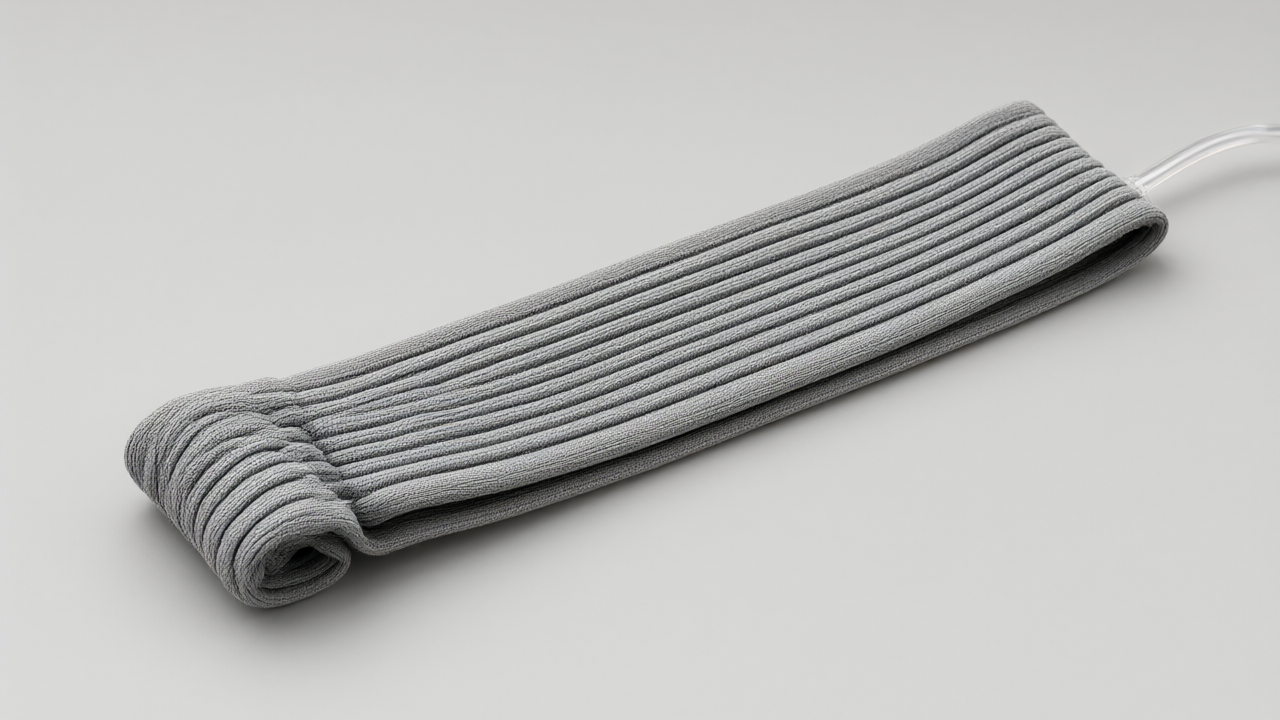
The Bionic Suit, developed by Park Chul-hoon (CEO of Sartexo and principal researcher at the Korea Institute of Machinery and Materials), utilizes a specialized “muscle fabric” to assist movements of the lower back, shoulders, and elbows. Experimental data using electromyography sensors shows that wearing the suit reduces activity in lower-back muscles by more than 40% during repeated dumbbell lifts. Furthermore, the suit maintains consistent muscle activity levels over time, significantly reducing fatigue compared to lifting without assistance.
Technical Details
The core technology consists of shape-memory alloy wires processed into coils 40 micrometers thick—less than half the thickness of a human hair. While standard shape-memory alloy wire only contracts by 4% to 5%, the coil structure allows the fabric to mimic human muscle contraction, which can reach 40%. The fabric operates via thermal activation: current flows through the fabric to heat the alloy, causing it to contract and generate force. Due to the fineness of the coils, the system relaxes via air cooling without requiring a dedicated cooling device.
Safety features include:
- An insulating layer and flame-retardant materials to keep skin temperature at or below 40 degrees Celsius.
- Temperature sensors that automatically cut off power during overheating.
- Integrated cooling fans for outdoor workers in logistics and construction.
Background and Context
Research began in 2012 focusing on artificial muscles for humanoid robots before shifting toward wearable solutions for delivery drivers and laborers. The resulting “Bionic Suit Full” is the world’s first garment-type robot to assist the lower back, shoulders, and elbows simultaneously in a single piece, avoiding the use of rigid frames or motors.
Significance and Outlook
Sartexo has transitioned from manual coil joining to automated weaving technology to increase productivity. The company is targeting B2B sales in defense, manufacturing, construction, and logistics, with projected pricing for lower-back models ranging from under 1 million won to the mid-1 million-won range. Future expansion into the B2C market for the elderly and people with disabilities is contingent upon obtaining medical device certification.
Source: https://en.sedaily.com/business/2026/11/18/wearable-robot-with-muscle-fabric-lifts-1500-times-its
Get our weekly technology intelligence — free
Receive an infographic that lets you judge at a glance whether each field’s analysis report is worth reading.
Subscribe Free — Weekly Tech Intelligence
By subscribing, you’ll receive Troy-Technical’s weekly technology intelligence newsletter.
- Your email and selected fields are used only to deliver the newsletter.
- We never share your information with third parties.
- You can unsubscribe anytime via the link in each email.
See our Privacy Policy for details.
Takes about a minute · Unsubscribe anytime