
Key Findings
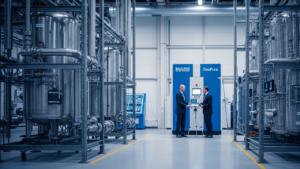
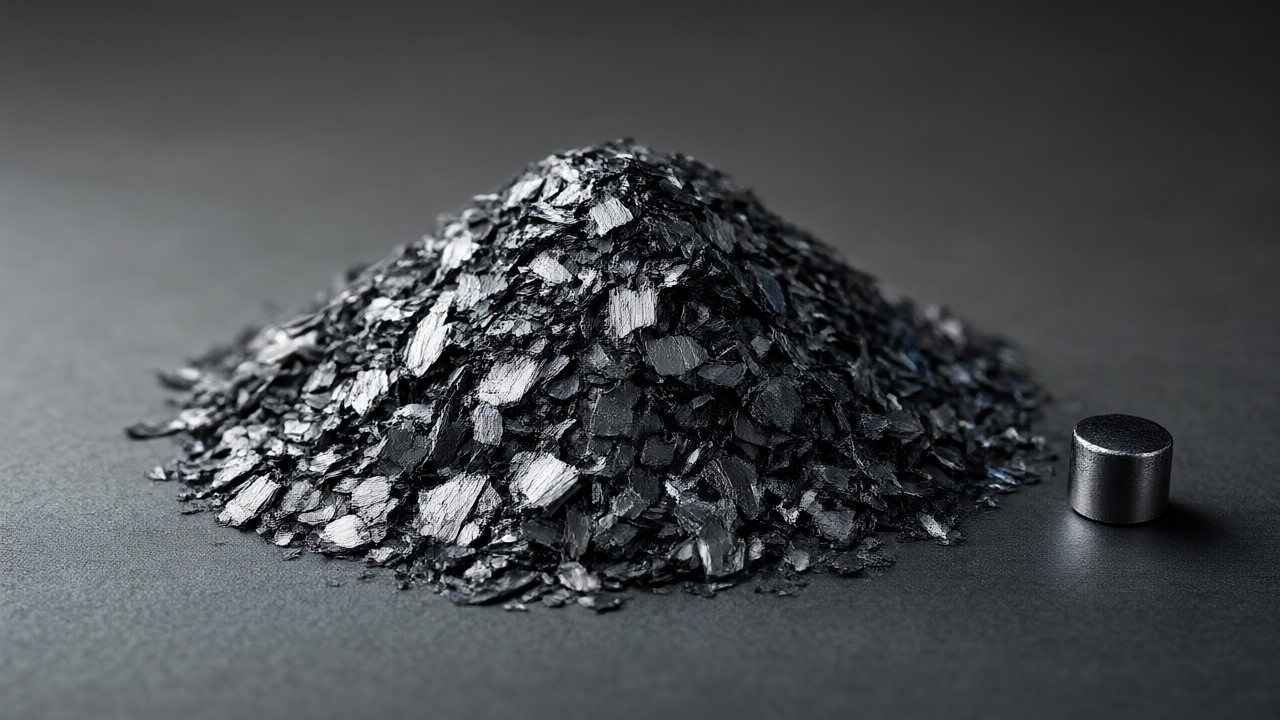
Molten Industries has commenced operations at its Oakland, California, demonstration plant, marking the first facility globally to produce battery-grade graphite from natural gas at a commercial scale. The plant utilizes a single full-scale modular reactor to convert methane into carbon and hydrogen without the use of oxygen, combustion, or the emission of CO₂.
Technical Details
The production process employs methane pyrolysis to split natural gas into its elemental components. According to the company, this method offers several technical and economic advantages over conventional synthetic graphite production:
- Efficiency: The process uses 3× less electricity and 4× cheaper feedstock.
- Infrastructure: It eliminates the need for a graphitization furnace.
- Environmental Impact: The process produces zero process emissions.
- Yield and Capacity: The Oakland plant has a capacity of 300 metric tons of graphite anode production per year, with yields exceeding 95%.
In addition to battery-grade graphite, the process generates clean hydrogen as a by-product, which is used in the production of steel, semiconductors, methanol, refined petroleum products, and ammonia fertilizer.
Background & Context
Graphite is essential for lithium-ion batteries used in electric vehicles, robotics, drones, grid storage, and data centers, as well as for jet engines, nuclear reactors, and semiconductor processing. While the U.S. has domestic sources for nuclear and steelmaking graphite, it remains heavily dependent on foreign sources for battery-grade material; currently, China controls 96% of global battery graphite processing.
Significance & Outlook
The operational status of the Oakland plant demonstrates a 100%-U.S.-made pathway for critical battery materials using widely available domestic natural gas. CEO Kevin Bush noted that while splitting natural gas was patented in 1889, the company has developed the technology necessary to produce high-quality graphite. The modular reactor serves as the fundamental building block for future larger-scale production facilities.
Source: https://www.mining.com/molten-industries-launches-first-us-graphite-plant-using-natural-gas/
Get our weekly technology intelligence — free
Receive an infographic that lets you judge at a glance whether each field’s analysis report is worth reading.
Subscribe Free — Weekly Tech Intelligence
By subscribing, you’ll receive Troy-Technical’s weekly technology intelligence newsletter.
- Your email and selected fields are used only to deliver the newsletter.
- We never share your information with third parties.
- You can unsubscribe anytime via the link in each email.
See our Privacy Policy for details.
Takes about a minute · Unsubscribe anytime