Key Findings
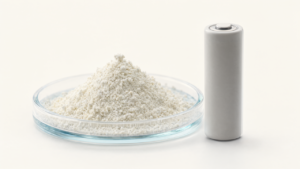
A significant breakthrough in solid-state electrolyte synthesis has been reported by the U.S. Office of Scientific and Technical Information (OSTI), detailing the successful solvent-based production of fluorine (F)-doped and dual (F-/Cl-, F-/Br-) doped Li argyrodite solid electrolytes. This innovative approach overcomes the inherent challenges of high-temperature synthesis methods. Notably, the F-doped Li6PS5F0.5Cl0.5 composition achieved an impressive lithium-ion conductivity of 3.5 × 10⁻⁴ S cm−1 at room temperature and demonstrated superior stability against lithium metal in symmetric cells, positioning it as a highly promising material for all-solid-state lithium metal batteries.
Technical / Clinical Details
The study focused on improving the properties of sulfide-based Li argyrodite solid electrolytes, which are known for their high ionic conductivity but can suffer from stability issues with lithium metal and during high-temperature synthesis. The key advancements include:
- Solvent-Based Synthesis: This method provides a lower-temperature alternative to conventional high-temperature solid-state reactions, offering better control over material homogeneity, reducing energy consumption, and simplifying the manufacturing process.
- High Ionic Conductivity: The F-doped Li6PS5F0.5Cl0.5 composition exhibited a robust lithium-ion conductivity of 3.5 × 10⁻⁴ S cm−1 at room temperature, which is a critical performance metric for efficient charge transport in SSBs.
- Superior Lithium Metal Compatibility: Electrochemical evaluations in symmetric Li/SSE/Li cells confirmed that the F-doped and dual-doped electrolytes possess excellent stability against lithium metal. This is vital for mitigating lithium dendrite growth and minimizing parasitic side reactions at the anode interface, which are major obstacles to long-term battery performance and safety.
- Stability Enhancement Mechanism: X-ray photoelectron spectroscopy (XPS) analysis provided insights into the underlying mechanism of enhanced stability. It revealed that conductive Li3P, along with co-present LiCl and LiF, contribute to the formation of a stable solid electrolyte interphase (SEI) layer between the electrolyte and lithium metal, which is crucial for overall cell longevity.
These combined properties make these doped argyrodite electrolytes highly attractive for high-power and long-lifetime all-solid-state lithium metal batteries.
Background & Context
All-solid-state lithium metal batteries are considered the ultimate next-generation energy storage solution due to their potential for significantly higher energy densities and intrinsic safety compared to conventional liquid-electrolyte lithium-ion batteries. However, major barriers to their commercialization have been the poor interfacial stability between the lithium metal anode and the solid electrolyte, particularly the growth of lithium dendrites, and the need for solid electrolytes with sufficient ionic conductivity. Sulfide-based solid electrolytes have garnered significant attention due to their high ionic conductivity, but their synthesis and stability still require improvement. The solvent-based synthesis and strategic doping demonstrated in this research represent a crucial step towards overcoming these challenges and accelerating the practical application of all-solid-state lithium metal batteries.
Strategic Significance & Outlook
The successful synthesis of these F-doped Li argyrodite solid electrolytes marks a substantial advancement towards the commercialization of all-solid-state lithium metal batteries. Future work will likely involve integrating these materials into full cells (including cathode materials), conducting further long-term cycling stability tests, and optimizing cost-effective manufacturing processes for large-scale production. This technology has the potential to accelerate the adoption of next-generation batteries in a wide range of applications, including extending the driving range of electric vehicles and enhancing the battery life of portable electronic devices. The development of stable and high-performing solid electrolytes is an indispensable component in building a sustainable energy future.
Source: https://www.osti.gov/servlets/purl/1867866
Get our weekly technology intelligence — free
Receive an infographic that lets you judge at a glance whether each field’s analysis report is worth reading.
Subscribe Free — Weekly Tech Intelligence
By subscribing, you’ll receive Troy-Technical’s weekly technology intelligence newsletter.
- Your email and selected fields are used only to deliver the newsletter.
- We never share your information with third parties.
- You can unsubscribe anytime via the link in each email.
See our Privacy Policy for details.
Takes about a minute · Unsubscribe anytime