Key Findings
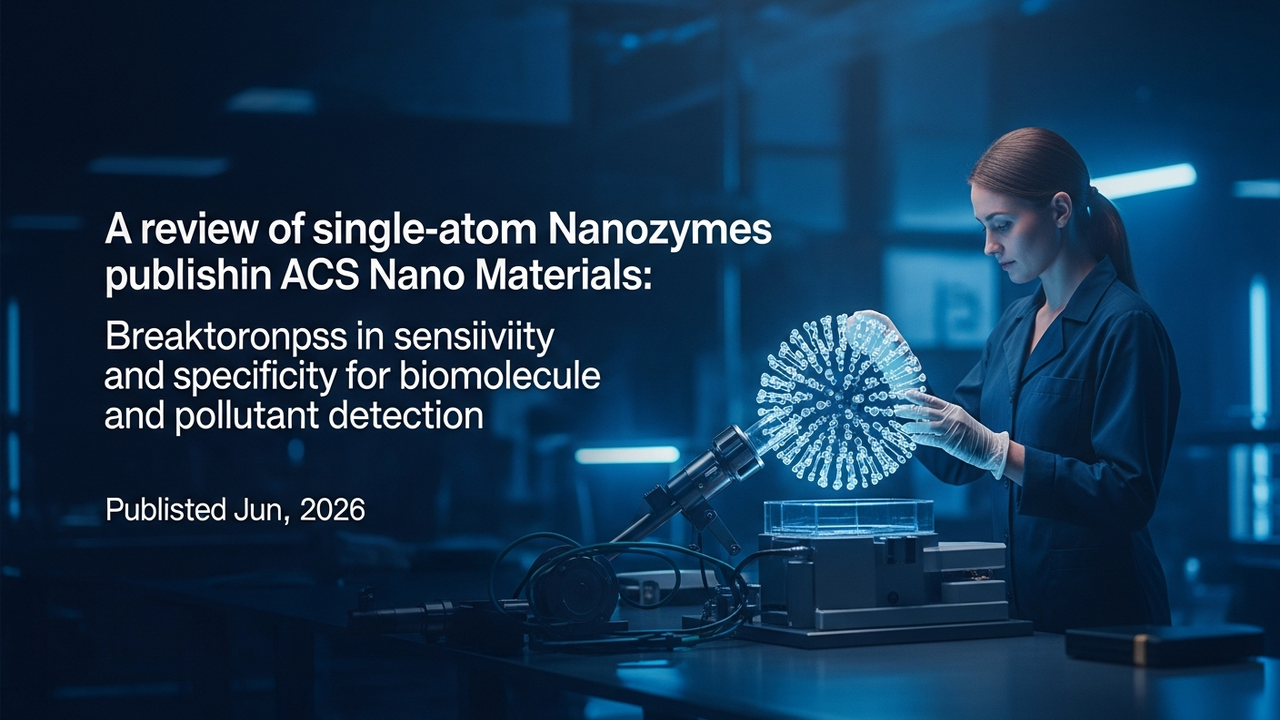
According to a review article published in ACS Applied Nano Materials, single-atom nanozymes (SAzymes) have been identified as dramatically reducing limits of detection (LOD) and significantly enhancing detection sensitivity and specificity compared to conventional analytical techniques, attributed to their exceptional substrate reaction catalysis. SAzymes, by combining the unique physical properties of nanomaterials with enzyme-like catalytic activity, are emerging as low-cost, high-performance sensing tools that are powerfully driving technological innovation across diverse fields such as environmental monitoring, food safety, and biomedical diagnostics. Their facile integration with portable devices, including smartphones, is particularly noteworthy, enabling rapid and highly accurate on-site detection and paving the way for broad applications.
Technical / Clinical Details
SAzymes possess a structure where single metal atoms (e.g., Fe, Co, Pt) are uniformly dispersed and anchored onto nanoscale support materials (e.g., graphene, metal oxides). These single-atom sites ensure maximum catalytic activity, reacting with specific biomolecules or chemical substances with enzyme-like efficiency. For example, in the detection of hydrogen peroxide (H2O2), SAzymes exhibit peroxidase-like activity, enabling the detection of H2O2 concentrations at nanomolar levels through colorimetric reactions. This ultra-high sensitivity represents a significant improvement over traditional nanozymes and natural enzymes, making them extremely effective for detecting trace biomarkers and pollutants. Furthermore, SAzymes demonstrate high stability across a broad range of pH and temperatures, and possess excellent shelf-life, making them suitable for field use and long-term monitoring. Their integration into portable devices means SAzyme-incorporated sensing platforms can be designed for instant, high-precision detection of specific biomarkers (e.g., glucose in diabetic patients, specific pathogen DNA, or allergens in food).
Background & Context
Highly sensitive and specific detection technologies are indispensable for public health, environmental protection, and ensuring food supply safety. However, existing high-performance analytical methods often require expensive, complex instrumentation and specialized operation. The advent of SAzymes fills this gap, offering more accessible and cost-effective solutions. SAzymes hold potential for addressing a wide range of challenges, including rapid detection of antibiotic-resistant bacteria, screening for harmful additives in food, and monitoring water pollutants. This technology is expected to play a critical role in enhancing diagnostic and monitoring capabilities, particularly in developing countries and remote areas.
Strategic Significance & Outlook
While research into single-atom nanozymes is still a relatively young field, their application potential is vast. In the future, SAzymes are likely to be integrated into multiplexed sensing platforms, enabling the simultaneous detection of multiple targets. Furthermore, their fusion with AI could allow SAzyme-based sensors to analyze vast amounts of collected data for more complex diagnoses and predictive analytics. The incorporation into wearable biosensors also offers the potential for continuous monitoring of individual health status, contributing to early disease detection and prevention. As one of the key pillars of next-generation biosensing technology, SAzymes are expected to exert a significant impact on science and society through their innovative capabilities.
Source: https://pubs.acs.org/doi/10.1021/acsanm.6c01129
Get our weekly technology intelligence — free
Receive an infographic that lets you judge at a glance whether each field’s analysis report is worth reading.
Subscribe Free — Weekly Tech Intelligence
By subscribing, you’ll receive Troy-Technical’s weekly technology intelligence newsletter.
- Your email and selected fields are used only to deliver the newsletter.
- We never share your information with third parties.
- You can unsubscribe anytime via the link in each email.
See our Privacy Policy for details.
Takes about a minute · Unsubscribe anytime








Comments