Background and Context
The development of high-performance energy materials (e.g., next-generation battery and fuel cell materials), microbes for producing new drugs and biofuels, and materials supporting cutting-edge computing technologies like quantum computing, are directly linked to national economic competitiveness and security. However, the traditional “hypothesis-experiment-validation” cycle is time-consuming and costly, limiting the pace of discovery. AI-driven autonomous labs are positioned as strategic investments to overcome these bottlenecks and enable faster, more efficient scientific discovery.
Key Initiatives and Findings
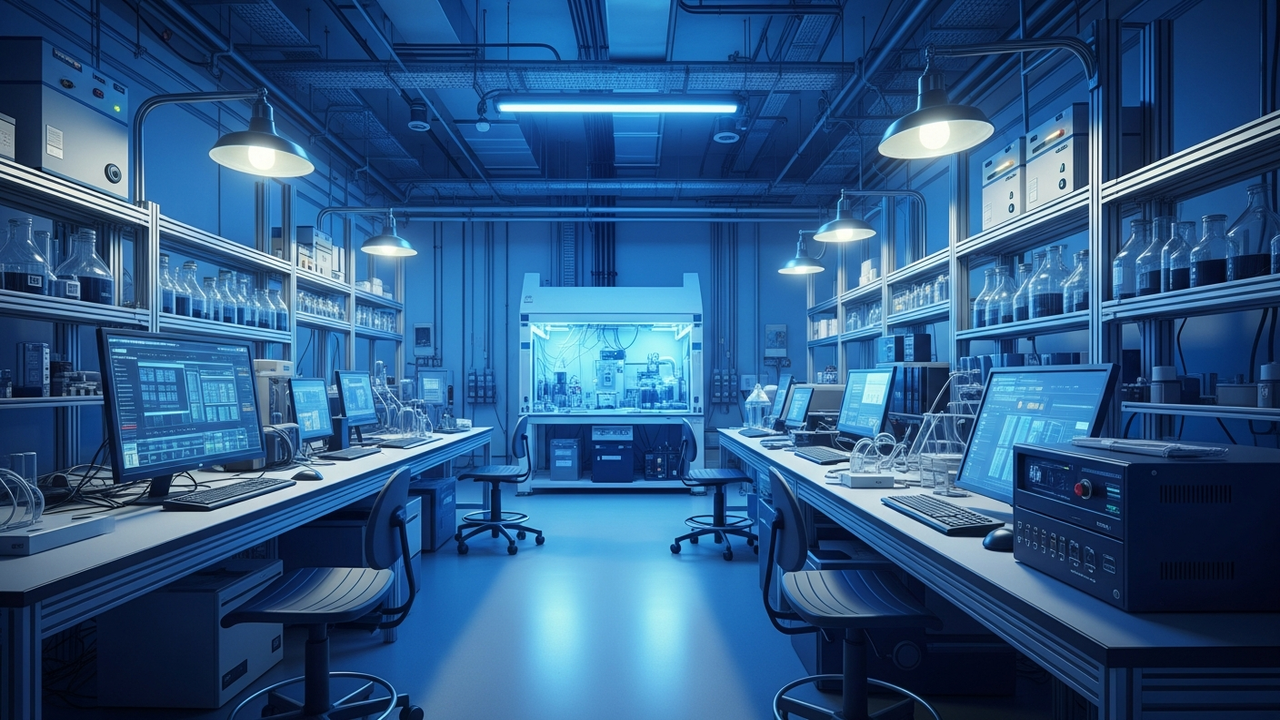
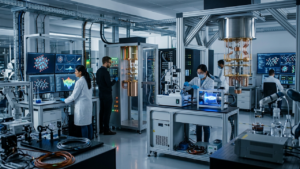
The U.S. Department of Energy (DOE) is prioritizing the advancement of AI-driven autonomous laboratories to accelerate scientific discovery of novel materials and molecules across critical sectors such as energy, computing, and biotechnology. Lawrence Berkeley National Laboratory’s A-Lab serves as a successful illustration of a closed-loop process for autonomous prediction, synthesis, and testing. Furthermore, Pacific Northwest National Laboratory’s BacterAI platform is optimizing microbes for bioproduction through the synergistic combination of reinforcement learning and lab automation. These initiatives aim to dramatically enhance the efficiency and pace of scientific research and innovation.
Technical Deep Dive: How Autonomous Labs Work
The DOE’s push for AI-driven autonomous labs integrates multiple cutting-edge technologies and systems:
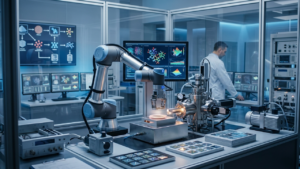
- Lawrence Berkeley National Laboratory’s A-Lab: Cited as a prime example of an autonomous laboratory, A-Lab establishes a closed-loop process where AI predicts material properties, robots autonomously synthesize materials based on these predictions, and the synthesized materials are then automatically tested and evaluated. This iterative cycle enables the discovery and development of optimal materials with minimal human intervention, having demonstrated its effectiveness particularly in the exploration of inorganic materials.
- Pacific Northwest National Laboratory (PNNL)’s BacterAI Platform: BacterAI optimizes microbes used in bioproduction by combining reinforcement learning with lab automation. A reinforcement learning agent autonomously adjusts culture conditions, nutrient formulations, and genetic modification strategies to explore the most efficient bioproduction pathways. Automated experimental systems execute the AI’s decisions, collect real-time data, and feed it back to the AI, thereby accelerating the discovery cycle.
- Data-Driven Discovery: These labs are designed to automatically generate and collect vast amounts of experimental data. AI then processes this data to recognize patterns and generate new hypotheses, fostering the discovery of potential relationships or non-intuitive insights that might be overlooked by human researchers.
These systems transcend the boundaries of physics, chemistry, biology, and computational science, driving discoveries across multiple scientific domains.
Strategic Outlook and Future Vision
The DOE’s aggressive investment in AI-driven autonomous laboratories is fundamentally transforming scientific methodology. This will enable the exploration of complex materials and biological systems previously intractable, leading to expected improvements in energy efficiency, accelerated drug development, and innovative solutions to environmental challenges. In the future, these autonomous labs are anticipated to collaborate and evolve into “networks of labs,” addressing even larger and more complex scientific problems, and providing groundbreaking solutions to humanity’s most pressing challenges.
Get our weekly technology intelligence — free
Receive an infographic that lets you judge at a glance whether each field’s analysis report is worth reading.
Subscribe Free — Weekly Tech Intelligence
By subscribing, you’ll receive Troy-Technical’s weekly technology intelligence newsletter.
- Your email and selected fields are used only to deliver the newsletter.
- We never share your information with third parties.
- You can unsubscribe anytime via the link in each email.
See our Privacy Policy for details.
Takes about a minute · Unsubscribe anytime


Comments