Background
Lithium-ion batteries, despite their widespread adoption in electric vehicles (EVs) and portable electronics, grapple with inherent challenges including raw material scarcity, high costs, and significant safety concerns like thermal runaway. Zinc-ion batteries, conversely, present compelling advantages as a next-generation alternative, leveraging abundant and inexpensive zinc, coupled with enhanced safety due to their compatibility with aqueous electrolytes. Historically, however, zinc-ion technology has been hampered by lower energy density and limited cycle life compared to its lithium-ion counterparts. The integration of advanced manufacturing techniques such as 3D printing holds transformative potential to revolutionize electrode architectures, thereby substantially improving the performance of zinc-ion batteries and surmounting these critical limitations.
Key Findings
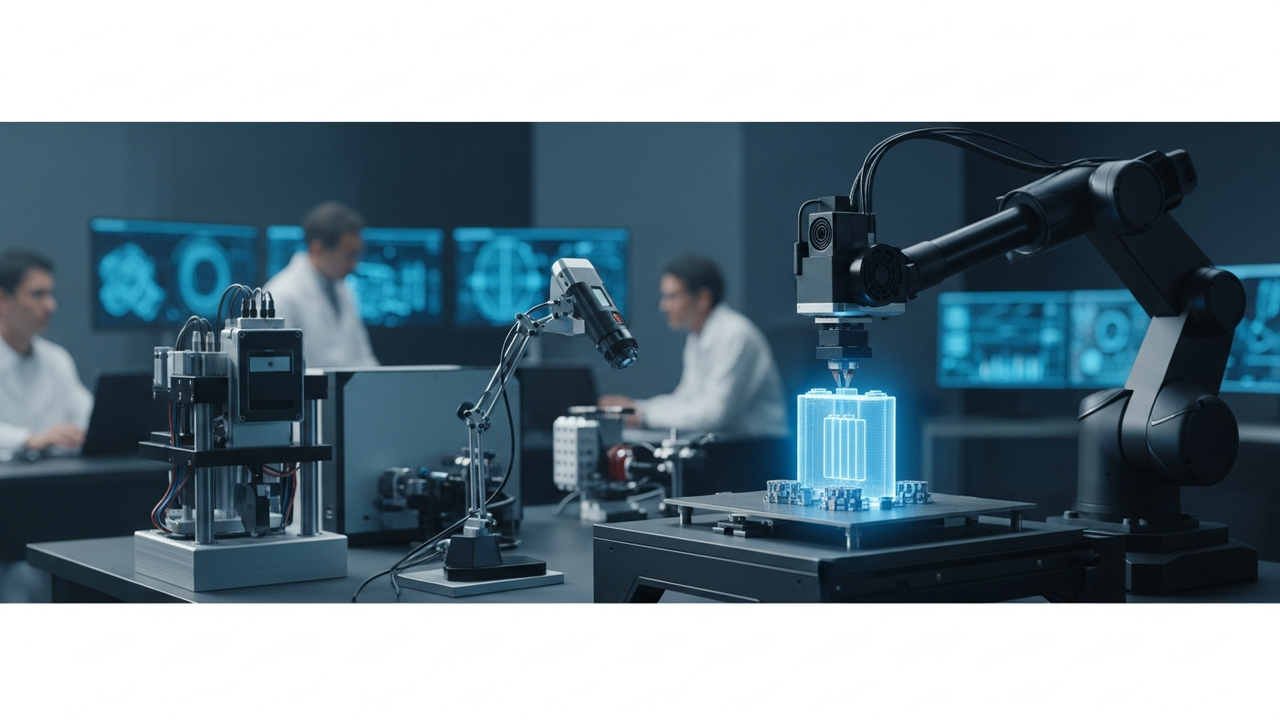
A research team at the University of California, Los Angeles (UCLA) has successfully engineered a zinc-iron (Zn-Fe) battery utilizing advanced 3D printing technology. This innovative design achieves an approximate sevenfold increase in both charge/discharge performance and energy density when compared to batteries constructed with conventional methods. This significant breakthrough opens new avenues for the architectural design and scalable manufacturing of next-generation energy storage devices.
Technical Details
The UCLA research team employed high-precision 3D printing to meticulously fabricate intricate porous architectures directly within the electrode materials. This sophisticated structural engineering dramatically expands the crucial contact area between the electrolyte and the active electrode material, thereby profoundly enhancing the efficiency of electrochemical reactions. Moreover, these optimized porous pathways facilitate superior ion transport kinetics, leading to accelerated charging and discharging rates. This novel 3D-printed architecture critically bolsters the performance of zinc-ion batteries—a highly promising alternative to lithium-ion systems—by effectively mitigating historical issues such as dendrite formation and constrained cycle life. The documented sevenfold improvement in energy density unequivocally underscores the technology’s superiority and marks a pivotal advancement toward widespread practical applications.
Strategic Significance & Outlook
This pioneering research from UCLA substantially expands the viability of zinc-ion batteries as a sustainable and inherently safer alternative to current lithium-ion technologies. The strategic optimization of electrode design via 3D printing not only delivers significant enhancements in battery performance but also introduces greater flexibility and efficiency into the manufacturing pipeline. Future research endeavors will likely concentrate on critical aspects such as the scalability of this additive manufacturing approach, further cost optimization, and achieving extended cycle stability. Successful commercialization of this technology could usher in a new era of environmentally benign and high-performance battery solutions, poised for deployment across diverse sectors including electric vehicles, grid-scale stationary energy storage, and sophisticated wearable electronic devices.
Source: https://tiisys.com/blog/2026/07/03/post-196788/
Get our weekly technology intelligence — free
Receive an infographic that lets you judge at a glance whether each field’s analysis report is worth reading.
Subscribe Free — Weekly Tech Intelligence
By subscribing, you’ll receive Troy-Technical’s weekly technology intelligence newsletter.
- Your email and selected fields are used only to deliver the newsletter.
- We never share your information with third parties.
- You can unsubscribe anytime via the link in each email.
See our Privacy Policy for details.
Takes about a minute · Unsubscribe anytime