Key Findings
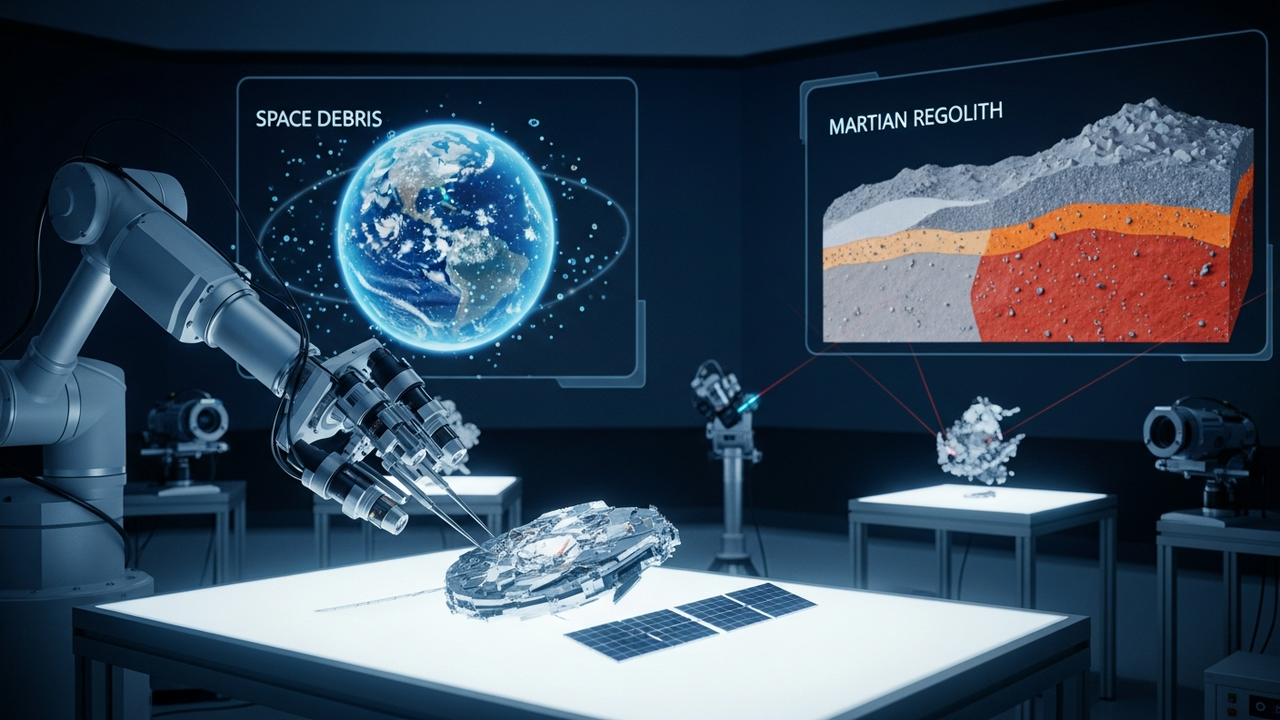
The latest issue of the academic journal “Frontiers in Astronomy and Space Sciences” has been released, presenting a diverse collection of cutting-edge research across various fields of space science. Particularly highlighted are detailed analyses of the impact of solar activity on the long-term orbital decay of space debris and studies on selecting beneficial fungi for plant cultivation utilizing lunar and Martian regolith.
Research Details
- Space Debris and Solar Activity: The orbits of space debris are influenced by factors such as atmospheric drag and solar radiation pressure, changing over time. This research models and predicts how periodic variations in solar activity (e.g., solar flares and coronal mass ejections) affect the density of Earth’s upper atmosphere, consequently accelerating the orbital decay rates of Low Earth Orbit (LEO) debris. This work could contribute to improving the accuracy of debris tracking and removal strategies.
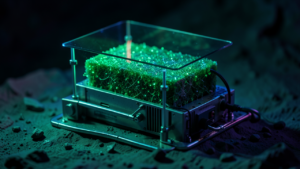
- Lunar/Martian Regolith and Plant Cultivation: Sustainable habitation in future lunar and Martian bases necessitates food production using in-situ resources. This study explores experimental approaches and theoretical considerations for selecting microorganisms, found in Earth’s extreme environments, that can adapt to lunar and Martian regolith compositions and promote plant nutrient uptake and growth. This directly contributes to building life support systems in resource-limited environments.
- Other Fields: The latest issue also includes papers on other broad topics such as new discoveries in planetary science, analysis of observational evidence in cosmology, insights into the origin and evolution of life in astrobiology, and research on high-energy phenomena in astrophysics.
Background & Industry Context
With the expansion of space activities, the space debris problem is becoming increasingly severe, making orbital environmental sustainability an international priority. Furthermore, as long-duration human deep-space exploration and lunar/Martian colonization plans advance, self-sustaining life support systems in space require technological and scientific breakthroughs. The research presented in this journal contributes to these pressing challenges from both fundamental science and applied technology perspectives.
Future Outlook
The research findings published in “Frontiers in Astronomy and Space Sciences” represent significant steps towards improving space debris management strategies and realizing food production technologies on the Moon and Mars. Particularly, studies on regolith-based agriculture lay the groundwork for building ecosystems in future space habitats, making human expansion into space more sustainable. These insights will serve as a compass for researchers, engineers, and investors in space exploration, guiding future R&D directions.
Source: https://www.frontiersin.org/journals/astronomy-and-space-sciences
Get our weekly technology intelligence — free
Receive an infographic that lets you judge at a glance whether each field’s analysis report is worth reading.
Subscribe Free — Weekly Tech Intelligence
By subscribing, you’ll receive Troy-Technical’s weekly technology intelligence newsletter.
- Your email and selected fields are used only to deliver the newsletter.
- We never share your information with third parties.
- You can unsubscribe anytime via the link in each email.
See our Privacy Policy for details.
Takes about a minute · Unsubscribe anytime



Comments