Key Findings
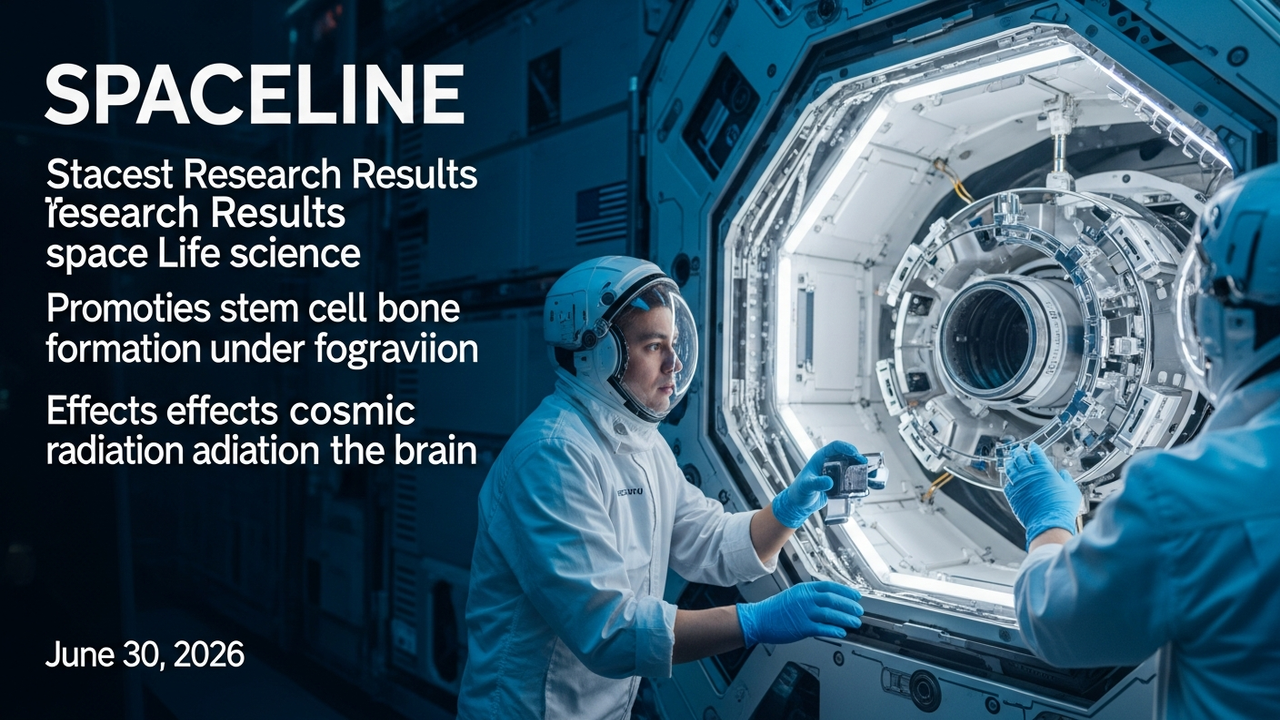
The latest “Current Awareness List” released by NASA Spaceline highlights several significant research findings in the field of space life science. Noteworthy reports include the elucidation of mechanisms by which microgravity promotes osteogenesis in mesenchymal stem cells, the long-term molecular effects of space radiation on rat brains, and the impact of spaceflight on neuromuscular aging in nematodes.
Research Details
- Microgravity and Bone Formation: Studies showed that culturing mesenchymal stem cells under microgravity conditions altered the expression of osteogenesis-related genes, potentially promoting bone tissue formation. This discovery could offer new approaches for combating bone density loss (osteoporosis) in astronauts and for treating bone diseases on Earth.
- Effects of Space Radiation on the Brain: Long-term molecular changes were observed in the brains of rats exposed to space radiation (particularly high-energy heavy ion radiation). These changes include increased neuroinflammation, oxidative stress, and alterations in gene expression related to synaptic plasticity, which are crucial for understanding potential risks to astronaut cognitive function and mental health.
- Human Posture Estimation in Space Microgravity: Research on accurately estimating astronaut posture and movement is essential for optimizing extravehicular activities (EVAs) and intra-vehicular tasks, as well as ensuring safety. This study developed methods using wearable sensors and machine learning algorithms to precisely estimate complex posture changes in microgravity.
- Spaceflight and Neuromuscular Aging in Nematodes: Using the simple biological model of C. elegans nematodes, research suggested that spaceflight affects neuromuscular junction function and muscle structure, potentially accelerating aging-related processes. These findings contribute to fundamental research on biological adaptation mechanisms and aging in space environments.
Background & Industry Context
Maintaining astronaut health and performance is one of the paramount challenges for long-duration human space missions, especially for lunar and Martian exploration. Factors such as microgravity, space radiation, and closed-environment stress are known to induce diverse physiological and psychological effects on the human body. The NASA Spaceline list promotes fundamental research to deepen scientific understanding of these complex challenges and develop effective countermeasures.
Future Outlook
These research findings will directly contribute to assessing health risks for astronauts during future long-duration spaceflights and developing mitigation strategies. Specifically, elucidating the mechanisms of osteogenesis promotion could lead to new treatments and exercise prescriptions to prevent bone loss, while research into radiation effects on the brain is indispensable for formulating effective radiation shielding and pharmaceutical protection strategies. These advancements in space life science lay the groundwork for humanity to operate further and longer in space.
Get our weekly technology intelligence — free
Receive an infographic that lets you judge at a glance whether each field’s analysis report is worth reading.
Subscribe Free — Weekly Tech Intelligence
By subscribing, you’ll receive Troy-Technical’s weekly technology intelligence newsletter.
- Your email and selected fields are used only to deliver the newsletter.
- We never share your information with third parties.
- You can unsubscribe anytime via the link in each email.
See our Privacy Policy for details.
Takes about a minute · Unsubscribe anytime



Comments