
Key Findings
NASA has awarded contracts totaling $590.4 million to three commercial space companies—Astrobotic, Firefly Aerospace, and Intuitive Machines—for four lunar lander missions targeting the Moon by the end of 2028, as part of its Commercial Lunar Payload Services (CLPS) program. Pittsburgh-based Astrobotic secured two missions, while Firefly Aerospace and Intuitive Machines, both based in Texas, each received one. This substantial investment marks a pivotal step in NASA’s strategy to commercialize lunar exploration and further propels the ambitious goals of the Artemis program.
Technical Details
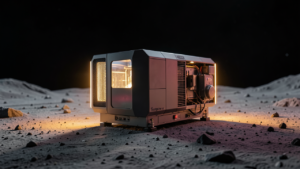
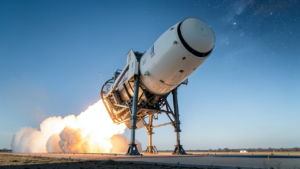
The CLPS program is designed to integrate NASA-developed scientific instruments and technology demonstration payloads onto commercial lunar landers, leveraging private sector innovation for lunar surface delivery services. Under these new contracts, each selected company will deploy its unique lunar lander and operational capabilities to transport NASA payloads to distinct regions of the Moon. These missions are crucial for gathering scientific data from unexplored areas, including the lunar south pole, testing technologies essential for future human activities, and investigating lunar resources. Specifically, the landers are expected to perform missions such as:
- Astrobotic: Two missions focused on payload delivery to previously untouched lunar regions, likely involving environmental data collection, regolith characterization, and ice presence investigations.
- Firefly Aerospace: One mission aiming to provide a lander with higher payload capacity, particularly enabling access to lunar polar regions.
- Intuitive Machines: One mission building upon past successes (such as the IM-1 mission) to provide reliable lunar landings and scientific observations.
These endeavors will furnish invaluable data and experience for the development of lunar surface power, in-situ resource utilization (ISRU), and advanced communication technologies necessary for sustained human presence.
Background & Context
The CLPS program represents NASA’s strategic commitment to conducting lunar exploration more cost-effectively and rapidly through partnerships with commercial entities. By engaging a diverse range of companies, from established players like Astrobotic to emerging innovators, NASA fosters competition and innovation across the space industry. These contract awards underscore the growing maturity of commercial space companies’ capabilities to execute complex lunar missions. They highlight the Artemis program’s model of integrating government leadership with private sector dynamism to redefine space exploration. NASA intends to use the data and lessons learned from these missions to inform the planning and design of future lunar habitats and crewed explorations.
Strategic Significance & Outlook
These contract awards provide a clear roadmap for lunar activities through 2028 and are expected to further invigorate the commercial lunar services market. Successful execution of these missions will enable regular access to the lunar surface, accelerating technological advancements in critical areas like lunar surface power, ISRU, and radiation-hardened nanomaterials. NASA has already announced upcoming solicitations in these fields, encouraging innovative solutions from private industry. Ultimately, these efforts will deepen scientific understanding of the Moon, establish vital stepping stones for future deep-space exploration, and lay the groundwork for the Moon to become humanity’s next frontier, supporting long-term scientific and commercial endeavors.
Source: https://skyandtelescope.org/astronomy-news/nasa-announces-four-new-lunar-lander-missions-for-2028/
Get our weekly technology intelligence — free
Receive an infographic that lets you judge at a glance whether each field’s analysis report is worth reading.
Subscribe Free — Weekly Tech Intelligence
By subscribing, you’ll receive Troy-Technical’s weekly technology intelligence newsletter.
- Your email and selected fields are used only to deliver the newsletter.
- We never share your information with third parties.
- You can unsubscribe anytime via the link in each email.
See our Privacy Policy for details.
Takes about a minute · Unsubscribe anytime






Comments