
Key Findings
NASA has announced the selection of Rocket Lab as the launch service provider for two critical solar and Earth science missions: the Polarized Submillimeter Ice-cloud Radiometer (PolSIR) and the Total and Spectral Solar Irradiance Sensor-2 (TSIS-2). This decision is instrumental in advancing Earth science research and deepening our understanding of climate change.
Mission Details and Technology
- PolSIR Mission: Scheduled for launch no earlier than June 2027, PolSIR is a submillimeter radiometer designed to provide detailed observations of Earth’s ice clouds. Ice clouds are known to have a significant impact on Earth’s energy balance and climate, yet many aspects of their formation mechanisms and radiative properties remain poorly understood. PolSIR’s data will measure the polarization properties of these ice clouds, enabling more accurate assessments of their microphysical structure and their influence on Earth’s radiative budget, thereby improving climate model accuracy.
- TSIS-2 Mission: Slated for an early 2027 launch, TSIS-2 will measure solar irradiance—the total amount and spectral distribution of solar energy reaching Earth. Variations in solar energy input are a natural driver of Earth’s climate variability, and TSIS-2’s continuous data will be crucial for tracking long-term solar activity and its impact on Earth’s climate. This data will contribute to validating climate models and enhancing the reliability of future climate predictions.
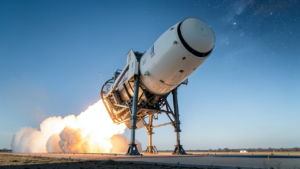
- Launch Vehicle: Both missions will utilize Rocket Lab’s small launch vehicle, the Electron rocket. Electron is renowned for providing cost-effective and flexible launch services tailored for small satellites and scientific missions.
Background and Industry Context
Earth’s climate is a complex system, and changes in ice clouds and solar energy input have widespread global implications, including sea-level rise, extreme weather events, and ecosystem shifts. Accurately understanding and predicting these factors is paramount for the international community to formulate effective climate change mitigation strategies. NASA, through a series of Earth observation missions, continuously monitors and studies Earth’s systems, with these new missions being integral to that effort.
The acquisition of significant scientific mission launch contracts by New Space companies like Rocket Lab from major space agencies such as NASA indicates a growing level of technical capability and trustworthiness within the commercial space sector. This reflects increasing competition and the emergence of diverse solutions in the space launch market. The Electron rocket, in particular, is highly regarded for its ability to rapidly and precisely deploy small payloads into specific low Earth orbits.
Strategic Significance and Outlook
The data from PolSIR and TSIS-2 will be made available to the climate science community, supporting international research projects and contributing to reports by the Intergovernmental Panel on Climate Change (IPCC). This will deepen the scientific understanding of Earth’s climate change, facilitating the development of more effective mitigation and adaptation strategies. For Rocket Lab, sustained partnership with NASA will further enhance its launch service reliability and technical prowess, serving as a crucial track record for securing future contracts from government agencies and commercial clients. Coupled with the growth of the small satellite market, demand for the Electron rocket is expected to continue to rise.
Source: https://www.nasa.gov/missions/tsis-2/nasa-selects-rocket-lab-to-launch-sun-earth-science-missions/
Get our weekly technology intelligence — free
Receive an infographic that lets you judge at a glance whether each field’s analysis report is worth reading.
Subscribe Free — Weekly Tech Intelligence
By subscribing, you’ll receive Troy-Technical’s weekly technology intelligence newsletter.
- Your email and selected fields are used only to deliver the newsletter.
- We never share your information with third parties.
- You can unsubscribe anytime via the link in each email.
See our Privacy Policy for details.
Takes about a minute · Unsubscribe anytime








Comments