Key Findings
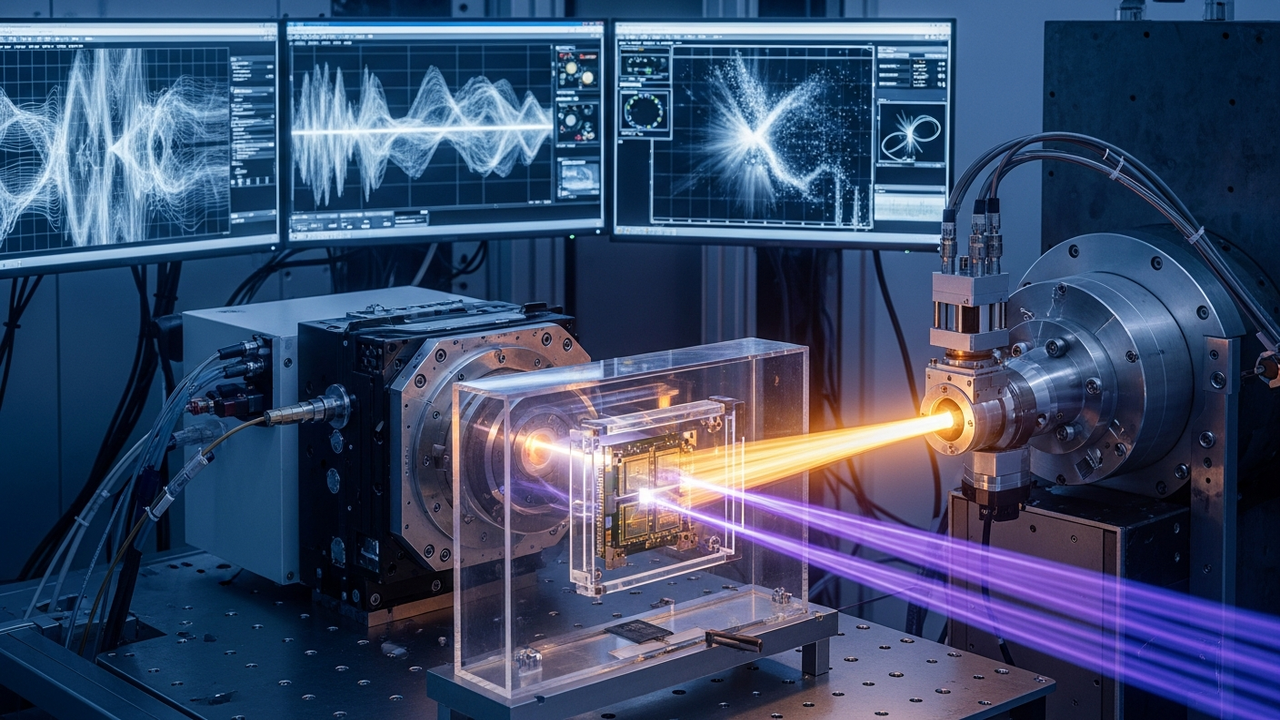
BAE Systems has announced the successful completion of strategic testing for its innovative Endura™ System-on-Chip (SoC) space processor, which demonstrated exceptional resilience in both natural space radiation and the most demanding strategic radiation environments. This accomplishment signifies a major advancement in the computing capabilities available for next-generation satellites and deep-space missions.
Technical and Product Details
The Endura™ SoC processor was developed by combining BAE Systems’ proprietary radiation-hardened 45-nanometer (RH45 nm) technology with GlobalFoundries’ commercial 45nm silicon-on-insulator (SOI) platform. SOI technology is highly effective in reducing parasitic capacitance between transistors and improving resistance to soft errors induced by radiation, making it ideal for space applications.
- Radiation Hardening: The processor’s ability to maintain stable operation was verified against both total ionizing dose (TID) and single-event effects (SEE) encountered in natural space, as well as under higher-level strategic radiation conditions. This ensures it meets the robust performance requirements for military and high-value civilian space assets.
- Compact, Low-Power, and Cost-Effective: Compared to conventional radiation-hardened processors, Endura™ achieves significant reductions in size and power consumption, alongside lower manufacturing costs. This makes it particularly suitable for satellite systems with tight space and power budgets.
- High-Performance Computing: It delivers high-performance computing essential for advanced data processing, AI integration, and autonomous operations in space, thereby enhancing onboard processing capabilities.
Background and Industry Context
Modern space missions demand systems that can generate more data and execute increasingly complex tasks autonomously in orbit. This necessitates reliable, high-performance computing capabilities akin to those on Earth, yet the space radiation environment poses extreme challenges to semiconductor devices. Radiation can cause data corruption, functional disruptions, and even permanent device damage. Consequently, highly radiation-hardened processors are critical for the reliability and longevity of all space assets, including communication satellites, Earth observation platforms, military spacecraft, and crewed vehicles.
This success reinforces the technological leadership of U.S. and allied nations in space electronics, bolstering competitiveness against rivals in Europe and Asia. The collaboration with GlobalFoundries highlights an effective approach to adapting commercial semiconductor technologies for space-grade requirements, underscoring the growing importance of private companies in advanced space technology development.
Strategic Significance and Outlook
The Endura™ SoC processor is poised to revolutionize the intelligence and autonomy of space systems by being adopted in next-generation satellite buses, payloads, deep-space probes, and lunar/Martian exploration robots. Its compact and low-power characteristics will accelerate the deployment of small satellite constellations, enabling greater data collection and real-time processing. This technology will advance edge computing in space, making it feasible to run AI and machine learning algorithms in orbit without sole reliance on Earth-based data processing. This will lead to significant advancements in space-based scientific research, commercial services, and defense capabilities.
Get our weekly technology intelligence — free
Receive an infographic that lets you judge at a glance whether each field’s analysis report is worth reading.
Subscribe Free — Weekly Tech Intelligence
By subscribing, you’ll receive Troy-Technical’s weekly technology intelligence newsletter.
- Your email and selected fields are used only to deliver the newsletter.
- We never share your information with third parties.
- You can unsubscribe anytime via the link in each email.
See our Privacy Policy for details.
Takes about a minute · Unsubscribe anytime


Comments