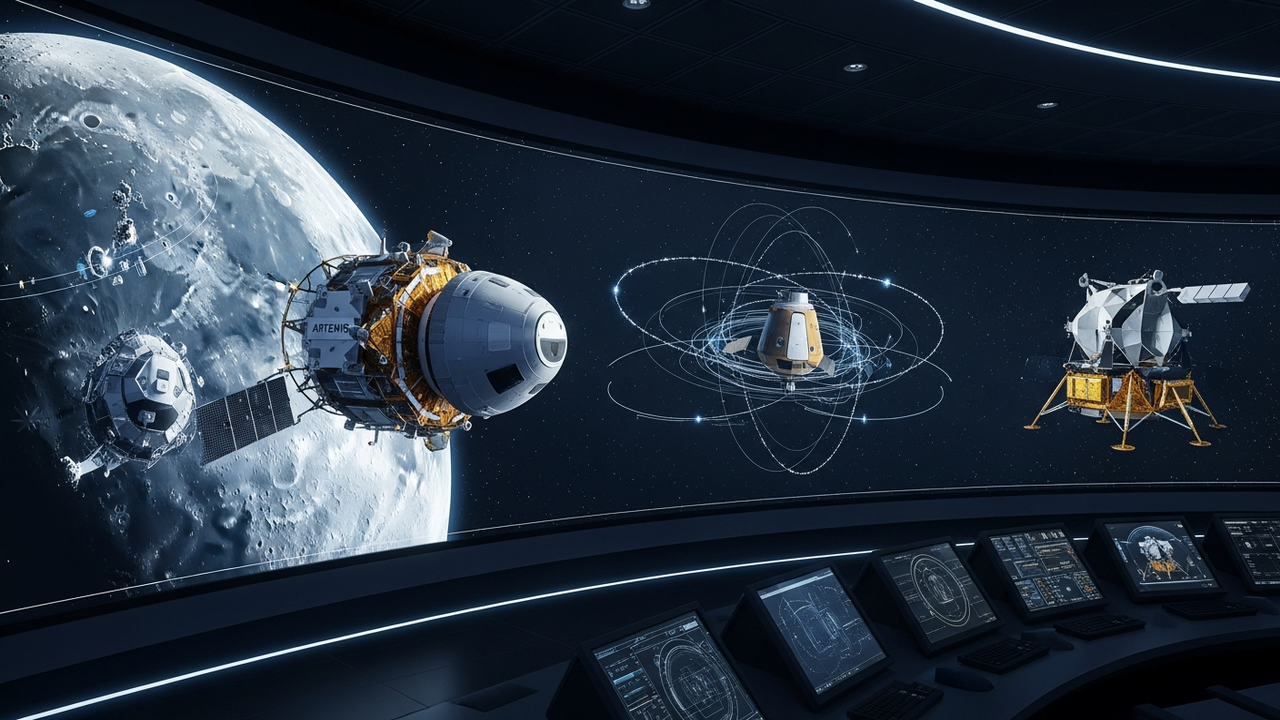
Key Achievement: Artemis II Breaks Human Lunar Distance Record
NASA’s Artemis II mission, successfully launched on April 1, 2026, set a new human record for the furthest distance traveled from Earth, reaching 406,771 kilometers during its approximately 10-day lunar orbital flight. The mission achieved all primary technical objectives, including testing the Orion spacecraft’s life support systems, astronaut manual control capabilities, lunar trajectory adjustments, a lunar flyby, and safe re-entry and recovery. This success garnered global attention, breaking NASA’s live-streaming records and attracting millions of new social media followers, underscoring the feasibility of future crewed lunar exploration.
Technical & Clinical Details: Orion Performance and System Integration Challenges
Artemis II was designed to demonstrate the safety and performance of the Orion spacecraft and the Space Launch System (SLS) rocket during a crewed flight. Throughout the mission, the crew successfully tested Orion’s manual flight controls, navigation, and communication systems, yielding expected results. However, the development of commercial lunar landers—SpaceX’s Starship and Blue Origin’s Blue Moon—which are critical for the Artemis III mission, has experienced delays against initial schedules. Consequently, NASA has revised the Artemis III mission objective from a lunar landing to a rendezvous and docking test with these commercial landing systems in Low Earth Orbit (LEO). This adjustment is a crucial step to verify the integrated functionality of the commercial landers and NASA’s systems.
Background & Industry Context: Post-Apollo Exploration and Evolving Commercial Partnerships
The Artemis program represents NASA’s ambitious effort to return humans to the Moon, and eventually to Mars, for the first time in over half a century since the Apollo missions. The success of Artemis II marks a pivotal juncture in proving the viability of this grand endeavor. Nevertheless, the delays in commercial lunar lander development highlight potential impacts on the overall program schedule. Former NASA Administrator Jim Bridenstine has voiced concerns that these delays in lander design and development could jeopardize the ambitious 2028 lunar landing target. This situation underscores both the opportunities and risks NASA faces as it deepens its collaboration with the commercial sector.
Strategic Significance & Outlook: Challenges and Strategy for Sustained Lunar Presence
The next major objective for the Artemis program is the Artemis III lunar landing, with the ultimate goal of establishing a sustained human presence on the Moon by 2032. This necessitates the development of essential infrastructure technologies, including In-Situ Resource Utilization (ISRU), power generation, and autonomous robotics, to support life and operations on the lunar surface. While lunar lander development delays pose challenges, NASA is committed to working closely with commercial partners and accelerating technological advancements to achieve its long-term strategy for lunar presence. The reunion of the Artemis II astronauts with their Orion capsule three months after their record-breaking flight symbolizes both a celebration of past successes and heightened anticipation for future lunar exploration.
Source: https://www.nasa.gov/general/nasas-artemis-ii-breaks-agency-streaming-record/
Get our weekly technology intelligence — free
Receive an infographic that lets you judge at a glance whether each field’s analysis report is worth reading.
Subscribe Free — Weekly Tech Intelligence
By subscribing, you’ll receive Troy-Technical’s weekly technology intelligence newsletter.
- Your email and selected fields are used only to deliver the newsletter.
- We never share your information with third parties.
- You can unsubscribe anytime via the link in each email.
See our Privacy Policy for details.
Takes about a minute · Unsubscribe anytime





Comments