Key Findings
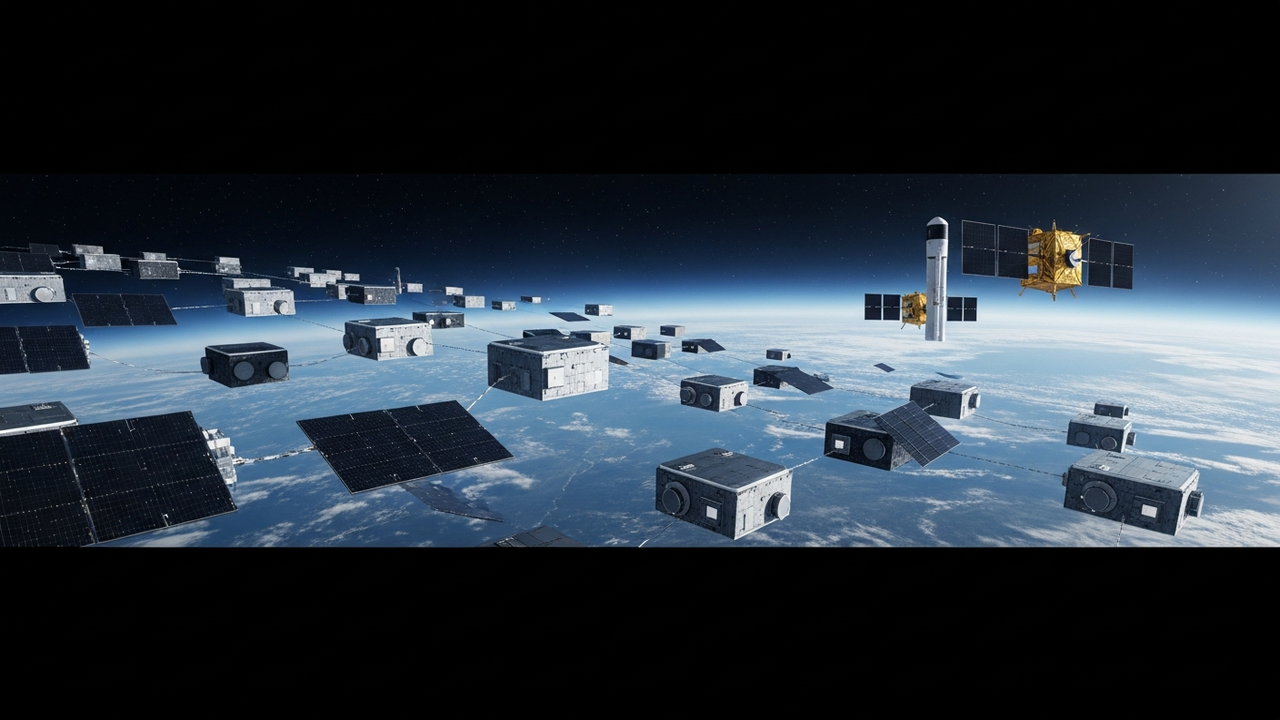
Orbital, a Los Angeles-based startup, has submitted an audacious plan to the U.S. Federal Communications Commission (FCC) to deploy up to 100,000 AI data center satellites in low Earth orbit (LEO), collectively providing 10 gigawatts of computing power. This ambitious initiative aims to solve the terrestrial constraints of power, cooling, and land faced by data centers, thereby opening a new frontier for AI infrastructure. Concurrently, SpaceX has also filed plans for its new high-performance Gen 3 satellites, intensifying the competition in space-based AI infrastructure.
Technical & Clinical Details
Orbital’s proposed data center satellites are each rated at 100 kilowatts, equipped with large solar arrays approximately 100 meters long and efficient radiators to maximize heat dissipation in the vacuum of space. These satellites will connect via optical inter-satellite links (laser communication) with existing third-party satellite constellations, such as SpaceX’s Starlink, to enable high-speed, low-latency data transmission. In orbit, AI chips can operate at peak performance due to superior cooling and stable power availability compared to Earth. Orbital plans to demonstrate Nvidia GPUs in orbit by 2027 and launch its first data center satellite, ‘Orbital-1,’ in 2028. SpaceX’s Gen 3 satellites, weighing 2,000kg and offering 1 Tbit/s downlink speeds, will significantly enhance Starlink services and could also support high-bandwidth applications like orbital data centers.
Background & Context
The rapid advancement of Artificial Intelligence (AI) places unprecedented demands on data processing capabilities and energy consumption, pushing terrestrial infrastructure to its physical and infrastructural limits. Against this backdrop, orbital data centers are gaining significant attention as next-generation digital infrastructure due to advantages such as limitless solar energy, natural cooling, and potentially enhanced data security. Major tech companies, including Google (Project Suncatcher), Amazon (AWS Ground Station), and Microsoft (Azure Orbital), are also exploring AI training and data processing in space. Orbital’s emergence marks a new phase in this competition, indicating that startups are entering the market with bold visions.
Strategic Significance & Outlook
If realized, Orbital’s plan for 100,000 AI data center satellites could fundamentally transform the global AI infrastructure landscape. The proposed 10 gigawatts of computing power would surpass the most powerful terrestrial data centers, accelerating the development of new AI applications. Synergies with SpaceX’s high-performance Gen 3 satellites are also expected, potentially fostering a new space-based data ecosystem. While this ambitious plan faces numerous technical, financial, and regulatory challenges, its success would unequivocally demonstrate that space is an indispensable component in shaping humanity’s digital future. The race for space AI infrastructure is poised to be one of the primary drivers of the space industry for decades to come.
Get our weekly technology intelligence — free
Receive an infographic that lets you judge at a glance whether each field’s analysis report is worth reading.
Subscribe Free — Weekly Tech Intelligence
By subscribing, you’ll receive Troy-Technical’s weekly technology intelligence newsletter.
- Your email and selected fields are used only to deliver the newsletter.
- We never share your information with third parties.
- You can unsubscribe anytime via the link in each email.
See our Privacy Policy for details.
Takes about a minute · Unsubscribe anytime






Comments