Background
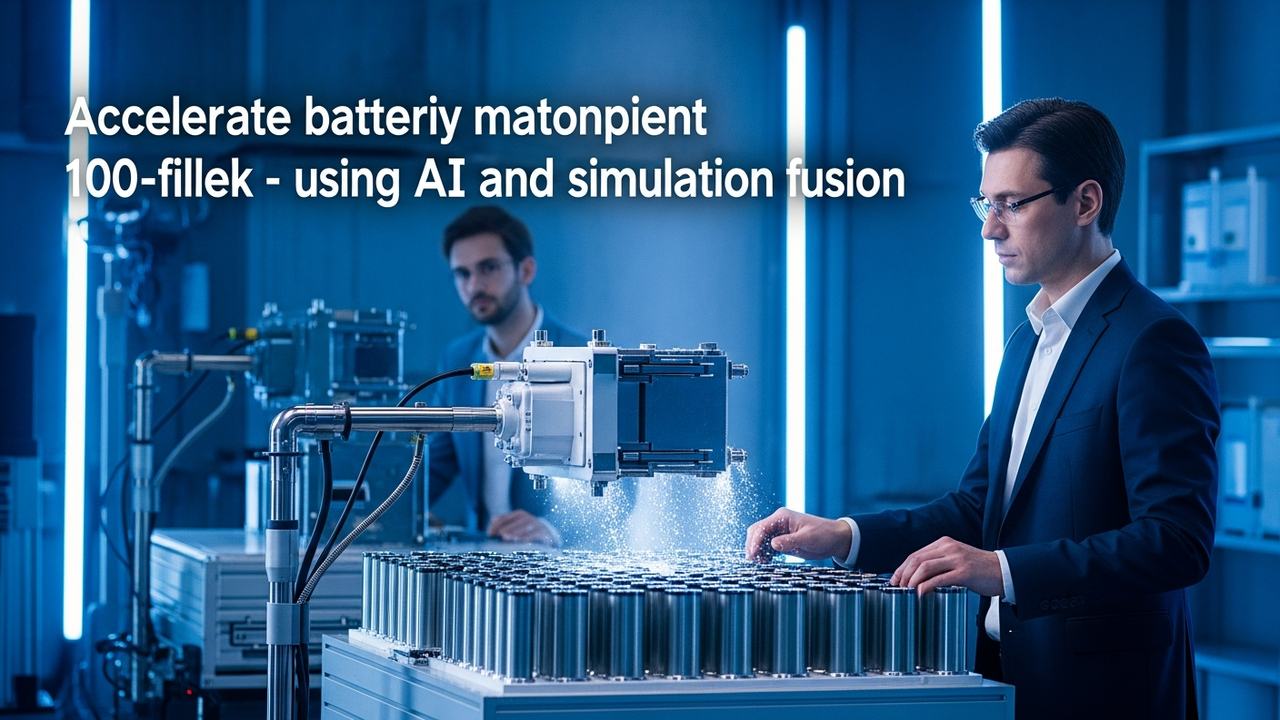
The escalating global demand for electric vehicles and large-scale renewable energy storage has made the urgent development of higher-performance, safer, and more affordable battery materials a critical priority. Historically, the traditional process of battery material discovery has been a significant bottleneck, demanding immense time and financial investment to meticulously explore the vast landscape of elemental combinations and crystal structures. This conventional approach often means that the discovery of truly novel materials can stretch across decades. However, the emergence of integrated platforms like BATMAT, which strategically leverage advanced AI and physics-based simulations, holds the transformative potential to fundamentally overhaul this development paradigm, enabling the identification of groundbreaking materials in mere months or a few years. Such an acceleration is indispensable for propelling battery technology forward and facilitating a robust transition towards a sustainable global society.
Key Findings
A research team spearheaded by Professor Alexandre Tkatchenko at the University of Luxembourg has achieved a significant breakthrough with the successful development of ‘BATMAT,’ a novel platform seamlessly integrating artificial intelligence (AI) with sophisticated physics-based simulations. This innovative closed-loop system has rigorously demonstrated its capacity to accelerate the discovery and comprehensive evaluation of next-generation battery materials by an unprecedented factor of up to 100 times compared to conventional, standard methodologies. BATMAT’s architecture is specifically designed to streamline the intricate processes of exploring and optimizing a diverse spectrum of critical battery components, including advanced solid-state electrolytes and novel electrode materials.
Technical Details
At the heart of the BATMAT platform resides its innovative application of ‘Physics-Informed Neural Networks (PINNs).’ These PINNs are engineered to embed established knowledge and fundamental physical laws from materials science directly into the AI models. This crucial integration empowers the AI to move beyond mere data pattern recognition, enabling it to make predictions with an inherent, physics-aware understanding of the underlying physical and chemical principles governing the materials. The operational workflow involves the AI proactively proposing a curated list of promising material candidates. These candidates then undergo rigorous validation through high-accuracy quantum chemical calculations and advanced molecular dynamics simulations. Crucially, the rich datasets generated from these simulations are systematically fed back into the AI model, thereby establishing an autonomous, self-correcting learning cycle that continuously refines and enhances predictive accuracy. This sophisticated ‘closed-loop’ methodology significantly minimizes the need for manual human intervention, dramatically accelerating the entire continuum of material design, virtual synthesis, evaluation, and optimization. The platform’s efficacy has been particularly validated in the rapid screening and identification of advanced solid-state electrolytes and innovative electrode materials, specifically those exhibiting superior ion conductivity and robust stability—characteristics paramount for achieving breakthroughs in battery performance, longevity, and intrinsic safety.
Strategic Significance & Outlook
Professor Tkatchenko has outlined ambitious plans to commercialize the BATMAT platform within the next 18 months, aiming to make this powerful tool accessible to a broad spectrum of research institutions and industrial partners globally. This strategic move is expected to significantly empower both academic and corporate researchers, enabling them to dramatically accelerate their own battery material development initiatives. Looking beyond battery applications, the underlying technology of BATMAT is envisioned to extend its impact to the development of novel materials in diverse fields, including advanced catalysts, high-efficiency solar cells, and innovative thermoelectric materials. This ultra-fast material discovery paradigm has the potential to substantially elevate competitiveness in the arena of next-generation energy technologies, ultimately poised to exert a profound economic impact across numerous sectors.
Get our weekly technology intelligence — free
Receive an infographic that lets you judge at a glance whether each field’s analysis report is worth reading.
Subscribe Free — Weekly Tech Intelligence
By subscribing, you’ll receive Troy-Technical’s weekly technology intelligence newsletter.
- Your email and selected fields are used only to deliver the newsletter.
- We never share your information with third parties.
- You can unsubscribe anytime via the link in each email.
See our Privacy Policy for details.
Takes about a minute · Unsubscribe anytime








Comments