Key Findings
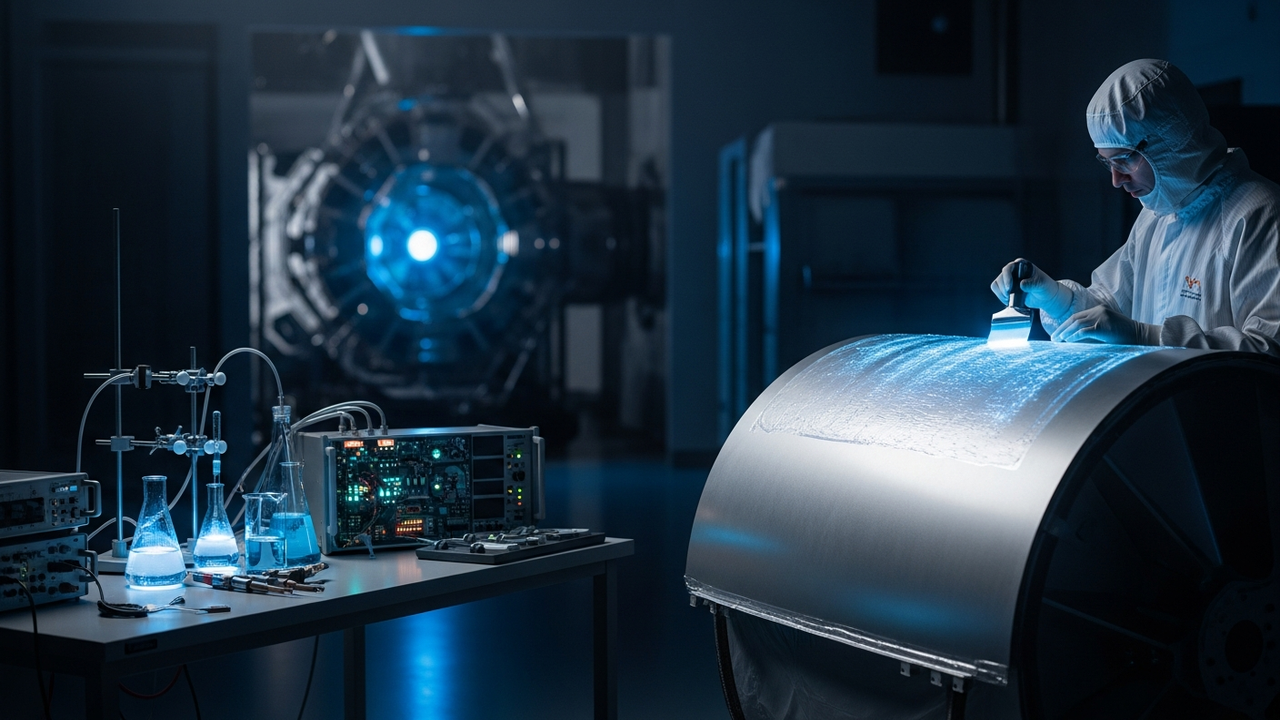
A research team led by Professor Arvind Agarwal at Virginia Commonwealth University (VCU) has developed an innovative radiation-resistant coating designed to protect astronauts during future lunar missions under the Artemis program. This new coating, based on lightweight and flexible boron nitride (BN), effectively absorbs neutron radiation and simultaneously provides abrasion resistance against impacts from micrometeoroids and orbital debris.
Technical Details
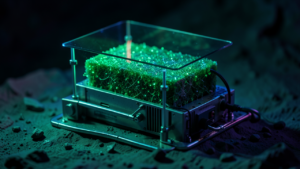
The developed boron nitride-based coating leverages its unique composition and structure to deliver high shielding capabilities, particularly against neutron radiation. Neutron radiation constitutes one of the primary health risks faced by astronauts on the lunar surface and in deep space, potentially leading to DNA damage and increased cancer risk. While conventional radiation shielding materials are often heavy and inflexible, this new coating achieves both lightness and flexibility, making it potentially suitable for easy application to spacecraft structures and spacesuit exteriors. Furthermore, its abrasion resistance enhances astronaut safety against high-velocity impacts from micrometeoroids and space debris. Currently, test samples of this material are deployed on the International Space Station (ISS) for real-world space environment evaluation, with detailed performance analysis anticipated after their return to Earth in August 2026.
Background & Industry Context
NASA’s Artemis program aims to return humans to the Moon and establish a sustainable lunar presence by the late 2020s. However, the lunar environment, lacking Earth’s protective atmosphere and strong magnetosphere, constantly exposes astronauts to space radiation (galactic cosmic rays and solar particle events) and micrometeoroid threats. Shielding astronauts from these harsh conditions is a paramount challenge for enabling long-duration missions. Professor Agarwal’s research offers a potentially cost-effective and practical solution to this challenge, representing a vital technology for enhancing the safety of future crewed deep-space exploration endeavors.
Strategic Significance & Outlook
The results from the ISS validation tests will be a critical step toward the practical implementation of this radiation-resistant coating. If successful, the material could be adopted for Artemis lunar landers, habitat modules, and next-generation spacesuits. Beyond lunar applications, this technology holds promise for Mars human missions and for improving the durability of Earth-orbiting satellites, among other space applications. The development of lightweight, multifunctional protective materials is essential for expanding the frontiers of human space exploration, and Professor Agarwal’s research has the potential to significantly contribute to this goal.
Get our weekly technology intelligence — free
Receive an infographic that lets you judge at a glance whether each field’s analysis report is worth reading.
Subscribe Free — Weekly Tech Intelligence
By subscribing, you’ll receive Troy-Technical’s weekly technology intelligence newsletter.
- Your email and selected fields are used only to deliver the newsletter.
- We never share your information with third parties.
- You can unsubscribe anytime via the link in each email.
See our Privacy Policy for details.
Takes about a minute · Unsubscribe anytime



Comments