Key Findings
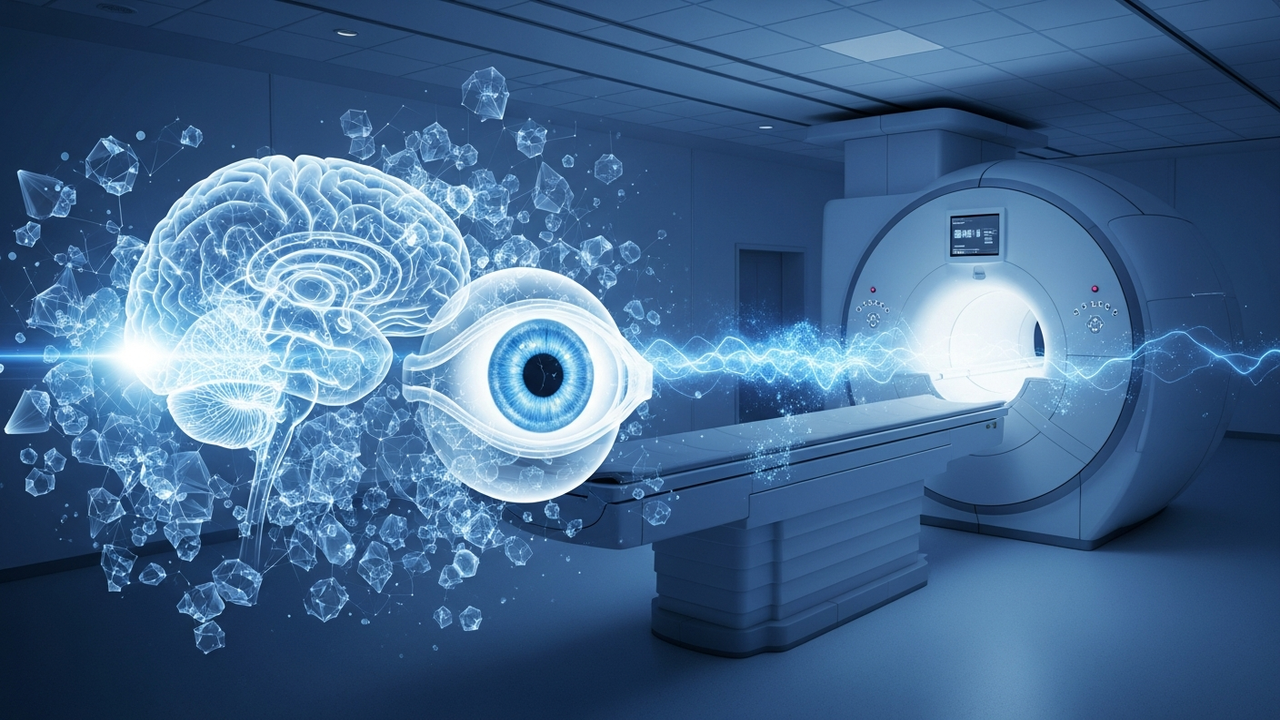
Scientists have achieved a significant breakthrough by integrating metamaterial-based hardware into existing MRI scanners, enabling them to generate images of challenging body regions, such as the brain and eyes, with unprecedented clarity and in dramatically shorter scan times. This innovation fundamentally enhances the performance of current MRI technology, promising a major leap forward in medical diagnostics.
Technical / Clinical Details
At the core of this new technology is an MRI antenna redesigned with specialized metamaterials. Metamaterials are engineered structures with electromagnetic properties not found in nature, capable of manipulating electromagnetic waves and light in novel ways. In the context of the MRI antenna, these metamaterials efficiently collect and amplify weak magnetic resonance signals from targeted tissues, significantly improving the signal-to-noise ratio (SNR). This leads to a remarkable increase in spatial resolution, allowing for much clearer visualization of fine brain structures and ocular nerve tissues than previously possible. Furthermore, the enhanced efficiency of signal acquisition contributes to shorter scan times, reducing patient discomfort and increasing imaging throughput.
Background & Context
Magnetic Resonance Imaging (MRI) is an indispensable diagnostic modality due to its superior soft tissue contrast resolution, crucial for diagnosing neurological disorders, tumors, and eye conditions. However, capturing subtle changes in deep body regions or small, complex structures like the brain and eyes still requires high spatial resolution and often prolonged scan durations. This has led to challenges such as patient discomfort, motion artifacts, and limitations in throughput. The field of metamaterials has advanced rapidly over the past few decades, with breakthroughs in electromagnetic wave manipulation eagerly anticipated for medical imaging applications.
Strategic Significance & Outlook
This advancement in MRI technology, powered by metamaterials, is expected to dramatically increase diagnostic accuracy, particularly for neurodegenerative diseases and retinal conditions where early diagnosis is critical, enabling clinicians to make more informed decisions. The reduction in scan time will not only enhance the patient experience but also improve MRI machine utilization, easing the burden on healthcare facilities. In the future, this technology holds the potential to open new avenues for medical imaging and therapeutic applications, including more precise brain functional mapping, monitoring targeted drug delivery, and even guiding non-invasive therapeutic interventions. It significantly broadens the scope of metamaterial applications in the medical field.
Source: https://www.sciencedaily.com/releases/2026/06/260626125712.htm
Get our weekly technology intelligence — free
Receive an infographic that lets you judge at a glance whether each field’s analysis report is worth reading.
Subscribe Free — Weekly Tech Intelligence
By subscribing, you’ll receive Troy-Technical’s weekly technology intelligence newsletter.
- Your email and selected fields are used only to deliver the newsletter.
- We never share your information with third parties.
- You can unsubscribe anytime via the link in each email.
See our Privacy Policy for details.
Takes about a minute · Unsubscribe anytime









Comments