Key Findings
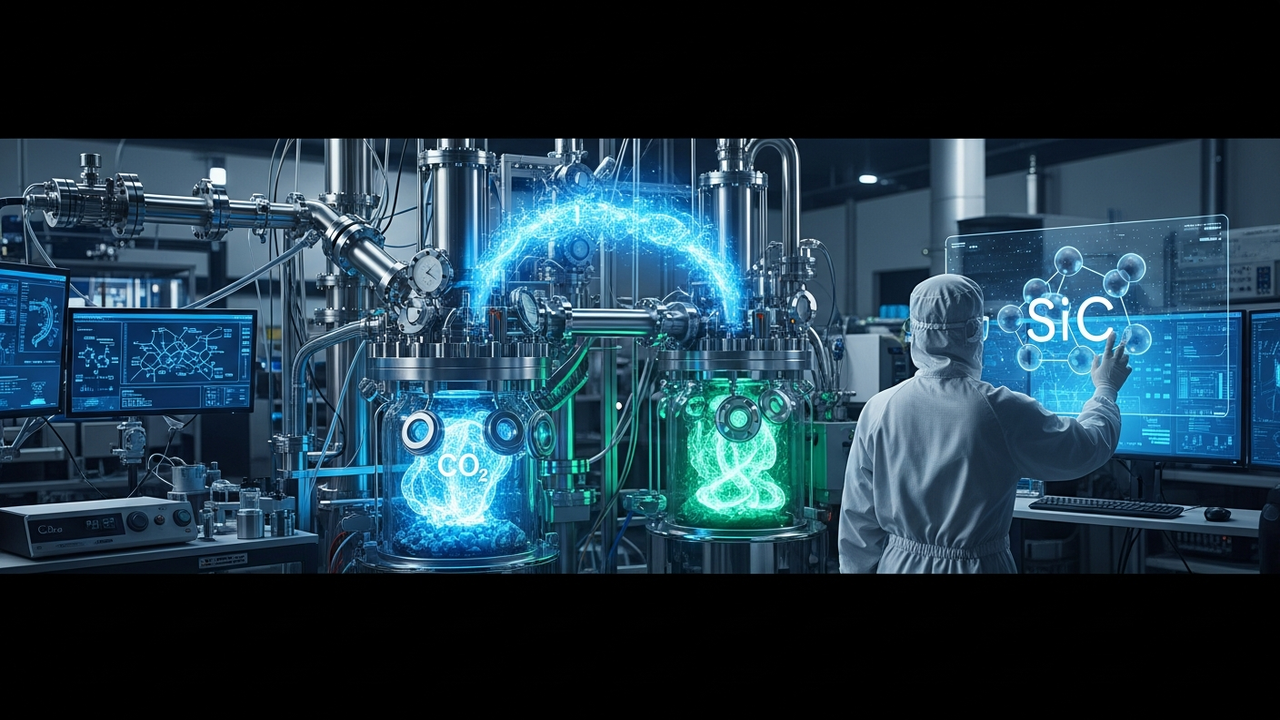
Tohoku University and Sumitomo Corporation are collaborating on a pioneering industry-academia project to commercialize a groundbreaking technology for synthesizing silicon carbide (SiC) using silicon-based waste and carbon dioxide (CO2) as raw materials. This initiative is set to significantly contribute to Japan’s domestic SiC production and diversify its critical materials supply chain.
Technical / Clinical Details
This innovative SiC synthesis process diverges from conventional methods by directly utilizing industrial silicon waste and captured CO2, rather than relying on high-energy reactions from silica (SiO2) and carbon sources. This approach drastically reduces energy consumption and is expected to lead to a substantial reduction in CO2 emissions during manufacturing. The resulting SiC boasts high purity, making it suitable for a wide array of high-tech applications, including power semiconductors, next-generation displays, and electric vehicle inverters. Currently, Japan imports approximately 80% of its SiC, so the commercialization of this technology is crucial for ensuring stable domestic supply and technological autonomy.
Background & Context
Silicon carbide (SiC) is a strategic material indispensable for next-generation power electronics, high-speed communication, and sensors in harsh environments, owing to its superior semiconductor properties, high heat resistance, and strength. With the rapid proliferation of electric vehicles (EVs), demand for high-efficiency power semiconductors is surging, making a stable SiC supply a key factor in industrial competitiveness. Concurrently, as CO2 emission reduction becomes a global imperative for combating climate change, carbon recycling technologies that convert waste and CO2 into valuable materials are attracting significant attention as crucial efforts towards achieving a sustainable society.
Strategic Significance & Outlook
This project by Tohoku University and Sumitomo Corporation is poised to play a major role in increasing Japan’s self-sufficiency in SiC supply and establishing a robust domestic supply chain. The use of waste-derived raw materials and a low-energy production process will provide a strong cost advantage, accelerating the broader industrial adoption of SiC. Furthermore, by contributing to CO2 emission reduction, it will promote the transition to environmentally friendly industries and holds immense potential to contribute to a sustainable society. This technology, upon commercialization, promises to be an ‘interesting’ breakthrough that not only strengthens Japan’s industrial competitiveness but also addresses global environmental challenges.
Source: https://www.sumitomocorp.com/en/jp/news/detail/id12563
Get our weekly technology intelligence — free
Receive an infographic that lets you judge at a glance whether each field’s analysis report is worth reading.
Subscribe Free — Weekly Tech Intelligence
By subscribing, you’ll receive Troy-Technical’s weekly technology intelligence newsletter.
- Your email and selected fields are used only to deliver the newsletter.
- We never share your information with third parties.
- You can unsubscribe anytime via the link in each email.
See our Privacy Policy for details.
Takes about a minute · Unsubscribe anytime








Comments