Key Findings
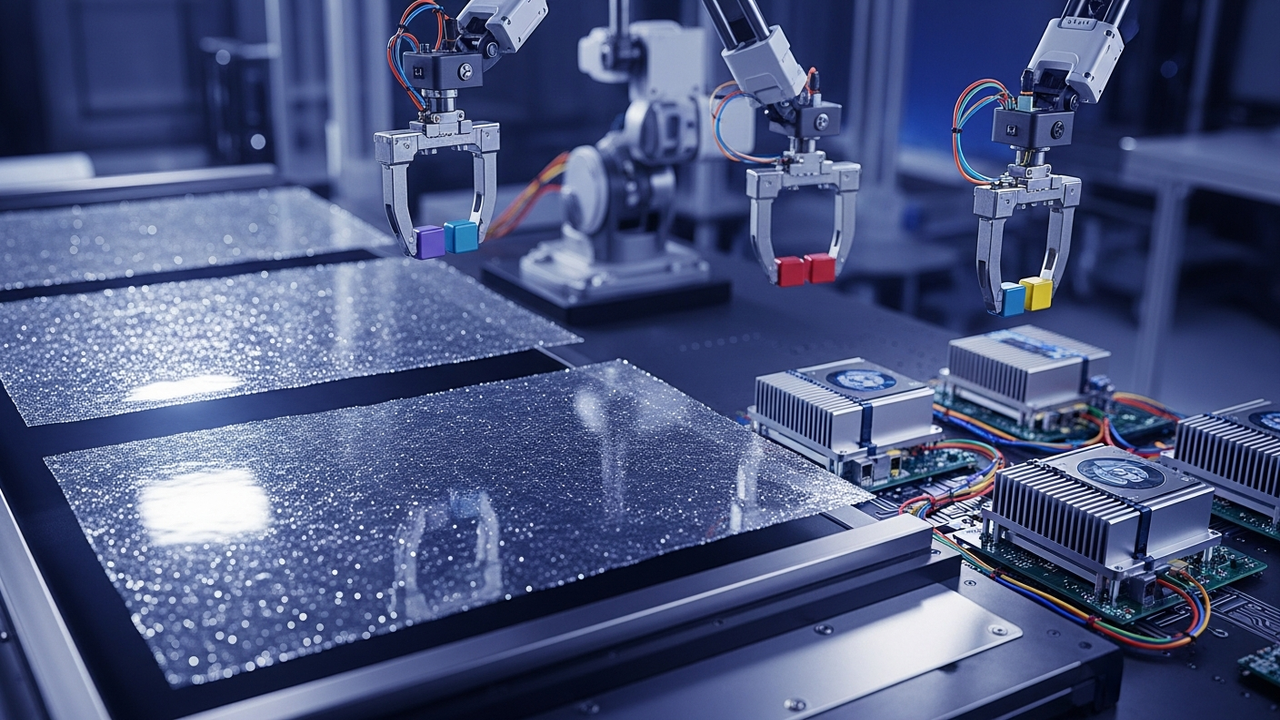
Avadain, a U.S. company, has developed a revolutionary type of graphene known as Large-Thin-Defect-Free (LTDF) graphene. This breakthrough material aims to deliver high value in three strategic application areas: reducing dependence on foreign critical minerals, enhancing rare-earth-free iron nitride (Fe₂₁₆N₂) permanent magnets, and improving cooling efficiency in high-power electronics.
Technical / Clinical Details
Avadain’s LTDF graphene is distinguished by its ability to be produced in larger sheet sizes, with fewer defects, and extreme thinness compared to conventional graphene manufacturing methods. This high-quality graphene holds the potential to dramatically enhance various material properties. The first application area addresses the reduction of reliance on foreign critical minerals, for instance, by using graphene in battery materials or catalysts to decrease the amount of scarce metals required. Secondly, it targets the enhancement of rare-earth-free iron nitride (Fe₂₁₆N₂) permanent magnets. By incorporating LTDF graphene as a composite material, it can improve the thermal stability and magnetic properties of magnets, fostering the development of magnets that rival or surpass the performance of existing rare-earth magnets. Thirdly, it focuses on improving heat dissipation in high-power electronics. Leveraging graphene’s exceptional thermal conductivity, its application in heat sinks and thermal management materials for power devices can prevent performance degradation and failures due to overheating, thereby extending device lifespan and efficiency. Avadain employs a licensing business model for its LTDF graphene technology, with an initial licensing agreement with Harcros Chemicals serving as a critical step to validate its scalability from laboratory to industrial production.
Background & Context
Graphene has long been hailed as a ‘wonder material,’ but its commercialization has faced significant challenges due to difficulties in achieving high-quality, large-scale production. Avadain’s LTDF graphene aims to overcome these production hurdles, enabling practical applications across a wide range of industries. International dependence on critical minerals, particularly the supply risks associated with rare earths, is an urgent concern for governments worldwide, making the development of rare-earth-free magnets a top priority. Furthermore, thermal management in high-power electronic devices represents a bottleneck for performance enhancement and miniaturization, where improved cooling efficiency through graphene could be a major breakthrough for the semiconductor industry.
Strategic Significance & Outlook
If Avadain’s LTDF graphene technology successfully transitions to industrial-scale production with Harcros Chemicals, its impact will be far-reaching. The proliferation of rare-earth-free magnets will contribute to stabilizing supply chains in the electric vehicle and renewable energy sectors, globally reducing reliance on critical minerals. Furthermore, highly efficient thermal management solutions will dramatically improve the performance of next-generation data centers, EV inverters, and 5G devices, fostering the realization of an energy-efficient society. Avadain’s licensing model enables rapid market introduction of graphene technology, accelerating ‘interesting’ innovations in these strategic application areas.
Get our weekly technology intelligence — free
Receive an infographic that lets you judge at a glance whether each field’s analysis report is worth reading.
Subscribe Free — Weekly Tech Intelligence
By subscribing, you’ll receive Troy-Technical’s weekly technology intelligence newsletter.
- Your email and selected fields are used only to deliver the newsletter.
- We never share your information with third parties.
- You can unsubscribe anytime via the link in each email.
See our Privacy Policy for details.
Takes about a minute · Unsubscribe anytime





Comments