Key Findings
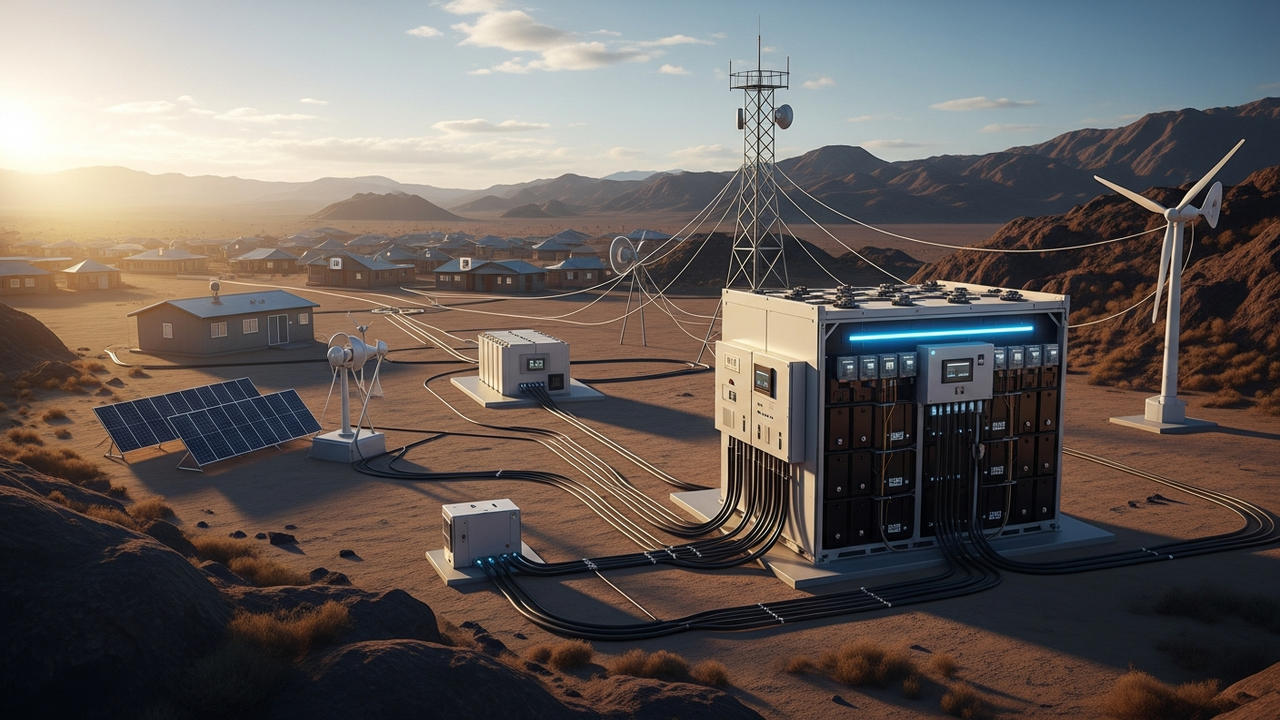
The integration of battery storage technology within microgrid systems is dramatically improving power supply resilience and energy independence, particularly in remote and disaster-prone areas. These autonomous power systems reduce reliance on traditional centralized power grids, enabling continuous and stable electricity supply during natural disasters or outages of the main grid by combining renewable energy sources such as solar and wind power with battery storage. This helps maintain the functionality of social infrastructure and contributes to the stabilization of local economies.
Technical / Clinical Details
Battery storage systems deployed in microgrids typically consist of lithium-ion batteries, though flow batteries and other long-duration energy storage (LDES) technologies are also adopted when extended storage is required. These batteries are intelligently controlled by a microgrid’s Energy Management System (EMS) to optimally balance generation (renewable energy, small-scale diesel generation, etc.), load (demand), and grid connection (interfacing with the centralized grid). Batteries smooth the variability of renewable energy, supply power during peak demand, and enable autonomous ‘island mode’ operation when grid connection is interrupted. This also helps alleviate transmission congestion and improves local power quality.
Background & Context
Many regions worldwide face challenges such as aging power infrastructure, an increase in natural disasters, and energy access issues. Particularly in remote or isolated communities far from the main grid, power supply tends to be unstable and costly. Microgrids are gaining attention as a cost-effective solution to these challenges, with the combination of renewable energy and battery storage forming their core. Governments and international organizations are actively promoting microgrid deployment as part of energy poverty alleviation, climate change adaptation, and economic development strategies.
Strategic Significance & Outlook
Battery deployment in microgrids is expected to accelerate globally. This will lead to the widespread adoption of clean, reliable electricity, especially in rural areas of developing countries and regions with unstable power supply. Technically, falling battery costs, increased energy density, and the evolution of AI-powered EMS will further enhance microgrid performance and economics. In the future, multiple microgrids could interconnect to form larger virtual power networks, further strengthening regional power resilience. This technology is expected to play an indispensable role in improving global energy access, enhancing grid resilience, and realizing sustainable local communities.
Source: #
Get our weekly technology intelligence — free
Receive an infographic that lets you judge at a glance whether each field’s analysis report is worth reading.
Subscribe Free — Weekly Tech Intelligence
By subscribing, you’ll receive Troy-Technical’s weekly technology intelligence newsletter.
- Your email and selected fields are used only to deliver the newsletter.
- We never share your information with third parties.
- You can unsubscribe anytime via the link in each email.
See our Privacy Policy for details.
Takes about a minute · Unsubscribe anytime









Comments