U.S. Department of Energy– tag –
-

Autonomous Laboratories Spark Paradigm Shift in Materials Science, Accelerating Development Through Evolving Algorithms and Hardware
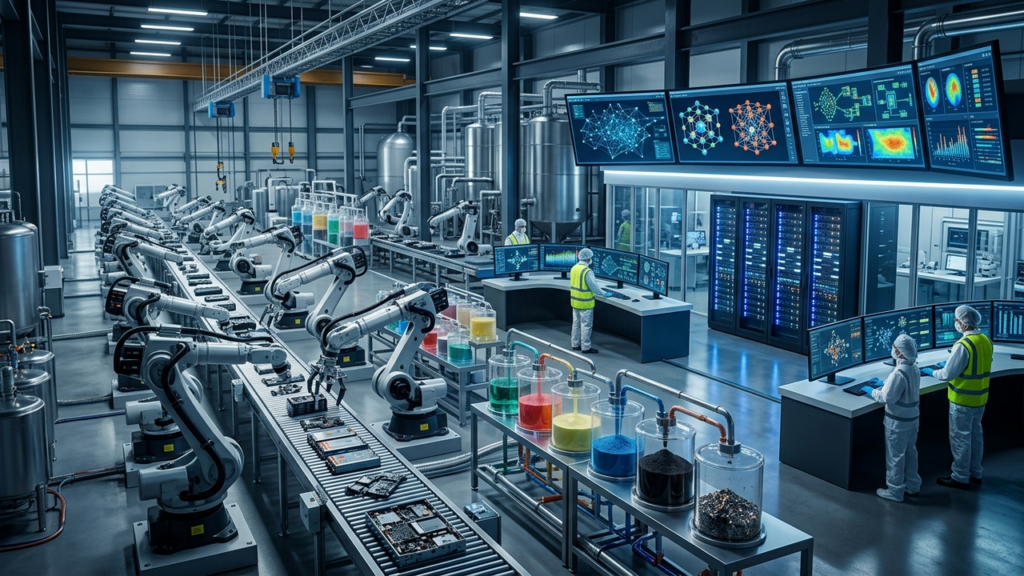
Facebook Unknown Overview Autonomous Laboratories (SDLs) are fundamentally transforming materials science, enabling unprecedented acceleration in materials discovery through autonomous exploration. By integrating advanced AI—from machine... -
AI-Powered Autonomous Labs Face Bottleneck: Hypothesis Generation Outpaces Physical Validation
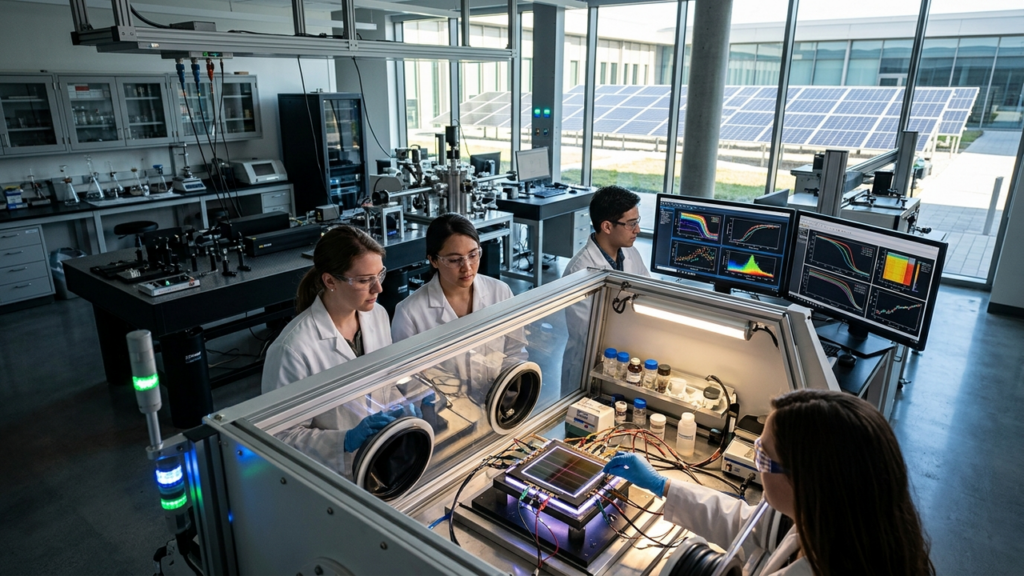
vertexaisearch.cloud.google.com Unknown Overview Autonomous laboratories, integrating robotics, high-throughput experiments, and AI, are revolutionizing scientific discovery by enabling continuous, adaptive learning cycles. While these s... -
Lawrence Berkeley National Laboratory Unveils Quantum Accuracy Scale Transition from DFT to MLIP and Plans for Two Autonomous Labs at 2026 Annual Meeting
Lawrence Berkeley National Laboratory USA Overview Lawrence Berkeley National Laboratory's Molecular Foundry highlighted the quantum accuracy scale transition from DFT to MLIP in a keynote at its 2026 Annual Meeting. They also announced ... -
U.S. Department of Energy Leverages AI and Supercomputing for Critical Mineral Recovery from Lithium-Ion Battery Recycling
GovCIO USA Overview The U.S. Department of Energy (DOE) is advancing a project at SLAC National Accelerator Laboratory, led by Stanford University, utilizing an AI agent team to efficiently recover critical minerals like nickel and cobal... -
Universal MLIPs Face Generalization Challenges, ACS Study Highlights Need for Iterative Fine-Tuning of Material-Specific Models
ACS Publications USA Overview An ACS Publications paper highlights that while Universal Machine Learning Interatomic Potentials (MLIPs) are rapidly becoming general tools for atomic simulations, their role in quantitative material modeli... -
Tandem PV Secures $7.7M DOE Grant to Accelerate US Commercialization of 29.7% Efficient Perovskite-Silicon Tandem Solar Cells
PV Tech USA Overview Tandem PV, a California-based startup, has been awarded a $7.7 million grant from the U.S. Department of Energy's ARPA-E SCALEUP Ready program. This funding will expedite the commercial-scale production and domestic ... -
HZB Achieves 30.3% Efficiency in Perovskite-Silicon Tandem Solar Cells Using Solvent-Free Co-Evaporation with Ultra-Thin CsCl Layer
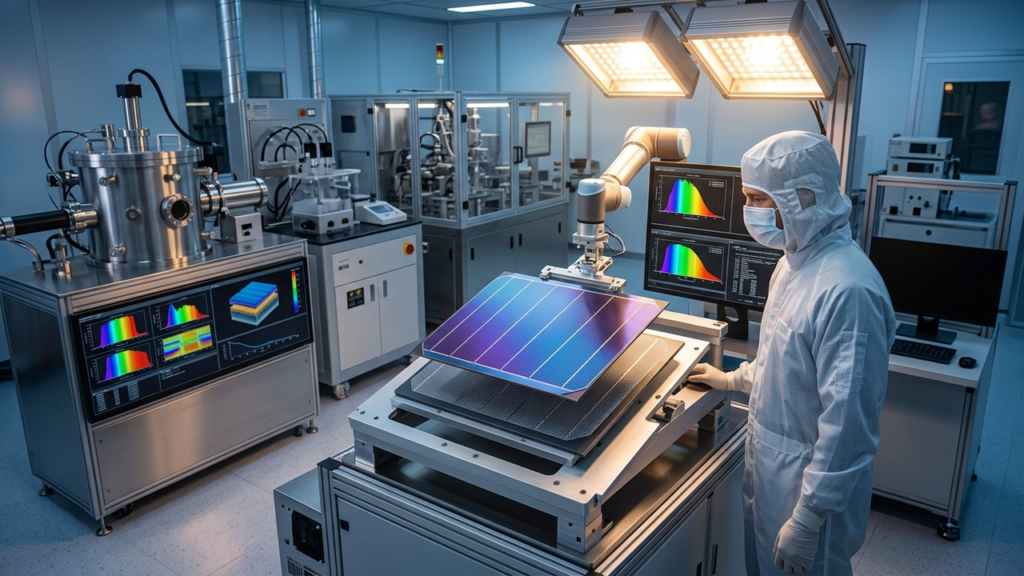
XenoSpectrum Germany Overview Germany's Helmholtz-Zentrum Berlin (HZB) has achieved a 30.3% (certified 29.7%) power conversion efficiency for perovskite-silicon tandem solar cells, employing a solvent-free co-evaporation method and an ul... -
U.S. DOE Backs Perovskite Solar Cell R&D, Highlighting >26% for Standalone and ~34% for Tandem Efficiencies
U.S. Department of Energy (DOE) USA Overview The U.S. Department of Energy (DOE) is actively supporting research and development for perovskite solar cells, aiming to enhance efficiency, extend lifespan, and reduce manufacturing costs. N... -
Review Highlights PLGA and LNP Nanomaterials as Key to Inducing Transplantation Tolerance, Improving Targeted Delivery and Sustained Release
Frontiers in Immunology International Overview A review in *Frontiers in Immunology* outlines advances in nanomaterial-based delivery systems for inducing transplantation tolerance. Polylactic-co-glycolic acid (PLGA) polymeric nanopartic... -
Quantum Computing Inc. (QCI) Revenue Surges to $5.55 Million in Q2 2026, Maintains $1.3 Billion Cash Position, Continues M&A Strategy for Room-Temperature Quantum Solutions
Simply Wall St USA Overview Quantum Computing Inc. (QCI) reported a significant year-over-year revenue increase to $5.55 million in Q2 2026, while narrowing its net loss to $11.75 million. The company maintains a robust cash position of ...