Background and Challenges in Clinical Medicine
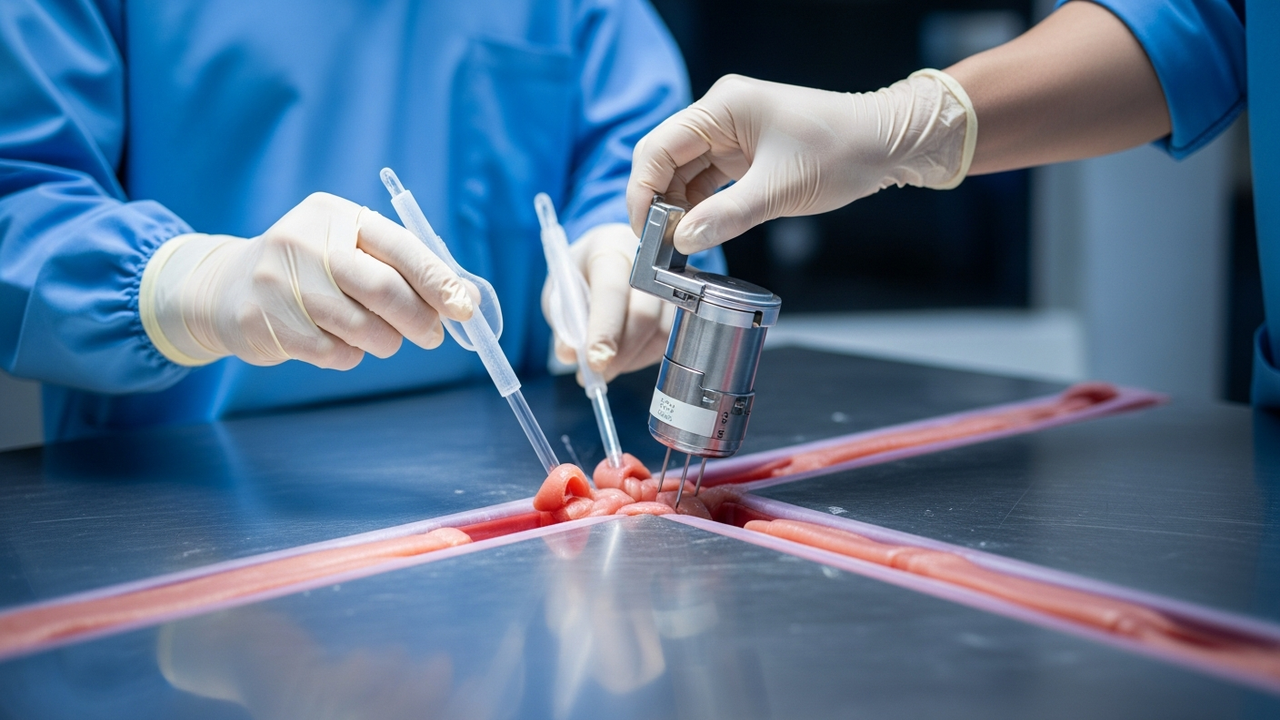
In surgical procedures and trauma care, rapid control of bleeding and effective adhesion to wet biological tissues are critical factors significantly impacting patient outcomes. Conventional hemostatic agents and adhesives have been limited by insufficient bond strength, diminished performance in moist environments, prolonged curing times, or issues with biocompatibility. Particularly for deep-seated tissues or vascular injuries where sustained compression is difficult, there has been a strong demand for instantly acting and highly reliable adhesive hemostatic materials.
Technical Innovation: Multi-Network Bio-Adhesive Sealant
The research published in Nature Communications describes the development of an innovative shear-thinning bio-adhesive sealant that simultaneously achieves wet tissue adhesion and instantaneous hemostatic capabilities. This sealant possesses the following key technical features:
- Multi-Network Architecture: It adopts a complex multi-network structure where polymer chains are strategically cross-linked via different types of interactions: hydrogen bonds, ionic bonds, and covalent bonds. This design imparts high mechanical strength and responsiveness to external stimuli.
- Shear-Thinning Property: The sealant exhibits reduced viscosity under shear stress, such as during stirring or application, allowing for smooth, precise delivery. Upon removal of shear stress, its viscosity rapidly recovers, enabling it to maintain its form in situ. This property allows surgeons to accurately and easily apply the sealant to the target area, where it immediately establishes stable adhesion.
- High Burst Strength and Reversible Shear Responsiveness: Once adhered, it demonstrates high strength capable of withstanding arterial burst pressures. Furthermore, it is suggested to possess the ability to respond reversibly to specific mechanical shear stresses, indicating potential for future removal or adjustment.
- Wet Tissue Adhesion and Instant Hemostasis: The sealant exhibits excellent adhesion even on wet biological tissue surfaces and achieves instantaneous hemostatic effects, stopping bleeding shortly after application. This significantly improves therapeutic efficacy for non-compressive wounds and deep hemorrhages.
Technical Significance and Future Outlook
This bio-adhesive sealant holds the potential to revolutionize medical fields, particularly surgery and emergency medicine. By combining rapid hemostasis, adhesion in moist environments, and high mechanical strength, it is expected to overcome the limitations of existing therapeutic methods and contribute to improving patient prognoses. This research expands the possibilities of multi-network polymers in biomaterial design and presents new design principles for medical adhesives and sealants. In the future, based on this technology, the development of more advanced multifunctional sealants with drug delivery or tissue regeneration capabilities is anticipated, with applications in regenerative medicine and advanced surgical fields.






Comments