Key Findings
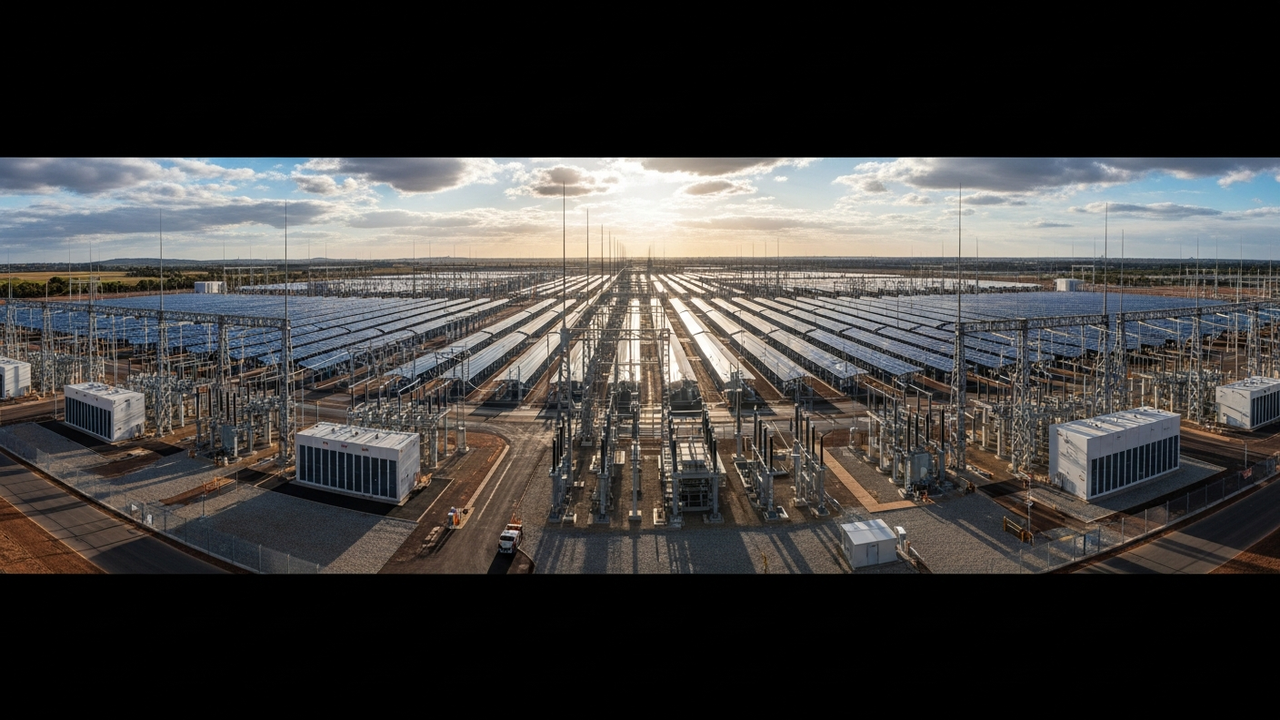
According to a report by the International Energy Agency (IEA), global battery storage capacity additions reached an unprecedented 108 GW in 2025, marking a 40% increase from 2024 and setting a new all-time record. This exponential growth is predominantly fueled by utility-scale battery storage projects, which constituted approximately 87 GW of the total additions. Australia, in particular, experienced a dramatic surge, with deployments skyrocketing to nearly 8 GW, representing a nearly nine-fold increase from the previous year, underscoring the dynamic expansion of the battery storage market.
Technical Details and Applications
Battery energy storage systems (BESS) are solidifying their role as a critical “multi-tool” in electricity grids, serving diverse functions such as grid stabilization, renewable energy integration, and providing power during peak demand. Their evolution is progressing on several fronts:
- Utility-Scale Leadership: Large-scale battery storage projects are frequently co-located with renewable energy power plants (solar, wind) and are indispensable for supplying stable power from intermittent sources. This enhances grid flexibility and reduces reliance on fossil fuels.
- Regional Growth Drivers: China remains the largest deployer globally, with the United States and Europe also being major markets. The U.S. added 19 GW, and Europe saw approximately 6.2 GW of new capacity, with both regions showing a structural shift towards utility-scale systems. Australia’s rapid growth reflects aggressive investments towards achieving its renewable energy targets.
- Cost Reductions: Battery costs have plummeted by over 90% since 2010, providing a powerful impetus for large-scale deployments. This cost decline has shifted the primary use case of batteries from ancillary services to longer-duration energy shifting. The average duration of storage projects also increased from 2 hours in 2023 to 3 hours in 2025.
- Technological Diversification: While lithium-ion batteries remain the dominant technology, long-duration energy storage (LDES) solutions such as iron-air batteries (e.g., Form Energy) and vanadium flow batteries are also being developed to meet multi-hour to multi-day storage needs. For instance, in Switzerland, FlexBase Group and Invinity Energy Systems are constructing a 2.1 GWh vanadium flow battery system, projected to be one of the world’s largest installations, offering decades of operation with minimal performance loss.
Background & Context
Global electricity systems are accelerating their transition to renewable energy sources, driven by climate change mitigation and energy security imperatives. Successful decarbonization hinges on effective energy storage solutions that can stably integrate variable solar and wind power. The burgeoning demand from AI data centers further strains grids, amplifying the need for robust and flexible power infrastructure. Governments worldwide are implementing policies and incentives, such as the U.S. IRA and Italy’s MACSE auctions, to accelerate BESS deployment and strengthen domestic supply chains. However, challenges persist, including reliance on critical materials from China and manufacturing hurdles in Europe, such as high scrap rates and low yields during factory ramp-ups.
Strategic Significance & Outlook
The global battery storage market is projected to continue its exponential growth. The further proliferation of renewable energy, extended range for electric vehicles, and increased power demand from AI data centers will be key drivers. The commercialization and cost reduction of long-duration energy storage technologies are particularly crucial steps toward enhancing grid stability and achieving full decarbonization. Government-mandated storage targets (e.g., Italy’s goal of 42 GWh by 2030) will further accelerate market expansion. Innovations in manufacturing processes, such as dry electrode technology, and diversification of supply chains are also indispensable for the industry’s sustainable growth.
Source: https://www.iea.org/commentaries/battery-storage-is-scaling-up-and-taking-on-a-larger-system-role








Comments