Key Findings
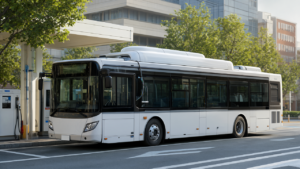
The state of Uttar Pradesh in India has launched three hydrogen buses, alongside 45 electric buses, as part of its initiative to enhance sustainable public transportation. These hydrogen buses, sourced from NTPC, boast a 42-passenger capacity and a 56kg hydrogen storage, enabling an impressive range of up to 750km on a single fueling. The deployment aims to provide zero-emission connectivity to the under-construction Jewar International Airport, marking a pivotal step in assessing the real-world operational viability of hydrogen fuel cell buses in India.
Technical / Clinical Details
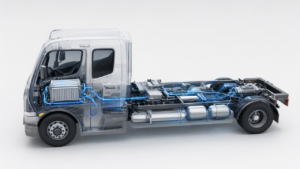
The newly introduced hydrogen buses are equipped with advanced fuel cell technology, which generates electricity through the chemical reaction between hydrogen and oxygen, powering an electric motor. This process ensures that only water is emitted during operation, eliminating CO2 and other harmful pollutants. The 56kg hydrogen storage capacity is key to enabling long-distance travel, making these buses particularly suitable for intercity routes and airport access services. The 750km range offers a significant advantage over many current electric buses, facilitating easier operation even in regions with developing charging infrastructure.
Background & Context
India faces the dual challenges of rapid economic growth-induced air pollution and the imperative to secure energy independence. Consequently, the government is strongly advocating for the adoption of renewable energy and clean mobility solutions, with hydrogen energy identified as a core technology. The introduction of hydrogen buses by Uttar Pradesh demonstrates a coordinated effort between federal policies and concrete regional initiatives. Decarbonizing public transport is expected to significantly improve urban air quality and reduce reliance on fossil fuels.
Strategic Significance & Outlook
This deployment of hydrogen buses serves as a litmus test for the further expansion of hydrogen mobility in India. Operational data collected during the trial will be crucial for informing future hydrogen infrastructure planning, evaluating operational costs, and optimizing the technology. The goal of providing sustainable access to the Jewar International Airport presents an excellent opportunity to showcase the environmental and operational benefits of hydrogen buses. In the long term, hydrogen bus adoption is expected to accelerate across major Indian cities and transport networks, significantly contributing to the nation’s decarbonization targets. This trend could also open new business opportunities for global bus manufacturers and fuel cell suppliers in the Indian market.
Get our weekly technology intelligence — free
Receive an infographic that lets you judge at a glance whether each field’s analysis report is worth reading.
Subscribe Free — Weekly Tech Intelligence
By subscribing, you’ll receive Troy-Technical’s weekly technology intelligence newsletter.
- Your email and selected fields are used only to deliver the newsletter.
- We never share your information with third parties.
- You can unsubscribe anytime via the link in each email.
See our Privacy Policy for details.
Takes about a minute · Unsubscribe anytime