Key Findings
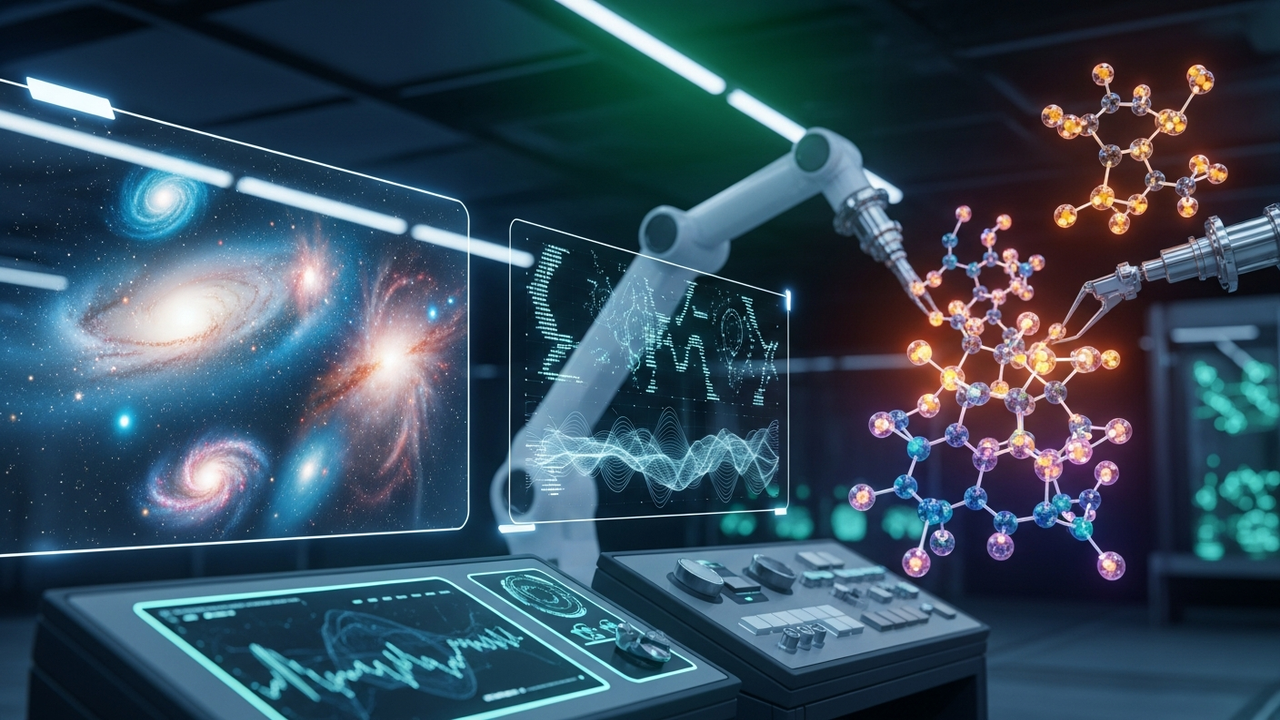
The American Chemical Society (ACS) has released a podcast titled “Chemistry in the New Space Age,” focusing on the critical role and future potential of chemistry in space exploration. The discussion emphasized technological innovations that chemistry brings to the space industry across fields such as materials science, bioengineering, and long-duration life support systems. Significantly, it suggested the potential for artificial intelligence (AI) to contribute to the formation of entirely new molecules in space, not found on Earth.
Discussion Content and Technical Details
- Materials Science in Space: The podcast discussed the imperative development of new materials capable of functioning in the extreme environment of space. This includes radiation-resistant materials, thermal management materials for extreme temperature fluctuations, and lightweight, high-strength composites. Chemists play a central role in designing and synthesizing materials with these properties.
- Bioengineering and Life Support Systems: For long-duration space missions and space habitation, closed-loop life support systems (CLSS) are essential. Chemistry is deeply involved in every aspect of CLSS, including water recycling, air purification, and food production (space agriculture). Bioengineering contributes to astronaut health maintenance and pharmaceutical manufacturing through microgravity cell culture and tissue engineering.
- AI and Novel Molecular Formation: One of the most notable discussions revolved around the possibility of AI revolutionizing chemical synthesis processes, designing and generating new molecules in space environments that do not naturally exist on Earth or are extremely difficult to synthesize. AI could complement and surpass human capabilities in optimizing molecular structures, predicting reaction pathways, and exploring unknown chemical spaces. This opens new avenues for on-demand manufacturing in space and the development of novel materials utilizing unique space-specific chemical reactions.
- Chemical Characteristics of the Space Environment: The unique chemical and physical characteristics of space, such as vacuum, microgravity, and high radiation levels, were also discussed as factors that could foster different reaction pathways and molecular structure formations compared to Earth.
Background & Industry Context
The “New Space Age” refers to the current era where, in addition to government-led exploration, the commercial sector is a major driving force in space development, with new economic activities such as space tourism, resource extraction, and in-orbit manufacturing becoming increasingly active. In this era, chemistry is positioned as a fundamental and indispensable scientific field for building space infrastructure, innovating life support systems, and creating new commercial opportunities. The integration with advanced technologies like AI will further accelerate progress in this field.
Future Outlook
The discussions presented in the ACS podcast suggest the direction for research and innovation in space chemistry. Particularly, the discovery and synthesis of new molecules through the use of AI have the potential to push the technological boundaries of space exploration and bring about groundbreaking advancements in our understanding of the possibility of life in space. In the future, the fusion of chemistry and AI is expected to create new pharmaceuticals, fuels, and materials adapted to the space environment, making humanity’s presence in space more sustainable and enriched.
Source: https://www.acs.org/pressroom/chain-reaction/new-space-age.html
Get our weekly technology intelligence — free
Receive an infographic that lets you judge at a glance whether each field’s analysis report is worth reading.
Subscribe Free — Weekly Tech Intelligence
By subscribing, you’ll receive Troy-Technical’s weekly technology intelligence newsletter.
- Your email and selected fields are used only to deliver the newsletter.
- We never share your information with third parties.
- You can unsubscribe anytime via the link in each email.
See our Privacy Policy for details.
Takes about a minute · Unsubscribe anytime



Comments