Key Findings
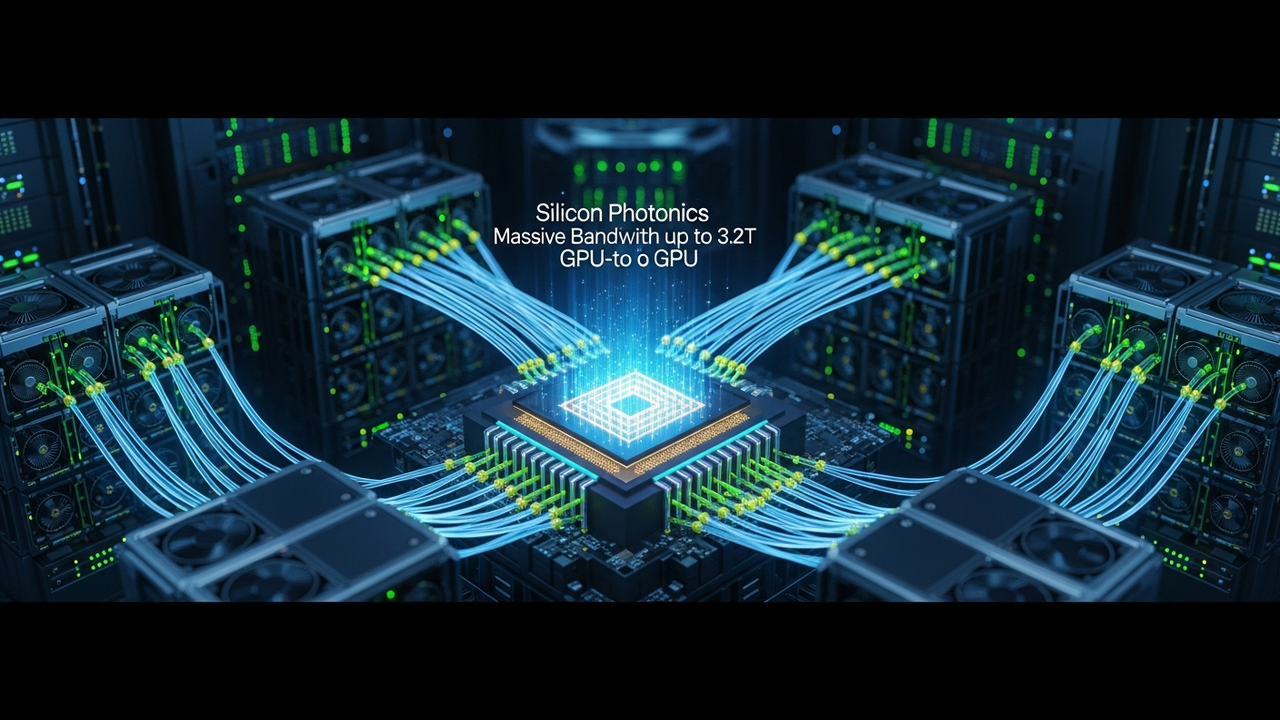
Marvell has announced a substantial expansion of its silicon photonics solutions portfolio, designed to meet the explosive bandwidth requirements for GPU-to-GPU and intra-rack connectivity within AI and HPC data centers. The company’s latest product line supports data transmission speeds of up to 3.2 terabits per second (Tbps) while simultaneously improving power efficiency by 25% compared to existing solutions, thereby elevating AI infrastructure performance and sustainability to new levels.
Technical / Clinical Details
- Marvell’s new silicon photonics platform features highly integrated optical engines and Digital Signal Processing (DSP) chips. This maximal integration of optical and electrical components enables high-speed data transmission at low power consumption.
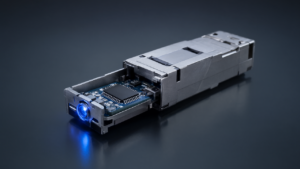
- The product portfolio includes optical transceivers supporting 800G and 1.6T, with a future roadmap outlined for 3.2T-capable solutions. These products utilize PAM4 modulation technology in conjunction with advanced Forward Error Correction (FEC) algorithms to ensure reliable data transmission.
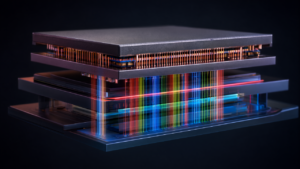
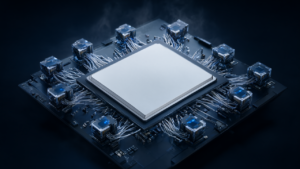
- Notably, these solutions are also compatible with in-package optics (such as Co-Packaged Optics or Near-Packaged Optics), designed for close proximity to GPUs and AI accelerators. This enables ultra-high-speed optical connections over short chip-to-chip distances, effectively resolving data movement bottlenecks.
Background & Context
The scaling of AI models and the increasing parallelism of processing have placed unprecedented demands on data center internal networks. Particularly in large-scale AI clusters, where thousands or even tens of thousands of GPUs operate cooperatively, fast and low-latency data transfer between GPUs dictates overall computational performance. Traditional copper cables and early optical modules have struggled to meet these demands due to issues of power consumption, thermal density, and signal attenuation. Silicon photonics, due to its inherent scalability and cost advantages, has emerged as the most promising technology to address these challenges.
Strategic Significance & Outlook
Marvell’s reinforced silicon photonics solutions are poised to play a critical role in the design and deployment of next-generation AI infrastructure. The company’s technology is expected to be adopted in high-performance AI accelerator systems and HPC clusters through collaborations with leading AI chip manufacturers and cloud service providers. This will likely push the boundaries of AI computational capabilities further, accelerating innovation across diverse fields such as autonomous driving, drug discovery, and scientific research.
Source: https://www.marvell.com/newsroom/XXXXXX/silicon-photonics-ai-infrastructure.html
Get our weekly technology intelligence — free
Receive an infographic that lets you judge at a glance whether each field’s analysis report is worth reading.
Subscribe Free — Weekly Tech Intelligence
By subscribing, you’ll receive Troy-Technical’s weekly technology intelligence newsletter.
- Your email and selected fields are used only to deliver the newsletter.
- We never share your information with third parties.
- You can unsubscribe anytime via the link in each email.
See our Privacy Policy for details.
Takes about a minute · Unsubscribe anytime