Background
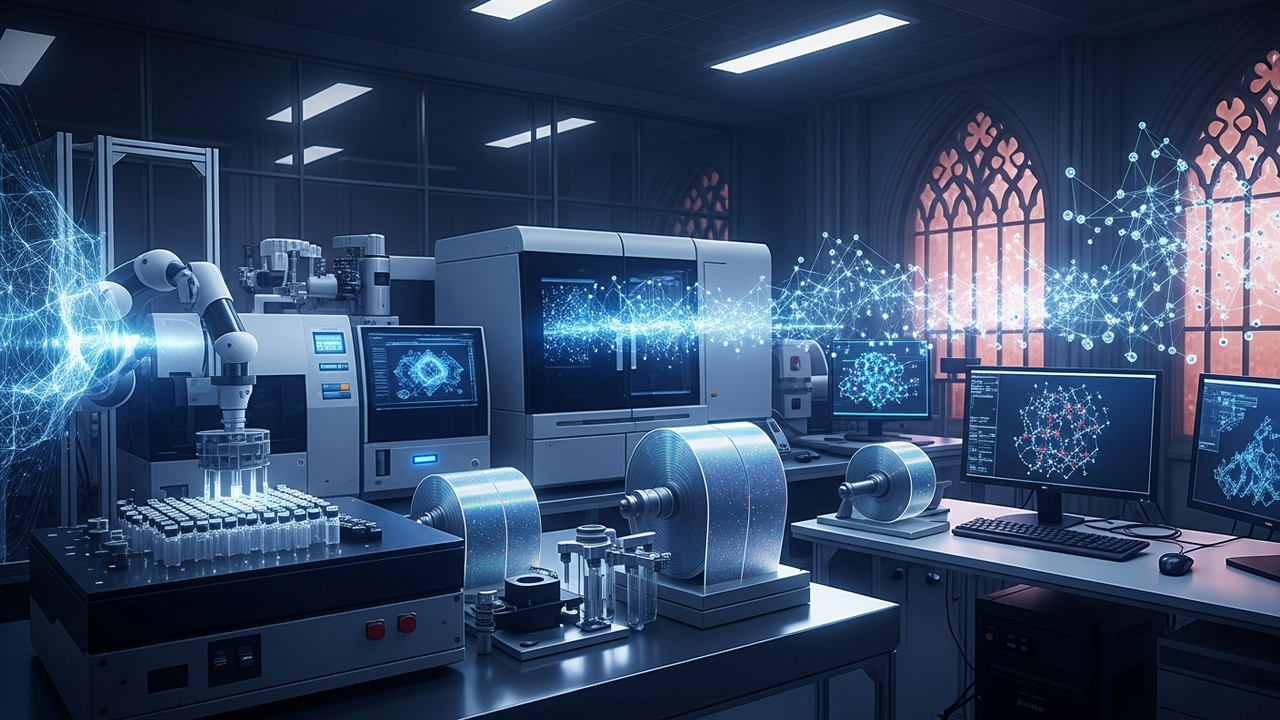
Molecular discovery is a cornerstone process across numerous industries, from pharmaceuticals and materials science to chemical engineering, yet it remains inherently time-consuming and costly. Designing novel molecules with precise functionalities has been particularly challenging, primarily due to the vast and complex chemical design space. However, recent advancements in data-centric machine learning (ML) and, notably, generative foundation models, are presenting powerful solutions to this long-standing problem. These intelligent systems enable researchers to rapidly and efficiently explore new molecular candidates, accurately predict their properties, and even suggest viable synthesis pathways, thereby moving beyond traditional, often slow, trial-and-error methods.
Key Findings
A recent Ph.D. dissertation from the University of Notre Dame introduces groundbreaking approaches that leverage data-centric ML and foundation models to significantly accelerate molecular discovery, with a specific emphasis on applications such as advanced gas separation polymer membranes. The research details substantial progress in several areas, including:
- Data-Centric ML for Robust Predictions: The study underscores the critical role of high-quality, diverse datasets in maximizing model performance and reliability. It advocates for meticulous data collection, curation, preprocessing, and augmentation strategies to empower ML models with more dependable predictive capabilities.
- Graph Learning for Molecular Property Prediction: Molecules are intrinsically represented as graph structures, enabling the use of Graph Neural Networks (GNNs) to predict their physical and chemical properties, such as gas permeability, selectivity, and stability. GNNs are uniquely effective as they directly model atomic bonds and spatial relationships, efficiently capturing the intricate structural features that dictate molecular behavior.
- Graph Diffusion Transformers (GDTs) for Inverse Molecular Design: Moving beyond conventional forward design—where properties of a given molecule are predicted—this research pioneers inverse design. It focuses on generating novel molecular structures based on a set of desired properties (e.g., high selectivity for a specific gas). GDTs achieve this by combining powerful diffusion models with Transformer architectures, allowing for the efficient exploration of vast molecular design spaces and the generation of innovative structures. This capability marks a crucial step toward discovering molecules with pre-specified functionalities.
The dissertation champions the integration of all phases of molecular discovery—spanning data, models, synthesis planning, software tools, benchmarks, and experimental validation—into a cohesive, comprehensive AI workflow. This holistic strategy ensures that each stage is interconnected and optimized, dramatically streamlining the entire discovery cycle. The practical application to gas separation polymer membranes holds direct relevance for critical technological innovations in energy and environmental sectors, including advanced CO2 capture and efficient hydrogen purification.
Looking forward, the data-centric ML and GDT developments presented are poised to profoundly reshape the landscape of molecular discovery. Beyond optimizing gas separation, these methodologies hold immense promise for diverse fields such as drug discovery, catalyst design, and the development of organic electronic materials. This integrated AI workflow is expected to dramatically boost R&D efficiency, shorten product development cycles in industry, and accelerate technological innovation globally. Ultimately, the vision is for AI, synergistically integrated with human expertise, to enable autonomous systems capable of discovering unknown molecules and maximizing their functionalities, ushering in a new era of chemical and materials innovation.
Get our weekly technology intelligence — free
Receive an infographic that lets you judge at a glance whether each field’s analysis report is worth reading.
Subscribe Free — Weekly Tech Intelligence
By subscribing, you’ll receive Troy-Technical’s weekly technology intelligence newsletter.
- Your email and selected fields are used only to deliver the newsletter.
- We never share your information with third parties.
- You can unsubscribe anytime via the link in each email.
See our Privacy Policy for details.
Takes about a minute · Unsubscribe anytime




Comments