Background
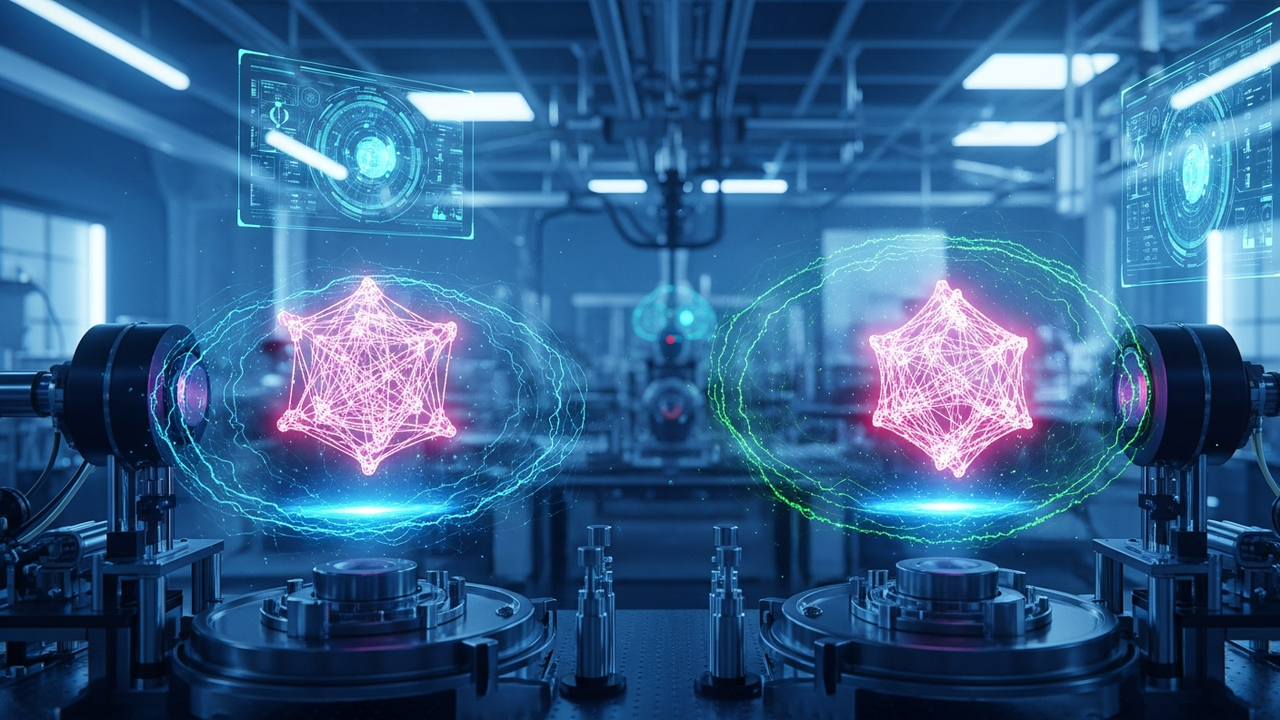
Room-temperature superconductors represent a “holy grail” across numerous technological domains, promising revolutionary advancements in areas such as lossless power transmission, ultrafast computing, and advanced medical imaging (MRI). However, their discovery has remained an formidable challenge, historically demanding vast amounts of time and resources. Previous research efforts predominantly involved incremental modifications of known materials or constrained explorations within limited chemical parameter spaces. The novel integration of artificial intelligence (AI) and quantum physics fundamentally expands this search domain, paving the way for the discovery of entirely new materials that might otherwise remain unexplored. This methodology is poised to play a pivotal role in accelerating the pace of material innovation, particularly for green energy and quantum technology applications.
Key Findings
A research team at Aalto University in Finland has developed a groundbreaking methodology that innovatively fuses machine learning (ML) with the fundamental principles of quantum physics. This integrated approach dramatically accelerates the identification of promising room-temperature superconductor candidates. Leveraging this AI-driven framework, the researchers have already successfully identified two novel superconducting materials. This transformative methodology enables the rapid downselection of viable candidates from an almost infinite combinatorial landscape of material possibilities, representing a significant leap forward in the pursuit of advanced superconducting materials.
Technical Details
The core of this developed technique lies in ML models that learn directly from quantum physics calculations to predict the properties of materials likely to exhibit superconductivity. This significantly curtails the laborious screening time typically associated with traditional trial-and-error experiments or computationally intensive simulations. The approach precisely models electron behavior at the atomic level, enabling the AI to decipher the complex quantum interactions that govern superconducting transition temperatures (Tc). The team utilized this integrated model to forecast the probability of materials, characterized by specific crystal structures and elemental compositions, becoming superconductors. Based on these high-confidence predictions, they successfully identified two materials exhibiting stable superconducting properties. While the precise material compositions and detailed characteristics await further announcement, this rapid discovery capability underscores a substantial enhancement in the efficiency and scope of material exploration.
Strategic Significance & Outlook
The research outcomes from Aalto University establish a versatile platform with implications far beyond superconductor exploration. This methodology is readily applicable to the discovery of other critical functional materials, including high-efficiency catalysts and next-generation battery components. The research team aims to further refine the accuracy and computational efficiency of this AI-driven approach, continuing to uncover additional room-temperature superconductor candidates and rigorously validating their practical utility. Broad adoption of this methodology could fundamentally automate and dramatically accelerate the entire material discovery pipeline, thereby making significant contributions to technological innovations essential for a sustainable global society.
Source: https://www.sciencedaily.com/releases/2026/07/260701205006.htm
Get our weekly technology intelligence — free
Receive an infographic that lets you judge at a glance whether each field’s analysis report is worth reading.
Subscribe Free — Weekly Tech Intelligence
By subscribing, you’ll receive Troy-Technical’s weekly technology intelligence newsletter.
- Your email and selected fields are used only to deliver the newsletter.
- We never share your information with third parties.
- You can unsubscribe anytime via the link in each email.
See our Privacy Policy for details.
Takes about a minute · Unsubscribe anytime





Comments