Key Findings
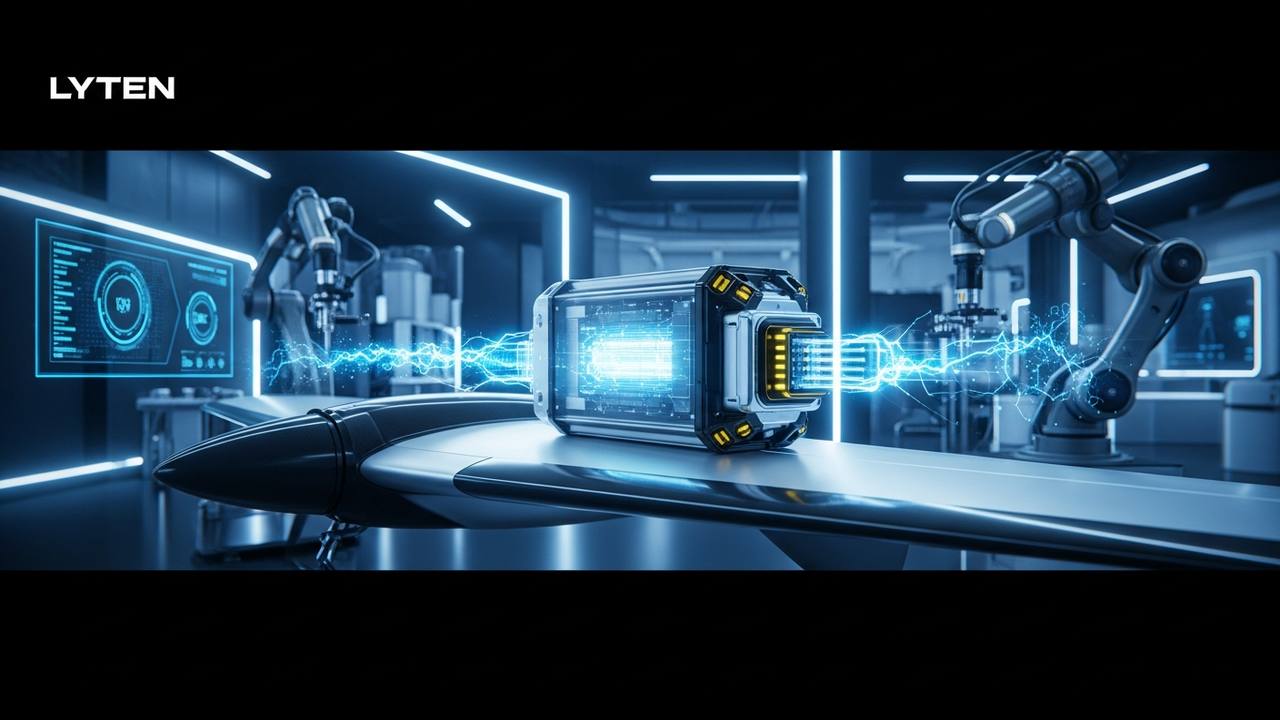
Lyten has announced a significant breakthrough in the performance of its lithium-sulfur (Li-S) battery technology. This advancement considerably progresses the application of Li-S batteries, particularly in the aviation sector, enabling the provision of lightweight, high-energy-density battery solutions at levels previously unachievable for drones and electric aircraft. The company’s technology is expected to directly contribute to extended flight times and increased payload capacity, thereby accelerating the electrification of the aviation industry.
Technical / Clinical Details
Lyten’s developed lithium-sulfur battery overcomes key challenges that plagued conventional Li-S batteries by incorporating the company’s proprietary 3D graphene material, ‘LytR,’ into its electrode structure. Traditional Li-S batteries suffered from limited cycle life and energy density due to issues like low sulfur conductivity, the polysulfide shuttle effect, and degradation of the lithium anode. Lyten’s technology addresses these problems by enhancing sulfur cathode utilization efficiency, suppressing the shuttle effect, and improving the stability of the lithium metal anode. This approach theoretically achieves an energy density exceeding 500 Wh/kg, significantly higher than existing lithium-ion batteries, while providing long-term reliability and safety at a practical level.
Background & Context
The aviation industry faces intense pressure to electrify due to climate change concerns and the need for operational cost reduction. However, a persistent challenge for aircraft electrification has been the insufficient energy density and weight issues inherent in existing lithium-ion batteries. Li-S batteries, possessing roughly twice the theoretical energy density of lithium-ion batteries, are considered one of the most promising options for next-generation electric aircraft, particularly for electric vertical take-off and landing (eVTOL) vehicles and long-range drones. Lyten’s breakthrough significantly accelerates the practical application of this technology, offering new design freedoms and performance enhancements for aircraft manufacturers.
Strategic Significance & Outlook
The evolution of Lyten’s lithium-sulfur battery technology holds the potential to be a game-changer for the electrification of the aviation industry. Moving forward, the company is expected to strengthen collaborations with aircraft manufacturers, further optimizing Li-S battery performance and advancing certification processes. This will pave the way for adoption in diverse aviation applications, including extended aerial surveillance, cargo drones, and future electric passenger aircraft. Furthermore, Li-S batteries offer the advantage of lower raw material costs compared to lithium-ion batteries, ultimately contributing to reduced manufacturing costs for electric aircraft and fostering the realization of sustainable and economical air transport.
Source: #
Get our weekly technology intelligence — free
Receive an infographic that lets you judge at a glance whether each field’s analysis report is worth reading.
Subscribe Free — Weekly Tech Intelligence
By subscribing, you’ll receive Troy-Technical’s weekly technology intelligence newsletter.
- Your email and selected fields are used only to deliver the newsletter.
- We never share your information with third parties.
- You can unsubscribe anytime via the link in each email.
See our Privacy Policy for details.
Takes about a minute · Unsubscribe anytime








Comments