Key Findings
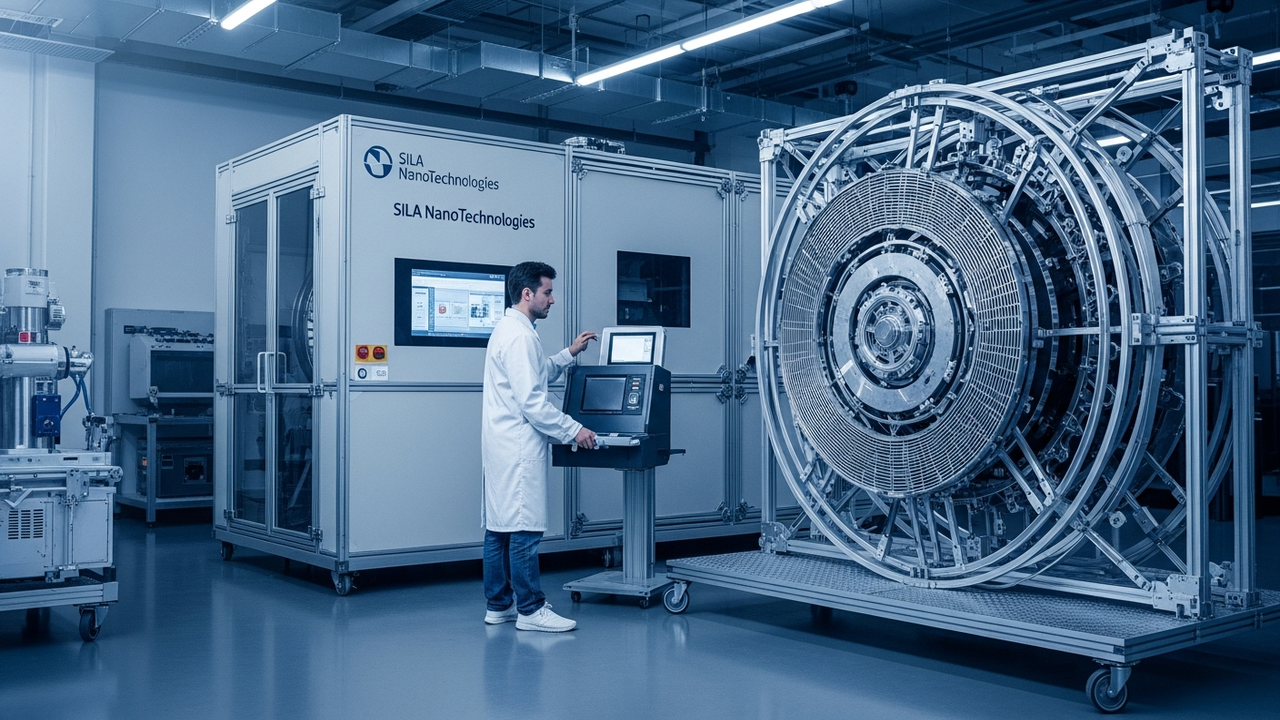
Sila Nanotechnologies has announced the commencement of commercial supply of its second-generation silicon anode material to a major automotive partner, aimed at dramatically improving electric vehicle (EV) battery performance. This supply initiation is a significant milestone for the introduction of practical silicon anode materials into the EV market, possessing the potential to increase battery energy density by up to 20%. This will contribute to extending EV range and reducing charging times, thereby accelerating the development of next-generation EVs.
Technical / Clinical Details
Sila Nanotechnologies’ silicon anode material features nanostructured porous silicon particles. Compared to traditional graphite anodes, silicon theoretically has the capacity to store over 10 times more lithium ions, but faced challenges with degradation due to large volume changes (up to 300%) during charge and discharge cycles. Sila’s second-generation material effectively manages this stress from volume changes through unique nanostructure design, achieving high cycle life and stability over long periods. This material can be easily integrated into existing lithium-ion battery manufacturing processes with minimal modifications, enabling rapid commercialization. The anticipated energy density improvement is estimated at 10-20% at the battery pack level.
Background & Context
In the adoption of electric vehicles, range and charging time are among the most critical factors for consumers. Current lithium-ion batteries are experiencing a gradual slowdown in performance improvement and are approaching their limits, particularly in terms of energy density. Silicon anodes are considered one of the most promising technologies to bridge this ‘energy density gap,’ with many battery and automotive manufacturers investing in their development. Sila Nanotechnologies’ recent supply initiation indicates that the practical application of silicon anodes has entered a serious phase, intensifying competition in the EV market.
Strategic Significance & Outlook
The commencement of supply of second-generation silicon anode material from Sila Nanotechnologies is expected to have a profound impact on the EV industry. As leading automotive manufacturers introduce EVs equipped with this material, more attractive long-range, fast-charging EVs will become available to consumers, further accelerating the transition to electric vehicles. Sila will continue to focus on further enhancing material performance and expanding production capacity, aiming for collaboration with more automotive partners. In the future, this technology is expected to push the performance limits of lithium-ion batteries and play an indispensable role in realizing a sustainable mobility society.
Source: #
Get our weekly technology intelligence — free
Receive an infographic that lets you judge at a glance whether each field’s analysis report is worth reading.
Subscribe Free — Weekly Tech Intelligence
By subscribing, you’ll receive Troy-Technical’s weekly technology intelligence newsletter.
- Your email and selected fields are used only to deliver the newsletter.
- We never share your information with third parties.
- You can unsubscribe anytime via the link in each email.
See our Privacy Policy for details.
Takes about a minute · Unsubscribe anytime







Comments