Key Findings
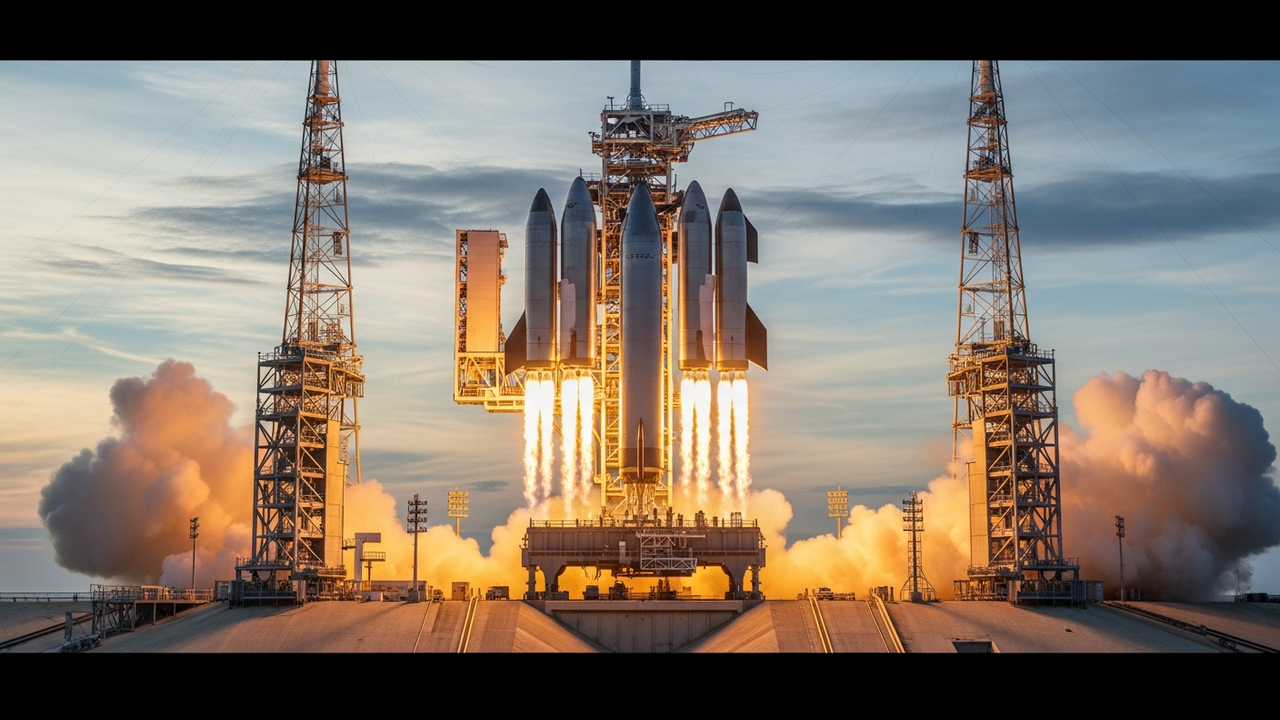
SpaceX has successfully performed a static fire test of all six Raptor engines on its newest Starship prototype, designated Ship 40 (Starship V3). This crucial test confirms the readiness of the vehicle’s propulsion system for its 13th full-stack Starship test flight, which is anticipated to occur within the next month.
Technical & Clinical Details
The static fire test involved igniting all six Raptor engines simultaneously while the Starship prototype remained secured on the launch pad. The test was designed to verify the engines’ ability to achieve and maintain their target thrust levels and burn duration. Raptor engines are highly efficient, full-flow staged combustion engines powered by liquid methane and liquid oxygen, forming the core of SpaceX’s reusable rocket technology. Starship V3 incorporates design improvements from previous prototypes, and this test specifically confirmed the integration and stability of its advanced propulsion system. Such successful validation is an indispensable step in controlling complex engine systems and ensuring the reliability of super heavy-lift rockets.
Background & Context
Starship is SpaceX’s ambitious next-generation, fully reusable space transportation system, designed to enable human missions to Mars, lunar exploration, and large-scale orbital activities. While previous test flights have encountered challenges during landing or orbital insertion phases, SpaceX has consistently gathered data and implemented design refinements. This latest success is a vital step towards enhancing propulsion system reliability and increasing future launch frequency. Starship’s development is widely regarded as a potential game-changer in global space exploration, with its progress significantly influencing the broader space industry.
Strategic Significance & Outlook
The successful static fire test serves as a critical green light for Starship’s 13th test flight. This upcoming mission is expected to validate a complex sequence of operations, including booster separation, orbital insertion, re-entry, and landing maneuvers. A successful flight would further demonstrate Starship’s operational capabilities, bringing SpaceX’s ambitious plans for lunar and Martian missions, as well as large-scale Starlink deployments, closer to reality. The establishment of this fully reusable super heavy-lift rocket system holds the potential to dramatically transform access to space.
Get our weekly technology intelligence — free
Receive an infographic that lets you judge at a glance whether each field’s analysis report is worth reading.
Subscribe Free — Weekly Tech Intelligence
By subscribing, you’ll receive Troy-Technical’s weekly technology intelligence newsletter.
- Your email and selected fields are used only to deliver the newsletter.
- We never share your information with third parties.
- You can unsubscribe anytime via the link in each email.
See our Privacy Policy for details.
Takes about a minute · Unsubscribe anytime





Comments