Key Findings
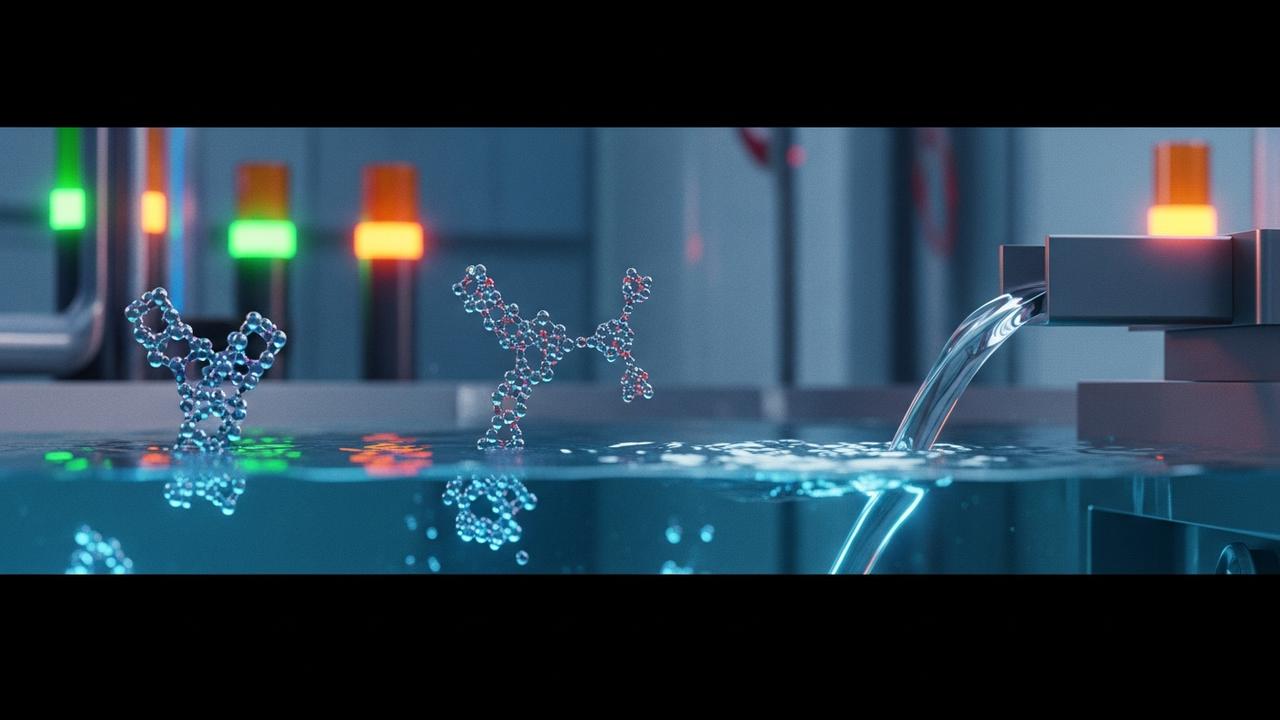
Researchers at the University of Florida have developed a breakthrough technology dubbed ‘molecular velcro’ that promises to more effectively remove per- and polyfluoroalkyl substances (PFAS), widely known as ‘forever chemicals,’ from water. This innovative gel-based material employs electrical charges to selectively trap PFOA (perfluorooctanoic acid), a prevalent type of PFAS. A significant advantage of this new method over conventional fluorinated PFAS filters is its ability to prevent harmful leaching of captured chemicals back into the water, alongside its reusable nature and compatibility with existing filtration infrastructure.
Technical / Clinical Details
The ‘molecular velcro’ gel is comprised of a unique polymer network embedded with specific functional groups designed to electrostatically interact with the negatively charged PFOA molecules. This mechanism allows the gel to strongly attract and sequester PFOA from contaminated water. Crucially, this differs fundamentally from traditional adsorption filters that rely on fluorinated polymers, which carry the risk of PFOA desorption or leaching back into the water over time. The gel itself is easily regenerable, meaning it can be reused multiple times, leading to significant reductions in operational costs and waste generation. Furthermore, the technology is designed for seamless integration into existing water purification and wastewater treatment systems, which broadens its potential for widespread application from point-of-use filters to municipal treatment plants.
Background & Context
PFAS compounds have been extensively used in various industrial and consumer products due to their exceptional water and oil-repellent properties, found in items ranging from non-stick cookware to firefighting foams and water-resistant apparel. However, their extreme persistence in the environment, earning them the moniker ‘forever chemicals,’ has led to their accumulation in soil, water bodies, and even human tissues, raising significant public health concerns. Regulatory bodies worldwide are increasingly implementing stricter limits on PFAS levels, driving an urgent need for effective removal technologies. Traditional methods like activated carbon filtration and reverse osmosis face limitations in terms of cost, efficiency, and the potential for secondary contamination, highlighting the demand for more sustainable and high-performance solutions. The University of Florida’s ‘molecular velcro’ offers a promising answer to these pressing environmental challenges.
Strategic Significance & Outlook
The development of the ‘molecular velcro’ technology by the University of Florida represents a pivotal moment in the ongoing battle against PFAS contamination. Should this technology be successfully commercialized, it has the potential to dramatically enhance the performance of residential water filters and provide critical solutions for large-scale water treatment challenges faced by municipalities and industries. The research team is now focused on further validating the scalability and long-term durability of the material, with a clear path towards practical implementation. Future research will likely explore optimizing removal efficiencies for a wider spectrum of PFAS compounds and investigating its application for other hazardous substances, ultimately contributing significantly to global efforts in securing safe drinking water and protecting environmental health.
Get our weekly technology intelligence — free
Receive an infographic that lets you judge at a glance whether each field’s analysis report is worth reading.
Subscribe Free — Weekly Tech Intelligence
By subscribing, you’ll receive Troy-Technical’s weekly technology intelligence newsletter.
- Your email and selected fields are used only to deliver the newsletter.
- We never share your information with third parties.
- You can unsubscribe anytime via the link in each email.
See our Privacy Policy for details.
Takes about a minute · Unsubscribe anytime






Comments