Key Findings
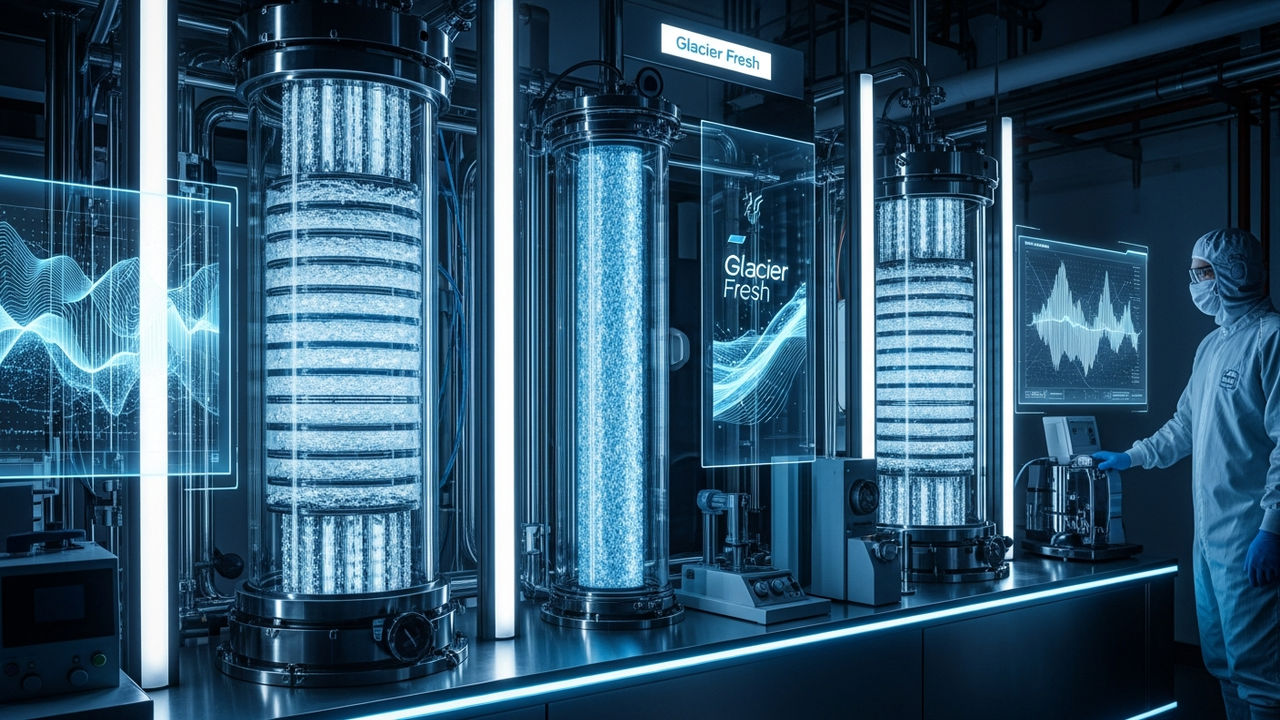
As reported by Glacier Fresh in 2026, ultrafiltration (UF) and nanofiltration (NF) membrane technologies have reached an unprecedented level of practicality for daily drinking water treatment systems. These membranes are accelerating their adoption in both residential and industrial water treatment by achieving an optimal balance between efficient contaminant removal, retention of essential minerals, appropriate flow rates, and ease of maintenance. Notably, significant advancements include a substantial improvement in fouling resistance (membrane clogging) and further miniaturization of system components.
Technical / Clinical Details
Ultrafiltration (UF) membranes possess very small pore sizes, typically ranging from 0.01 to 0.1 microns, which enables them to effectively remove fine particles, suspended solids, bacteria, viruses, and colloids. The progress in UF technology by 2026 stems from improved membrane materials and optimized manufacturing processes, leading to more uniform pore structures and enhanced selectivity. This allows for high levels of contaminant removal while simultaneously maintaining high water flux rates through the membrane. Nanofiltration (NF) membranes, on the other hand, feature even smaller pore sizes (typically around 1 nanometer), capable of removing finer dissolved components such as hardness-causing ions, heavy metal ions, and organic pollutants. Both UF and NF technologies have seen significant improvements in fouling resistance through special surface modification techniques and the introduction of new polymeric materials, which inhibit the adhesion of organic matter and microorganisms to the membrane surface. This leads to reduced maintenance frequency and extended membrane lifespan.
Background & Context
Global water scarcity and escalating water pollution have made the development of innovative and sustainable water treatment technologies an urgent priority for ensuring access to safe drinking water. While conventional methods like chlorination and activated carbon filters are effective, they have limitations in addressing certain trace contaminants and emerging pollutants (e.g., PFAS), necessitating more advanced physical barrier technologies. UF and NF membranes have long been researched for their high-efficiency removal capabilities, but high costs, complex operation, and performance degradation due to fouling previously hindered their widespread adoption. However, recent advancements in materials science and nanotechnology have begun to overcome these challenges, making membrane technologies more affordable and reliable solutions for the market.
Strategic Significance & Outlook
The increasing practicality of UF and NF membrane technologies holds the potential not only to enhance the quality of drinking water at home but also to address large-scale water treatment challenges faced by industries and municipalities. Specifically, improved fouling resistance and system compactness contribute to reducing both installation and operational costs, enabling more sustainable and accessible water treatment solutions. Companies like Glacier Fresh are integrating these technologies into consumer products to provide high-quality water filtration to more households. In the future, these membrane technologies are expected to become indispensable components for expanding recycled water use, enhancing the efficiency of desalination, and developing decentralized water treatment systems, thereby playing a crucial role in solving global water issues and supporting sustainable communities worldwide.
Source: https://glacierfreshfilter.com/blogs/news/revolutionary-water-filtratin-technologies-in-2026
Get our weekly technology intelligence — free
Receive an infographic that lets you judge at a glance whether each field’s analysis report is worth reading.
Subscribe Free — Weekly Tech Intelligence
By subscribing, you’ll receive Troy-Technical’s weekly technology intelligence newsletter.
- Your email and selected fields are used only to deliver the newsletter.
- We never share your information with third parties.
- You can unsubscribe anytime via the link in each email.
See our Privacy Policy for details.
Takes about a minute · Unsubscribe anytime





Comments